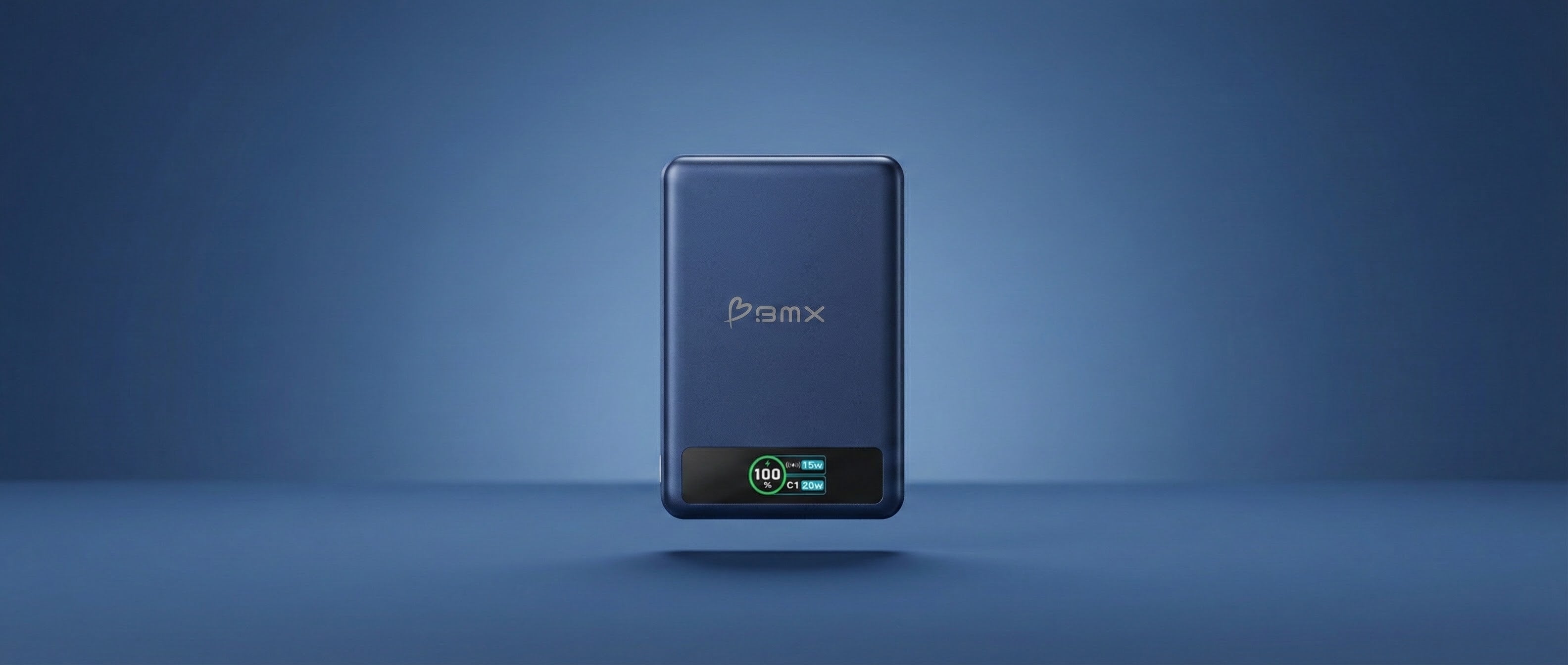
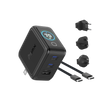
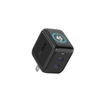
Semi-solid-state power banks replace most of the flammable liquid inside conventional lithium-ion batteries with an electrolyte that barely moves. The result is a portable charger that handles heat and impact better, lasts longer, and fits into thinner designs. BMX builds every SolidSafe power bank around this chemistry.
If you have searched for a new portable charger recently, you have probably seen "solid-state" and "lithium-ion" thrown around like they mean the same thing. They do not. The difference matters for safety, for how long the battery holds up, and for how thin a power bank can actually get before thermal tradeoffs start stacking up.
How Lithium-Ion Power Banks Work
Every lithium-ion power bank uses a liquid electrolyte to shuttle lithium ions between electrodes during charging and discharging. That liquid is what makes the battery work. It is also what makes it flammable. If a cell is punctured, crushed, or overheated, the liquid can leak, vaporize, and ignite. This failure mode is called thermal runaway.
Lithium-ion is the standard for a reason: high energy density, low manufacturing cost, and decades of supply chain maturity. But the tradeoff is that the liquid electrolyte is always a liability. The thinner you make the enclosure, the less room there is for thermal management, and the higher the risk.
What Makes a Semi-Solid-State Power Bank Different
A semi-solid-state power bank drastically reduces the amount of free-flowing liquid inside each cell. BMX SolidSafe cells contain a fraction of the flammable liquid found in conventional lithium-ion. What little liquid remains has very low fluidity, meaning it stays put even if the cell is damaged. It does not slosh around. It does not flow toward a short circuit. It barely moves.
Less liquid means less fuel for a fire. It also means the electrolyte does not shift under impact or altitude changes. That improves thermal stability and reduces the chance that a single cell failure escalates into something worse.
Quick answer
Semi-solid-state power banks contain a fraction of the flammable liquid found in conventional lithium-ion. What remains barely moves. This reduces the risk of thermal runaway and allows for thinner, more durable designs.
What Happens When You Drill Through a SolidSafe Cell
Nobody is drilling their power bank on purpose. But a nail penetration test simulates exactly what happens during a real-world failure: a short circuit inside the cell. Crushing in a bag, overheating in a car, a manufacturing defect. These all cause the same chain reaction. The drill test just shows you what happens next.
SolidSafe cell drilled while fully charged. No fire. No thermal runaway. Performed under controlled conditions by trained staff. Do not try this at home.
Drill a conventional lithium-ion cell and the liquid electrolyte catches instantly. The spark hits liquid, the liquid flows and feeds the reaction, and you get thermal runaway: fire, pressure, sometimes an explosion.
Drill a SolidSafe cell and you get the same short circuit, the same spark. But the electrolyte barely moves. Not enough liquid to catch. Not enough to spread. The heat stays local and the reaction fizzles out.
In internal testing, SolidSafe cells were drilled, cut, and punctured while fully charged, with no fire and no thermal runaway. Standard lithium-ion ignited instantly in the same tests. That does not mean the product is indestructible, but it does mean the failure behavior is fundamentally different.
Safety, Design, and Real-World Performance
Safety is the most obvious difference between a semi-solid-state power bank and a lithium-ion one, but it is not the only one.
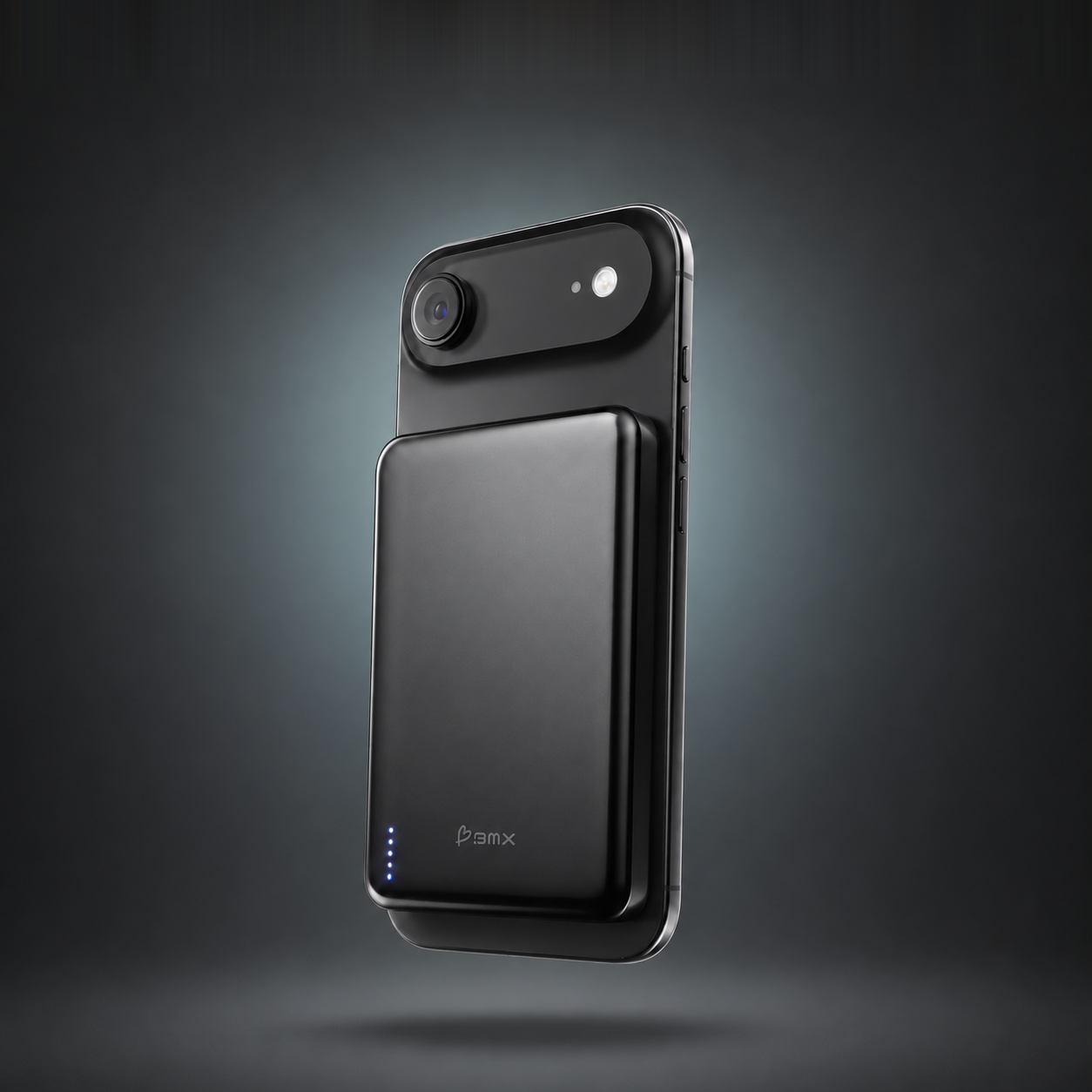
When the electrolyte generates less heat and resists fire on its own, engineers can spend less space on thermal padding and safety buffers. That is how BMX got the SolidSafe Air down to 6.8mm, thinner than most smartphones. The chemistry makes the form factor possible. Competitors squeezing standard lithium-ion into ultra-thin enclosures are compressing more heat density into a smaller space. Semi-solid-state does not have that problem.
Lithium-ion power banks typically maintain 80% capacity for 300 to 500 cycles. Semi-solid-state cells handle thermal stress better over time, which means less degradation and fewer replacements.
BMX SolidSafe Power Banks: The Full Lineup
Every SolidSafe power bank uses the same semi-solid-state cells. The difference is capacity, features, and form factor. Here is how the three models compare.
| Feature | Air 5K | SolidSafe 5K | SolidSafe 10K |
|---|---|---|---|
| Capacity | 5,000mAh | 5,000mAh | 10,000mAh |
| Enclosure | Titanium | CNC Aluminum | CNC Aluminum |
| Thickness | 6.8mm | Standard | Standard |
| Wireless | Qi2 15W | Qi2 15W | Qi2 15W |
| USB-C Output | 20W | 20W | Dual 30W |
| Display | LED dots | Full-color LCD | Full-color LCD |
| Built-in Cable | No | Yes (lanyard) | Yes (lanyard) |
| Devices | 2 | 2 | 3 |
| Price | $59.99 | $59.99 | $79.99 |
How to Choose Between Semi-Solid-State and Lithium-Ion
If capacity is the only thing that matters and budget is tight, lithium-ion power banks still deliver solid value. They are widely available, inexpensive, and good enough for casual use at home or at a desk.
A semi-solid-state power bank makes more sense for travel, daily carry, or any situation where the battery is close to your body for extended periods. The improved thermal behavior matters more when you are on a plane, in a hot car, or carrying the charger in your pocket against your leg.
Before choosing a portable charger, consider:
- How often do you fly or travel with a power bank close to your body?
- Do you want a slim charger that fits in a pocket, or is bulk acceptable?
- Do you need one full phone charge (5K) or two (10K)?
- Is premium build quality (titanium, CNC aluminum) worth paying for?
Frequently Asked Questions
Are semi-solid-state power banks safer than lithium-ion?
Semi-solid-state power banks contain a fraction of the flammable liquid found in conventional lithium-ion, which reduces the risk of thermal runaway. They are not risk-free, but the failure behavior is significantly different. In internal testing, BMX SolidSafe cells were drilled and punctured while fully charged with no fire. Standard lithium-ion ignited instantly in the same tests.
Can a semi-solid-state power bank charge my iPhone or Android phone?
Yes. Semi-solid-state power banks charge devices exactly the same way lithium-ion ones do. The battery chemistry is internal. Any phone, tablet, or accessory that charges via USB-C or Qi2 wireless will work normally with a BMX SolidSafe power bank.
Why are semi-solid-state power banks more expensive?
The cells cost more to manufacture. The electrolyte composition, tighter tolerances, and premium enclosure materials (BMX uses titanium on the Air 5K and CNC aluminum on the 5K and 10K) all add to the price. For daily carry and travel use, many buyers consider the safety and durability improvements worth the premium.
Can I take a semi-solid-state power bank on a plane?
Yes. Semi-solid-state power banks follow the same airline rules as lithium-ion: carry-on only, under 100Wh. All three BMX SolidSafe models are well under that limit. The SolidSafe 5K and 10K also have a dedicated Airplane Mode for travel.
What is the difference between solid-state and semi-solid-state?
A fully solid-state battery uses no liquid at all. A semi-solid-state battery greatly reduces liquid content but does not eliminate it entirely. BMX SolidSafe cells contain a fraction of the liquid found in conventional lithium-ion. Fully solid-state batteries are still largely in the research phase for consumer electronics. Semi-solid-state is the version available and shipping today.
What is the difference between the SolidSafe Air 5K, 5K, and 10K?
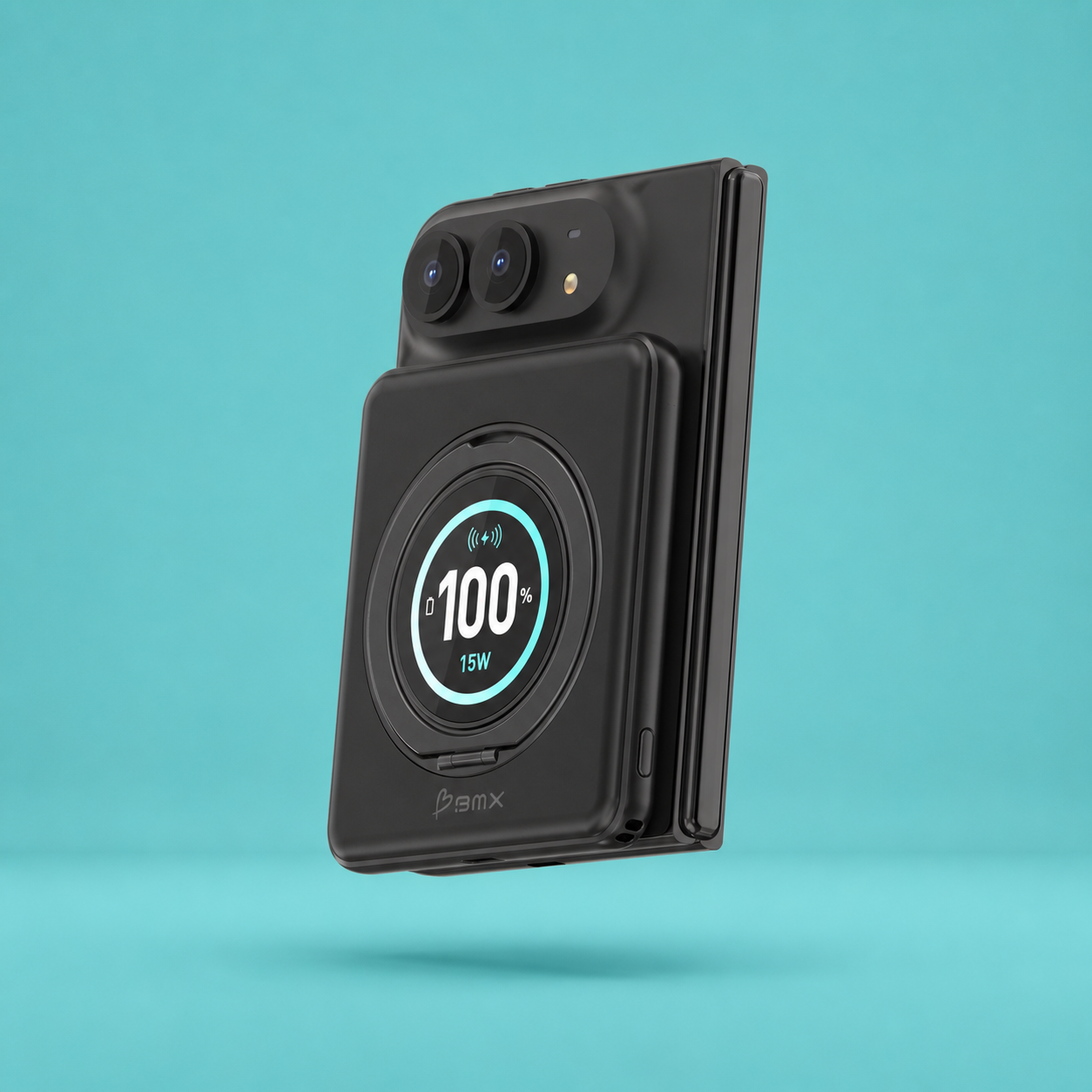
All three use the same semi-solid-state cells. The Air 5K is 6.8mm thin with a titanium body, built for pocket carry. The SolidSafe 5K adds a full-color LCD and built-in lanyard cable in a CNC aluminum body. The SolidSafe 10K doubles the capacity to 10,000mAh, adds dual USB-C ports with 30W output, and charges three devices at once.
How long do semi-solid-state power banks last?
Semi-solid-state cells handle thermal stress better than conventional lithium-ion, which reduces degradation over time. Standard lithium-ion power banks typically hold 80% capacity for 300 to 500 cycles. Semi-solid-state cells are engineered to degrade more slowly over the same period, which means fewer replacements and less waste.
SolidSafe Power Banks
Safer Chemistry. Thinner Design.
BMX SolidSafe semi-solid-state power banks are built for daily carry and travel. Three models, one chemistry. See the full lineup.
See SolidSafe Power BanksRelated guides


Leave a comment
This site is protected by hCaptcha and the hCaptcha Privacy Policy and Terms of Service apply.