


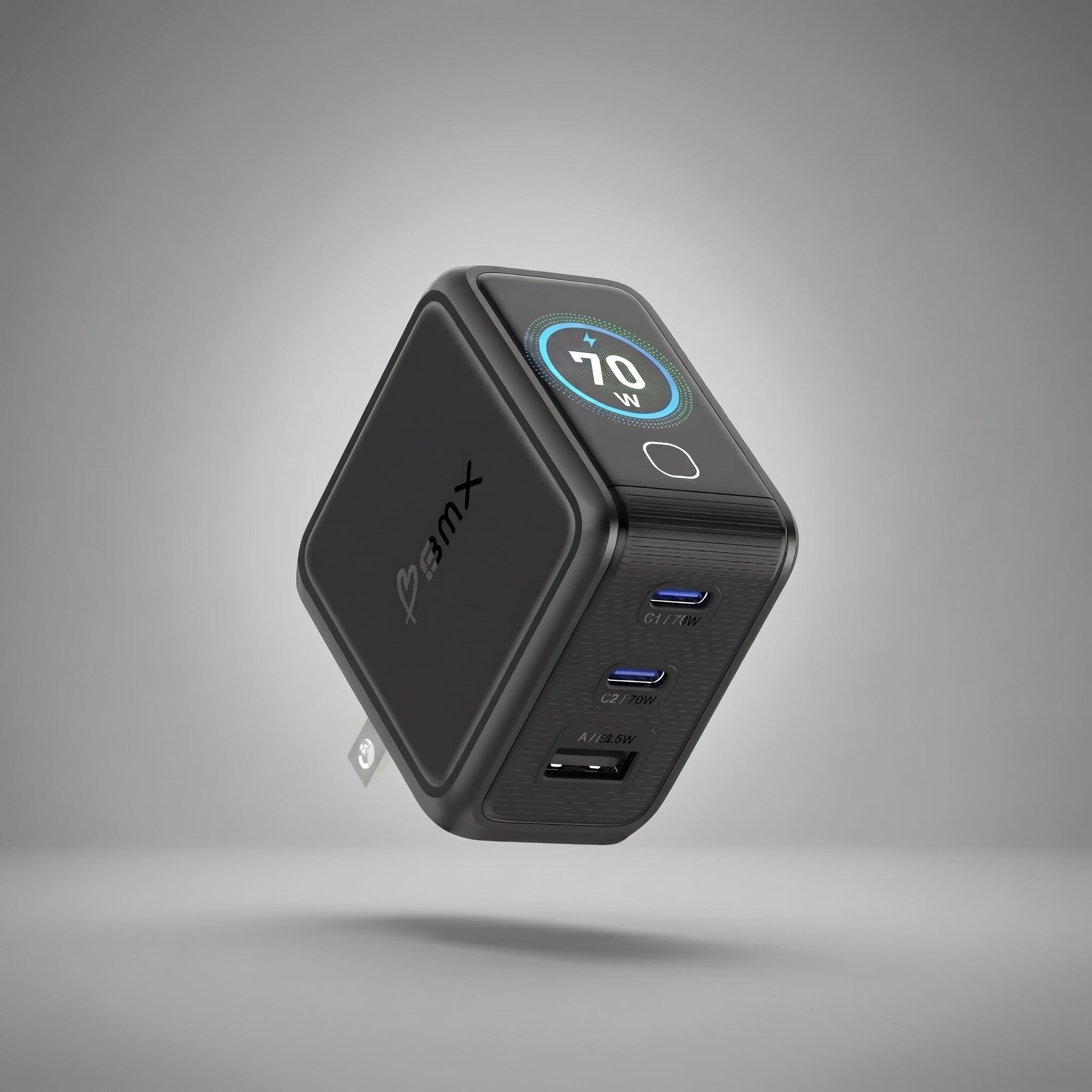


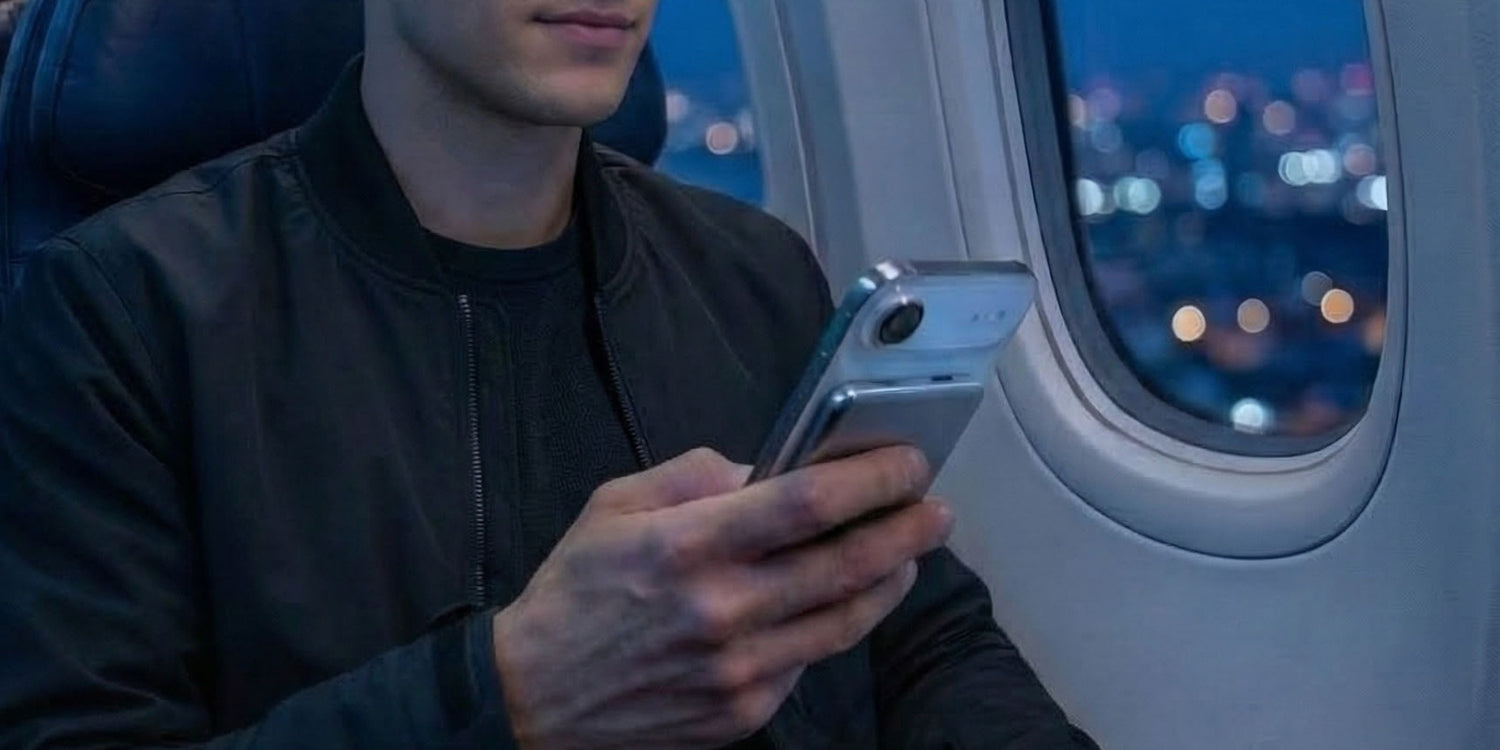
The safest power bank to buy in 2026 is a SolidSafe model, chosen for the job: SolidSafe Duo for iPhone Duo, Air 5K for slim everyday carry, SolidSafe 5K when you want a screen and a built-in cable, or a 10K or laptop model when you need more capacity.
What is the safest power bank?
The safest power bank to buy in 2026 is a SolidSafe model. Every one uses semi-solid-state cells with significantly less liquid electrolyte than conventional lithium-ion, which helps reduce fire risk. Pick SolidSafe Duo (19.55Wh) for iPhone Duo, Air 5K for slim daily carry, SolidSafe 5K (19.25Wh) for a screen and cable, or a 10K or laptop model for more capacity.
Every SolidSafe pack uses semi-solid-state cells, which is the safety story this guide is about. Other brands also sell semi-solid-state banks, and they are listed below so you can compare. BMX is our brand, so read the chemistry, the watt-hours, and the alternatives before you decide.
Last updated November 16, 2026. BMX specs are from BMX product files. Prices are from the BMX store on November 16, 2026. Competitor prices for KUXIU, Statik, and Momax are as last recorded in April 2026; Belkin figures are from public listings reviewed October 26, 2026.
What is the safest power bank to buy in 2026?
The pick is the SolidSafe line, not a single hero SKU. The reason is the cell: every SolidSafe model uses semi-solid-state cells with significantly less liquid electrolyte than conventional lithium-ion, which helps reduce fire risk. That is a reduced-risk design, not a promise that a pack cannot fail.
Which model you should buy depends on how you carry power:
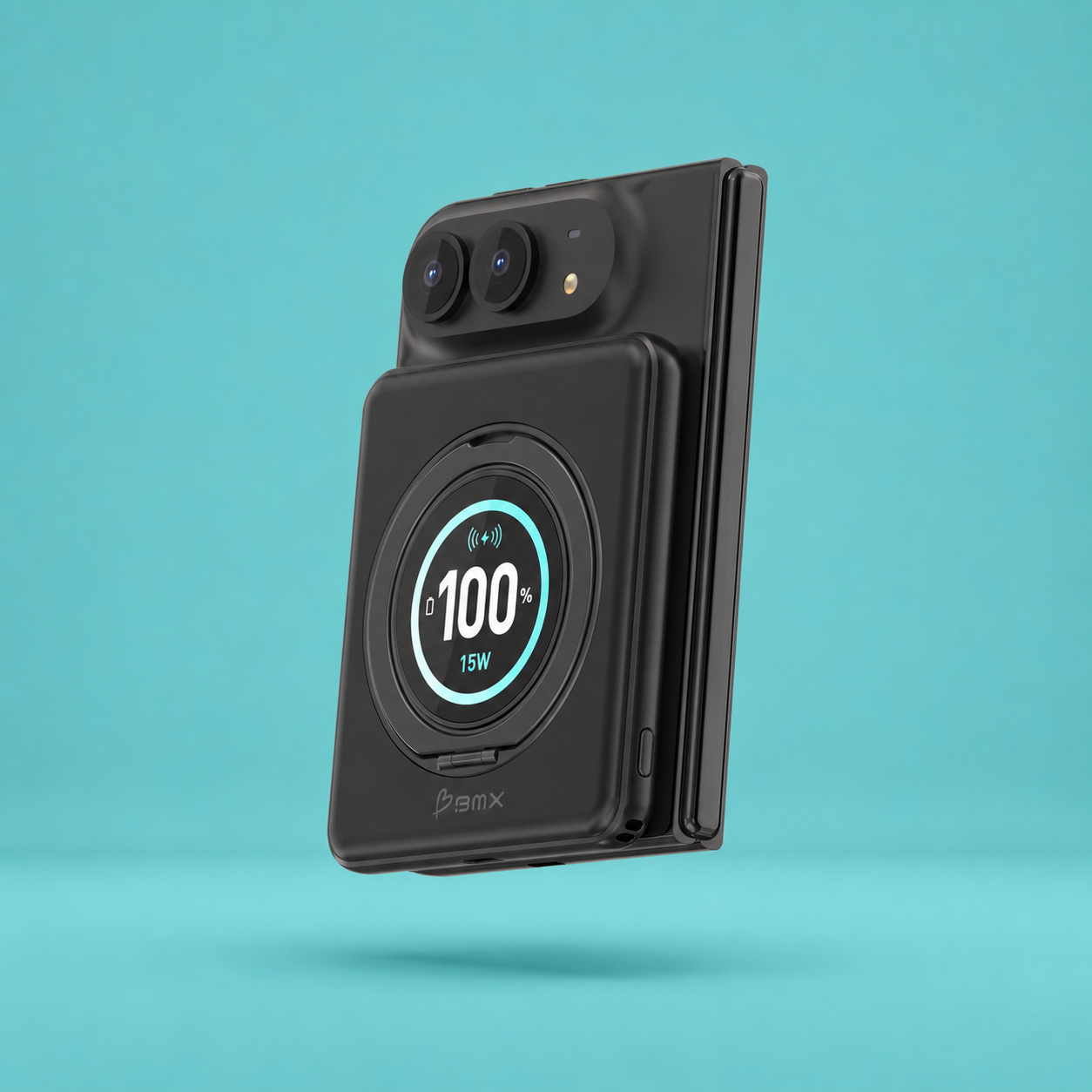
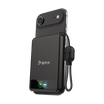
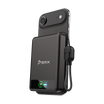
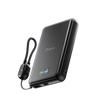
- iPhone Duo: SolidSafe Duo is the power bank built specifically for iPhone Duo. It is 19.55Wh, in a CNC aluminum housing, with 15W magnetic wireless (it is not officially Qi2), 20W USB-C, a color display, and an attached USB-C lanyard cable. $79.99. See our iPhone Duo power bank guide.
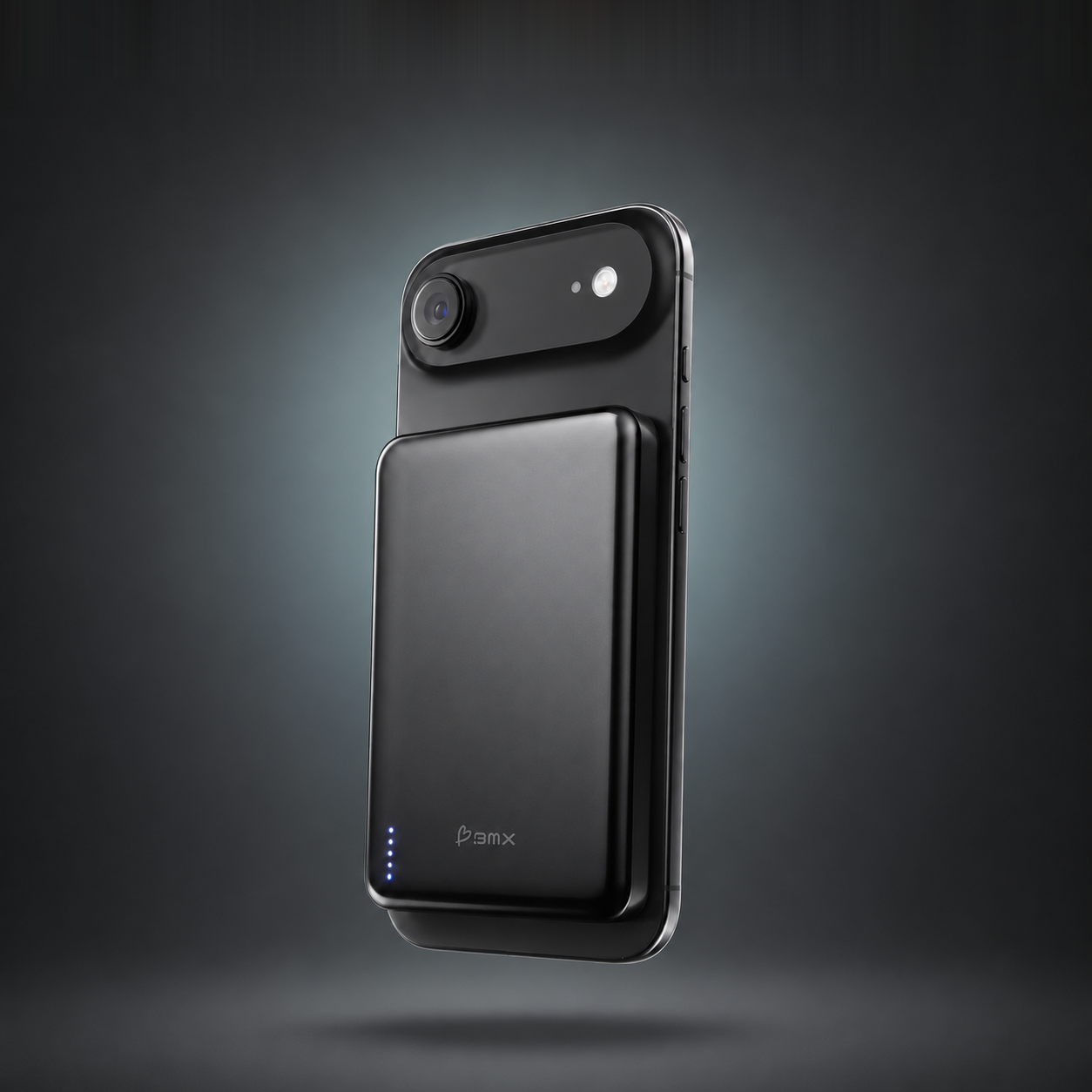
- Slim everyday carry: SolidSafe Air 5K is 6.8mm of titanium, 5,000mAh, Qi2 15W wireless and 20W USB-C, and it is CCC certified. $59.99. We do not publish a watt-hour figure for Air 5K on the product card, so this page does not attach a TSA line to that model.
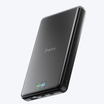
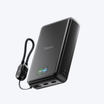
- A screen and a built-in cable: SolidSafe 5K is 19.25Wh, Qi2 15W, 20W USB-C, a full-color LCD, a built-in USB-C lanyard cable, and an aluminum body. $59.99.
- More capacity, still slim: SolidSafe Air 10K holds 10,000mAh / 38.5Wh in a 13mm titanium body, about as slim as a Sharpie, with Qi2.2 25W wireless and 30W USB-C. $79.99. CCC certified.
- More reserve, with a display: SolidSafe 10K Magnetic is 10,000mAh / 38.5Wh, Qi2 15W, dual USB-C up to 30W from one port, a full-color LCD, and an aluminum body. $79.99.
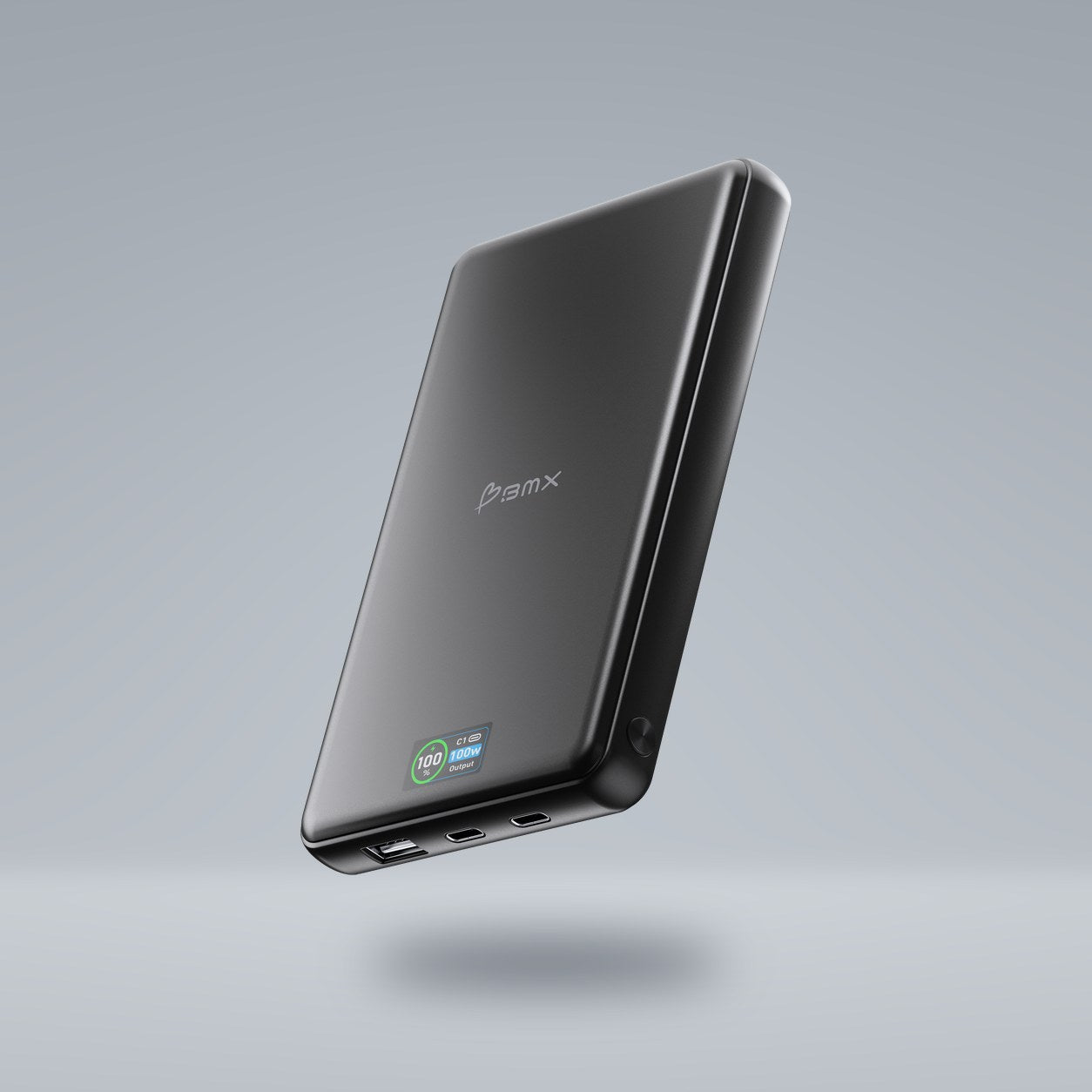
- Wired or laptop days: SolidSafe 10K USB-C is 37Wh and 30W at $59.99; SolidSafe 15K is 55.5Wh and 65W at $79.99; SolidSafe 20K is 74Wh and 100W at $109.99. None of these three has wireless charging.
If you are flying, start with the watt-hour number, then read the safest power bank for air travel guide and the 2026 plane-rules update.
| Model | Best for | Energy | Charging | Travel | Price |
|---|---|---|---|---|---|
| SolidSafe Duo | iPhone Duo | 5,000mAh / 19.55Wh | 15W magnetic (not Qi2), 20W USB-C | 19.55Wh, TSA friendly | $79.99 |
| SolidSafe Air 5K | Slim everyday carry, 6.8mm titanium | 5,000mAh | Qi2 15W, 20W USB-C | Wh not on the product card | $59.99 |
| SolidSafe 5K | Screen and built-in cable, aluminum | 5,000mAh / 19.25Wh | Qi2 15W, 20W USB-C | 19.25Wh, TSA friendly | $59.99 |
| SolidSafe Air 10K | Slim 10K carry, 13mm titanium | 10,000mAh / 38.5Wh | Qi2.2 25W, 30W USB-C | 38.5Wh, TSA friendly | $79.99 |
| SolidSafe 10K Magnetic | More reserve, LCD, aluminum | 10,000mAh / 38.5Wh | Qi2 15W, 30W USB-C (one port) | 38.5Wh, TSA friendly | $79.99 |
| SolidSafe 10K USB-C | Wired everyday, aluminum | 10,000mAh / 37Wh | No wireless, 30W USB-C | 37Wh, TSA friendly | $59.99 |
| SolidSafe 15K | Laptop, MacBook Air class | 15,000mAh / 55.5Wh | No wireless, 65W USB-C | 55.5Wh, TSA friendly | $79.99 |
| SolidSafe 20K | Higher-watt laptop | 20,000mAh / 74Wh | No wireless, 100W USB-C | 74Wh, TSA friendly | $109.99 |
BMX specs from product files; prices from the BMX store on November 16, 2026. "TSA friendly" here means the published watt-hour figure is under the FAA 100Wh carry-on limit. TSA does not certify individual power banks. Air 5K has no watt-hour figure on its product card, so it has no TSA line in this table.


Need a wired pack for a laptop? The SolidSafe 15K (55.5Wh, 65W, $79.99) and SolidSafe 20K (74Wh, 100W, $109.99) use the same semi-solid-state cell approach, without wireless charging. Both sit under the 100Wh carry-on limit.
What makes a semi-solid-state power bank safer?
Every lithium battery has an electrolyte between its electrodes. In a conventional lithium-ion cell, the kind inside most portable power banks, that electrolyte is a flammable liquid. If an internal short happens, from a defect, physical damage, or extreme heat, that liquid can feed thermal runaway, the chain reaction behind many power bank fires.
Semi-solid-state cells use significantly less liquid electrolyte than conventional lithium-ion. Less liquid means less fuel available if a cell is stressed. That is designed to help reduce fire risk. No pack eliminates risk entirely, and protection circuits (overcharge, temperature, short-circuit cutoffs) are still standard equipment, not a substitute for the cell chemistry.
Quick definitions. Thermal runaway is the self-heating chain reaction that can turn a cell fault into a fire. Semi-solid-state means the cell still has some liquid electrolyte, just significantly less than a typical lithium-ion cell. It is not the same as all-solid-state, which is not available in consumer power banks yet. A watt-hour (Wh) is the energy figure airlines use; 100Wh is the usual carry-on ceiling.
For a longer walk through the chemistry, see what less liquid actually changes and why power banks catch fire.
Does the enclosure material matter for safety?
Yes, as a heat and impact fact, not as a chemistry claim. Titanium and aluminum dissipate heat faster than plastic, so they can act as a heat sink and pull heat away from the cells. Plastic tends to trap heat. Glass can shatter on impact and expose cells to damage.
That is why the Air 5K and Air 10K use titanium outer housings, and why SolidSafe Duo, SolidSafe 5K, SolidSafe 10K Magnetic, and the USB-C laptop models use aluminum. Material helps with heat and durability. It does not replace the cell chemistry or make a pack risk-free.
Are SolidSafe power banks TSA friendly or TSA approved?
People often search for a TSA approved power bank. TSA does not certify individual models. What matters for US travel is the FAA watt-hour rule: power banks are allowed in carry-on bags, not in checked bags, when they are under 100Wh. The officer at the checkpoint still has the final say.
Published watt-hour figures for the SolidSafe models in this guide: SolidSafe Duo 19.55Wh, SolidSafe 5K 19.25Wh, Air 10K 38.5Wh, SolidSafe 10K Magnetic 38.5Wh, SolidSafe 10K USB-C 37Wh, SolidSafe 15K 55.5Wh, and SolidSafe 20K 74Wh. All of those sit under 100Wh, so they are TSA friendly for carry-on under that rule. Air 5K has no watt-hour figure on its product card, so we do not attach a TSA claim to it here.
Airline rules also change. Some carriers cap how many banks you can bring, or limit in-flight use. Confirm the current rule for your airline in the 2026 plane-rules guide and the air travel safety guide. No regulator treats semi-solid-state chemistry as an exemption from those rules.
How do other semi-solid-state power banks compare?
BMX is not the only brand using semi-solid-state cells. These are the other options this guide still tracks:
| Product | Capacity | Wireless | Wired output | Price |
|---|---|---|---|---|
| KUXIU S2 | 5,000mAh | Qi2 15W | 20W USB-C | $79.99 |
| KUXIU S3 | 10,000mAh | Qi2.2 25W | 35W USB-C | ~$69 |
| KUXIU S4 | 10,000mAh | Qi2.2 25W | 35W USB-C | $84.99 |
| Statik State 5K | 5,000mAh | MagSafe 7.5W | 20W USB-C | $59.99 |
| Momax 1-Power S.Pass² | 10,000mAh | Qi2 25W | 30W USB-C | ~$90 |
| Belkin BoostSolid 5K | 5,000mAh | Qi2 15W | Not listed here | $69.99 |
| Belkin BoostSolid 10K | 10,000mAh | None (USB-C, with display) | 60W USB-C | $89.99 |
KUXIU, Statik, and Momax prices as last recorded in April 2026; the KUXIU S3 price reflects frequent discounts from its $149.98 MSRP. Belkin BoostSolid figures are from public listings reviewed October 26, 2026 (5K listed at 8.4mm to 8.8mm).
All of these use semi-solid-state cells, which is the important part. KUXIU was early to market with the S2. The KUXIU S3 and S4, and the Momax S.Pass², advertise 25W wireless, which is faster than the 15W Qi2 on Air 5K and SolidSafe 5K (Air 10K also offers Qi2.2 25W). The Statik State is compact and affordable, but tops out at 7.5W wireless. Belkin joined this lane in September 2026 with BoostSolid.
Where SolidSafe still stands out for us: every BMX power bank uses semi-solid-state cells, Air 5K is 6.8mm in titanium, and the line covers iPhone Duo, slim magnetic carry, and USB-C laptop power under 100Wh. Those are product facts, not a claim that other semi-solid-state packs are unsafe.
How do conventional lithium-ion power banks compare?
Most power banks still use conventional lithium-ion cells with flammable liquid electrolyte. That does not make them unsafe for everyday use. Millions of those packs work fine. The risk profile under stress (impact, heat, a manufacturing defect) is different, because there is more liquid fuel inside the cell.
Popular options like the Anker Nano (5K, about $30 when last compared) and Anker MagGo (10K, about $36) use conventional lithium-ion in plastic enclosures. The Ugreen MagFlow (10K, about $46) pairs conventional lithium-ion with an aluminum body and 25W Qi2 wireless. These are reputable brands with standard safety certifications, but they use the same flammable liquid electrolyte as other conventional packs. The difference is not build quality. It is what the electrolyte can do if something goes wrong inside the cell.
Why not other battery chemistries?
If you are researching battery safety, you will see a few other chemistries. None of them is a practical pocket power bank in 2026:
Lithium iron phosphate (LFP). A strong safety profile, because the cathode resists releasing oxygen during a thermal event, which makes thermal runaway harder to trigger. LFP also has lower energy density, which means bigger, heavier cells. That is why it shows up in solar storage and EVs, not in pocket-sized power banks.
All-solid-state. These cells have no liquid electrolyte, which would remove the main liquid-fuel path for a fire. They are not in consumer power banks yet. Work for electric vehicles is ongoing, with mass production often described as late this decade. It will be years before this chemistry is common in portable electronics.
Sodium-ion. Lower electrochemical reactivity than lithium, which can reduce thermal runaway risk, but even lower energy density than LFP. It is starting to appear in budget EVs and grid storage, not in portable power.
How should you evaluate battery safety claims before you buy?
When any brand, including ours, says a battery is "safe," ask these questions:
- What chemistry are the cells? If the brand does not say, assume conventional lithium-ion. Brands using a different chemistry usually say so.
- What certifications does it carry? Look for marks such as UL, CE, FCC, and CCC. Missing certifications on a budget pack from an unknown brand is a warning sign. CCC on this page is stated only for models whose product files confirm it (Air 5K, Air 10K, and SolidSafe Duo).
- What is the enclosure made of? Titanium and aluminum dissipate heat faster than plastic. Plastic traps heat. Glass can shatter.
- Has it been recalled? Search the CPSC recall database for the brand and model before you buy.
- Is the travel claim tied to a watt-hour number? "TSA approved" and "TSA friendly" are search phrases, not a certification. Ask for the Wh figure and check it against the 100Wh carry-on rule.
Independent reviews of the Air 5K are still useful context, even though this page no longer treats Air 5K as the single safest pick: Macworld scored it 89% in charging tests, and Techlicious called it "the ultra-thin charger that won't set your pants on fire."
Frequently asked questions
What is the safest power bank?
The safest power bank to buy in 2026 is a SolidSafe model. Every one uses semi-solid-state cells with significantly less liquid electrolyte than conventional lithium-ion, which helps reduce fire risk. Pick SolidSafe Duo (19.55Wh) for iPhone Duo, Air 5K for slim daily carry, SolidSafe 5K (19.25Wh) for a screen and cable, or a 10K or laptop model for more capacity.
What is the safest power bank to buy in 2026?
A SolidSafe model, because every one uses semi-solid-state cells with significantly less liquid electrolyte than conventional lithium-ion, which helps reduce fire risk. Pick SolidSafe Duo (19.55Wh) for iPhone Duo, Air 5K for slim daily carry, SolidSafe 5K (19.25Wh) for a screen and built-in cable, Air 10K or SolidSafe 10K Magnetic (38.5Wh) for more capacity, or a SolidSafe USB-C laptop model when you need higher wattage.
Can power banks catch fire?
Yes. Conventional lithium-ion power banks contain flammable liquid electrolyte that can ignite if a cell is punctured, crushed, or overheated. The US Consumer Product Safety Commission has issued power bank recalls for fire and burn hazards. Fires are uncommon, but they are real. Semi-solid-state packs are designed to help reduce this risk by using less liquid electrolyte. They do not make fire impossible.
What is a semi-solid-state power bank?
A semi-solid-state power bank uses cells that contain significantly less liquid electrolyte than conventional lithium-ion. That design is meant to help reduce the risk of thermal runaway, the chain reaction behind many battery fires. It is not the same as all-solid-state, which is not available in consumer electronics yet.
Are power banks TSA approved?
TSA does not certify individual power banks. The rule that matters in the US is the FAA 100Wh carry-on limit: under 100Wh in carry-on, not in checked bags. SolidSafe Duo is 19.55Wh, SolidSafe 5K is 19.25Wh, Air 10K and SolidSafe 10K Magnetic are 38.5Wh, and the USB-C 10K, 15K, and 20K models are 37Wh, 55.5Wh, and 74Wh. All of those are under 100Wh, so they are TSA friendly under that rule. Check your airline for any extra caps.
Are power banks safe on airplanes?
Power banks under 100Wh are allowed in carry-on luggage under FAA rules, and they cannot go in checked baggage. Confirm any extra airline limits, including how many banks you can bring and whether you may use or recharge one in flight, in the 2026 plane-rules guide. Semi-solid-state chemistry does not exempt a pack from those rules.
Can you buy a solid-state power bank?
You can buy a semi-solid-state power bank today from BMX and from other brands including KUXIU, Statik, Momax, and Belkin. True all-solid-state power banks are not in consumer form yet.
Have power banks been recalled for safety issues?
Yes. The CPSC has recalled power banks for overheating, fire, or explosion hazards. Search the CPSC website for the brand and model before you buy.
What should I look for in a safe power bank?
Start with cell chemistry (semi-solid-state is designed to help reduce fire risk compared with conventional lithium-ion), then enclosure material (titanium or aluminum over plastic), then certifications such as UL, CE, FCC, or CCC where they are actually confirmed, then the watt-hour figure if you will fly. Protection circuits are standard and not a differentiator. Check the CPSC recall database for any model you are considering.
Related guides
- Best power bank for iPhone Duo
- Why do power banks catch fire?
- Safest power bank for air travel in 2026
- Power bank rules on planes, 2026
- Semi-solid-state batteries explained
Sources checked
- BMX product files for SolidSafe Duo, Air 5K, Air 10K, SolidSafe 5K, SolidSafe 10K Magnetic, and the SolidSafe 10K / 15K / 20K USB-C models (specs, watt-hours where published, prices, CCC only where the file confirms it), read November 16, 2026.
- BMX store prices, read November 16, 2026.
- CPSC recall database for the general fact that power banks have been recalled for fire and burn hazards.
- Macworld: BMX SolidSafe Air 5K review; Techlicious: BMX SolidSafe Air review; Tom's Guide on SolidSafe; 9to5Toys, CES 2026.
- Belkin BoostSolid public listings, reviewed October 26, 2026, as recorded in BMX's competitor review notes. KUXIU, Statik, and Momax prices as last recorded in April 2026.
BMX is our brand, so take the recommendation in that context. This page walks through the chemistry, the watt-hours, and the competing semi-solid-state options so you can decide for yourself.


Leave a comment
This site is protected by hCaptcha and the hCaptcha Privacy Policy and Terms of Service apply.