





Last updated: June 26, 2026
Latest Updates
- April 2026 - United Airlines: Power banks can no longer be stored in overhead bins (effective March 1, 2026). They must stay on the passenger's person, in a seat pocket, or in an under-seat personal item. Triggered by the Air China Flight CA139 overhead bin fire, October 2025. See the United States carriers section below.
- March 2026 - ICAO: Updated global guidance on lithium battery rules. The IATA DGR 67th Edition is now the de facto floor for international air travel.
- Earlier 2026: Lufthansa Group (Jan 15), Japan-wide ban (effective April), India DGCA, Australia carriers (Dec 2025), Singapore, Korea - see airline-by-airline section below.
30-second answer
Yes, you can bring a magnetic power bank on a plane if it follows the same battery rules as any other power bank: carry-on only, under 100Wh for normal travel, protected from short circuits, and visible enough for security to inspect. The magnet is not the issue. The battery capacity, label, storage location, and airline use rule are what matter.
Magnetic power banks follow battery rules, not magnet rules
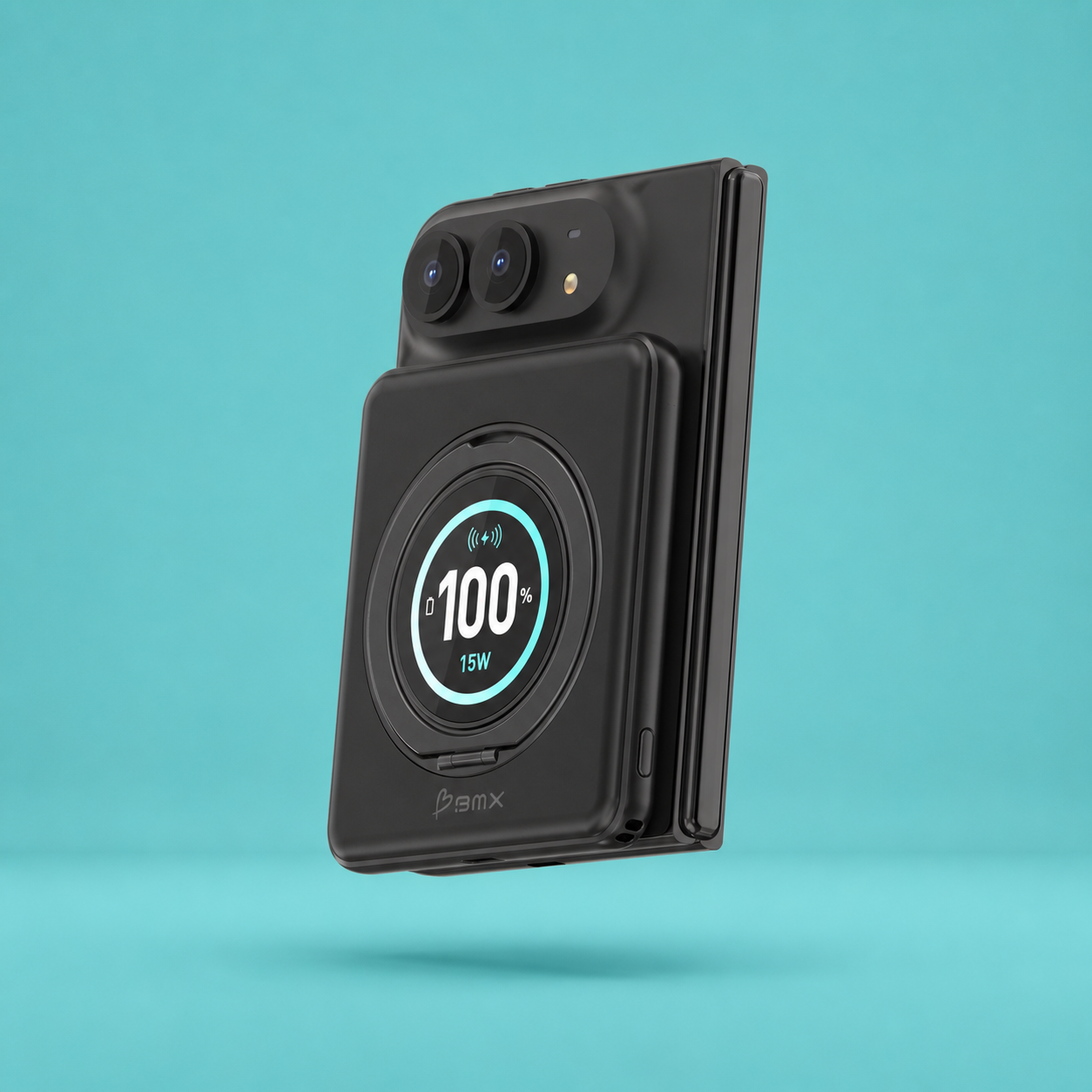
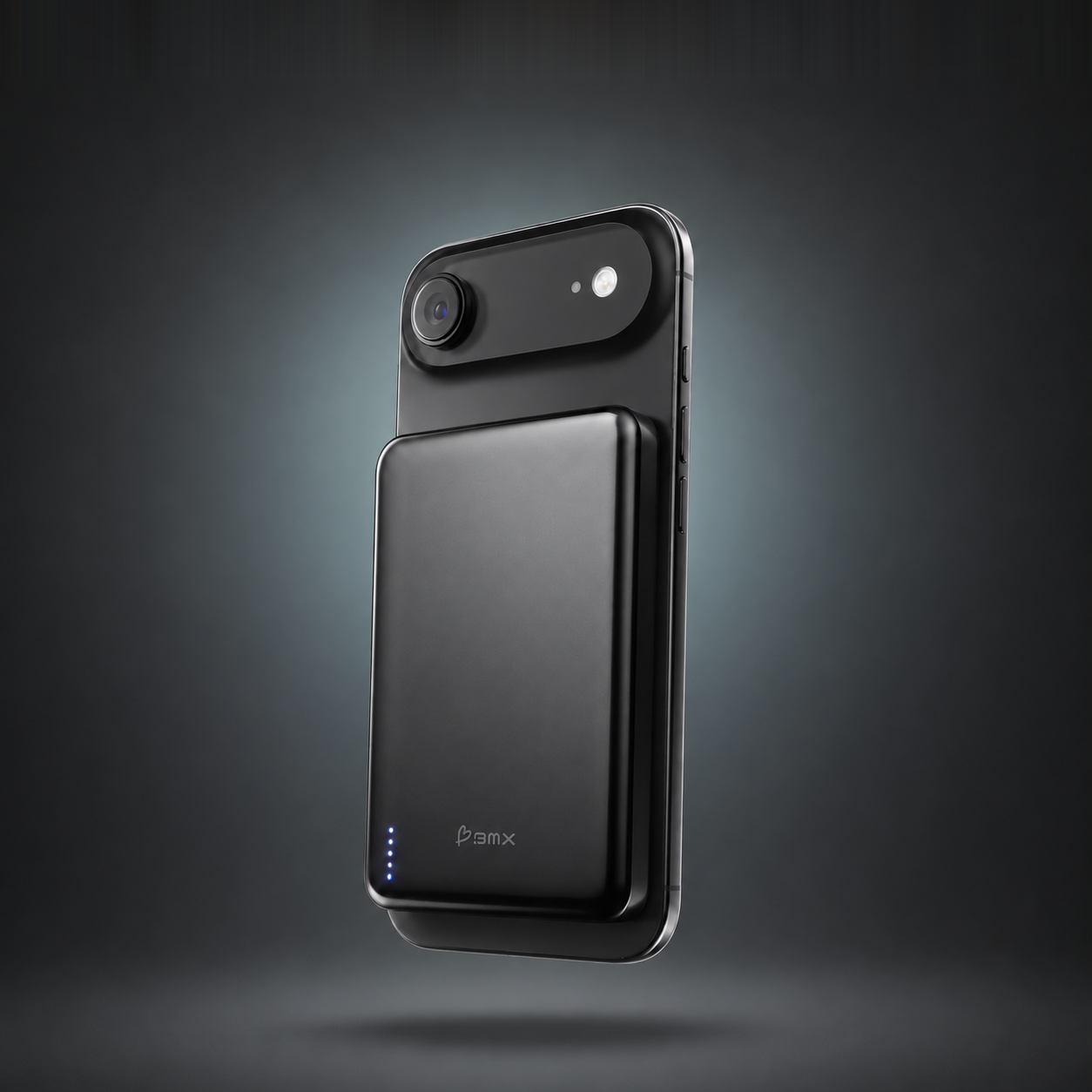
A Qi2 or MagSafe-style battery is still a lithium battery pack. If it is under 100Wh, packed in carry-on, and protected from short circuits, the magnetic attachment does not create a separate airline category.

Which power bank should you actually pack?
Once you know the airline rule, the practical choice is simpler: pick the smallest battery that covers the trip without creating a bag full of extra gear.
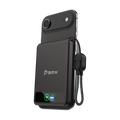
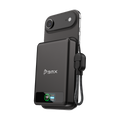
- Shortest trips and pocket carry: choose SolidSafe Air 5K if you want the thinnest magnetic phone backup.
- Long travel days: choose SolidSafe 10K if you want more phone capacity and multi-device backup while staying under 100Wh.
- Laptop backup: wait for the SolidSafe B Series. Air 5K and 10K are phone-first travel batteries, not the honest laptop-backup answer.
For the full lineup, see the SolidSafe power bank collection.
| Power bank rating | Can you fly with it? | What to do |
|---|---|---|
| Up to 100Wh | Yes, on most passenger flights | Carry it on. Do not check it. Keep the label visible. |
| 101Wh to 160Wh | Sometimes | Ask the airline first. FAA guidance limits this lane to two spare batteries with airline approval. |
| Over 160Wh | No for normal passenger travel | Do not pack it for a normal flight. |
| SolidSafe Air 5K | 18.5Wh | Well below the 100Wh limit, but still carry-on only. |
Quick official-policy links:
- FAA PackSafe lithium battery rules for carry-on, checked baggage, 100Wh, and 101Wh to 160Wh approval.
- IATA lithium battery guidance for international dangerous-goods context.
- United dangerous-items policy as the first airline page to check before flying United.
Why are airlines banning power banks in 2026?
The cascade of restrictions traces back to one flight. On January 28, 2025, an Air Busan Airbus A321 was destroyed by fire on the ground at Gimhae Airport in South Korea. Twenty-seven people were injured during the evacuation. The fire started in the overhead bin. Investigators identified a power bank as the cause.
That incident triggered something the aviation industry had been building toward for years. The FAA logged 89 lithium battery incidents in 2024, a record high. By mid-2025, the pace had not slowed - 38 incidents recorded through June 30 alone. Airlines that had been warning passengers about battery risks for years now had a real-world case that showed what full thermal runaway looks like in a confined cabin.
Within months, carriers across Asia, the Middle East, and Europe moved from advisory language to outright bans on in-flight use. The pattern accelerated through late 2025 and into 2026, and it has not stopped.
The short explanation for why power banks specifically are the target: unlike a phone or laptop, a power bank contains only a battery with no active thermal management. No temperature sensors throttling output. No software watching for abnormal draw. Just cells, a protection circuit, and a plastic or metal shell. When something goes wrong, there is no safety system to catch it early.
What are the global power bank rules for flying in 2026?
These baseline guidelines come from ICAO, the FAA, and IATA. They apply across essentially all international air travel. Many airlines now go further - but even the international floor shifted in 2026.
What the IATA DGR 67th Edition changed (effective January 1, 2026)
The 67th Edition of the IATA Dangerous Goods Regulations - the industry standard that most airlines and airports worldwide follow - introduced new cabin rules for power banks that took effect January 1, 2026. These are significant because they represent global baseline requirements, not just individual airline choices.
What changed under the 67th Edition:
- Charging power banks from in-seat USB ports or power outlets is now prohibited throughout the flight under baseline IATA guidance. Previously, this was left to individual carriers.
- During taxi, takeoff, and landing, power banks cannot be used to charge other devices at all.
- Power banks must remain in carry-on luggage only - the checked baggage ban is unchanged and absolute.
The practical implication: even on airlines that have not announced their own separate usage ban, plugging your power bank into a seat USB port to top it up mid-flight is no longer permitted under the global standard. Individual airlines may enforce this differently during the transition period, but the regulatory intent is now explicit.
The Wh limits that determine what you can bring
Safety next: if you want the travel-specific buying version, read the safest power bank for air travel guide.
- Under 100 Wh: allowed without airline approval on essentially all commercial flights.
- 100 to 160 Wh: requires airline approval, typically limited to two per passenger.
- Above 160 Wh: not permitted on passenger flights under any circumstances.
- The Wh rating must be labeled on the device. If it is not visible, you can be stopped at security.
If your power bank does not have a Wh label, calculate it: multiply the mAh capacity by the voltage (typically 3.7V) and divide by 1000. A 10,000 mAh power bank at 3.7V works out to 37 Wh, well under the 100 Wh limit. A 27,000 mAh pack at 3.7V is approximately 99.9 Wh - technically compliant, but expect scrutiny if the label is not clearly marked.
Every SolidSafe power bank from Better Mobile Xperience is under 100 Wh, which keeps them compliant with these universal carry-on rules regardless of which airline you are flying.
What changed for flying with power banks in 2026?
This is where the rules get complicated. The baseline rules above say you can carry power banks. A growing list of airlines says you can carry them but not use them. Here is where things stand as of April 2026.
United States carriers (United Airlines update, March 2026)
United Airlines (effective March 1, 2026): Power banks can no longer be stored in overhead bins. They must be carried on the passenger's person, in a seat pocket, or in an under-seat personal item where cabin crew can see and access them quickly. The 100 Wh standard limit and 100 to 160 Wh approval threshold are unchanged. United is the first major US carrier to implement an overhead bin storage ban. The change followed the October 2025 Air China Flight CA139 incident, where a power bank ignited in an overhead locker.
American Airlines, Delta, Southwest, JetBlue, Alaska, Spirit, Frontier: As of April 2026, no public overhead bin restrictions on power banks. Standard FAA rules apply: under 100 Wh, carry-on only, no checked baggage. Expect more US carriers to follow United's lead through 2026 as ICAO and IATA tighten guidance further. Always check your specific carrier before travel - rules are changing on short timelines.
What this means in practice: Even if your specific airline has not adopted United's overhead bin rule, the smart move is to keep your power bank where you can see it - a seat pocket or a personal item under the seat. This pattern is already mandatory in Asia, Europe, and the Middle East, and it is the direction US carriers are moving.
Lufthansa Group (effective January 15, 2026)
The Lufthansa Group introduced uniform rules across all carriers in its network, covering Lufthansa, SWISS, Austrian Airlines, Brussels Airlines, Eurowings, ITA Airways, Edelweiss, and Air Dolomiti. Passengers may bring a maximum of two power banks under 100 Wh. In-flight use is banned entirely - no charging devices from a power bank, no charging the power bank from an in-seat outlet. Power banks must be stored under the seat, not in overhead bins.
Emirates (effective October 1, 2025)
One of the strictest policies from a major carrier. Passengers may bring one power bank under 100 Wh. It must be stored under the seat or in the seat pocket. Charging any device mid-flight is prohibited. Overhead bin storage is not permitted.
Singapore Airlines and Scoot (effective April 2025)
Power banks under 100 Wh are allowed. Devices between 100 and 160 Wh require airline approval. In-flight use is banned under any circumstances.
Japanese airlines (effective April 2026)
Japan's Ministry of Land, Infrastructure, Transport and Tourism has directed all airlines operating to, from, and within Japan to ban power bank use in-flight from April 2026. Passengers are limited to two power banks under 160 Wh. Neither charging devices from a power bank nor charging the power bank from in-seat outlets will be permitted. The policy applies to all carriers flying Japanese routes, not just Japanese airlines. As of late February 2026, the official policy text had not yet been published, with a formal announcement expected around late March.
Korean Air, Asiana, and all major Korean carriers
In-flight use is banned following a directive from South Korean aviation authorities. Power banks must be kept under the seat and within reach of passengers at all times. Some carriers require exposed charging ports to be taped before boarding.
Cathay Pacific and Hong Kong Airlines
Power banks are allowed but must remain accessible to cabin crew at all times. Mid-flight use is not permitted.
EVA Air, Thai Airways, AirAsia, VietJet, Starlux, Tigerair
In-flight charging is prohibited across all these carriers. Check individual airline policies for storage requirements, as they vary.
ANA and Japan Airlines
Power banks must remain visible and accessible. Overhead bin storage is not permitted. These rules are expected to align with the new Japan-wide policy when it takes effect in April 2026.
Qantas, Jetstar, and Virgin Australia (effective December 15, 2025)
All three Australian carriers introduced uniform restrictions from mid-December 2025. In-flight use of power banks is prohibited. Passengers are limited to two power banks carried in the cabin. Overhead bin storage is not permitted - power banks must be kept in the seat pocket, under the seat, or on the passenger's person. Fiji Airways adopted comparable restrictions at the same time.
India (DGCA directive, 2025)
India's Directorate General of Civil Aviation issued a directive banning in-flight use and charging of power banks on all flights to, from, and within India. Power banks must be kept in personal possession and switched off. Overhead storage is not permitted. This applies to all carriers operating Indian routes, not just domestic Indian airlines.
What ICAO is discussing for 2026
The International Civil Aviation Organization held council discussions in early 2026, with a meeting window running from late March through early April. Industry observers expect ICAO to issue updated guidance on lithium battery restrictions that could become the new global baseline. The IATA DGR 67th Edition has already moved ahead of ICAO's formal guidance in some areas - if ICAO formalizes similar restrictions, the airlines that have not yet moved to full usage bans will likely have less discretion on the timeline.
Why are lithium-ion power banks a fire risk on planes?
The phrase "lithium battery" covers a wide range of chemistry and design. (See why power banks catch fire for a deep dive on the chemistry.) What airlines are actually concerned about is free-flowing liquid electrolyte - the component inside conventional lithium-ion batteries that makes thermal runaway possible.
In a standard lithium-ion cell, the electrolyte is a liquid that carries lithium ions between the anode and cathode during charging and discharging. This liquid electrolyte is flammable - typically an organic solvent with dissolved lithium salt. When a cell is damaged, overheated, or experiences an internal short circuit, that liquid can heat rapidly, vaporize, and build pressure inside the sealed cell casing. If the pressure exceeds the casing's tolerance, it vents. Once vaporized electrolyte contacts oxygen, ignition can follow within seconds. That sequence - short circuit, heat, vaporization, pressure, vent, ignition - is thermal runaway.
Why an overhead bin is the worst possible place for this to happen
Thermal runaway is not a manufacturing defect. It is a physics consequence of liquid electrolyte under stress. Even cells from reputable manufacturers can experience it under the right conditions - physical damage, overcharging, manufacturing variation, or a combination of factors that creates an internal short circuit. The failure mode is inherent to the chemistry.
In a closed overhead bin, the problem compounds. The first sign of a developing failure is often heat and a chemical smell. If the device is in a bag inside a closed bin, neither the passenger nor the cabin crew can detect it until the situation has already progressed. By the time smoke is visible, the reaction may be self-sustaining. The Air Busan incident - a complete hull loss with the aircraft destroyed on the ground - demonstrated how quickly an overhead bin fire can escalate.
In October 2025, Air China Flight CA139 added a second high-profile data point: a power bank ignited in an overhead locker mid-flight, validating exactly the failure mode airlines had been warning about. United Airlines cited that incident in its March 1, 2026 decision to ban overhead bin storage of power banks across its fleet, becoming the first major US carrier to do so.
This is why airlines are not just banning use - they are also banning overhead bin storage. A power bank under a seat or in a seat pocket remains visible. Someone can see it, touch it, and detect heat early. The same device in a closed overhead compartment is effectively invisible to detection.
Why power banks carry higher risk than phones and laptops
Phones and laptops contain lithium-ion batteries too. The difference is active thermal management. A smartphone monitors its battery temperature constantly and throttles charging or discharges load when things get too hot. A laptop has similar systems, plus typically more physical mass to act as a heat sink. These devices actively manage the conditions that lead to thermal runaway.
A standalone power bank has no equivalent system. It contains cells, a basic protection circuit that guards against extreme over-voltage or over-current, and a shell. The protection circuit is not a thermal management system - it is a last-resort cutoff. Between normal operation and that cutoff, there is a range of conditions under which the cells can heat without any intervention. This is the physics gap that airline policy is now addressing.
Are semi-solid-state power banks safer for air travel?
How semi-solid-state battery architecture addresses the problem
The airline regulations focus on watt-hour capacity because that is what regulators can measure. But the actual safety concern is the liquid electrolyte - and battery technology has been evolving specifically to reduce it.
Two battery architectures - and why the difference matters
Not all "lithium" batteries are built the same way:
Conventional lithium-ion: Free-flowing liquid electrolyte fills the space between electrodes. This liquid is flammable. It allows fast ion transport and has been the dominant technology for decades. It is also the source of thermal runaway risk when cells fail.
Semi-solid-state (where SolidSafe sits): The liquid electrolyte is replaced or largely supplemented by a gel-like polymer electrolyte - a viscous, semi-solid material that still allows lithium ions to move between electrodes, but does not flow freely. In practical terms, semi-solid-state designs use a gel-like electrolyte structure instead of the free-flowing liquid electrolyte found in conventional lithium-ion cells. The gel electrolyte retains ion conductivity while significantly reducing the volume of free-flowing flammable liquid available to vaporize under stress.
What the gel electrolyte changes in practice
In a conventional lithium-ion cell under thermal stress, the sequence goes: heat - electrolyte vaporizes - pressure builds - cell vents - vaporized flammable electrolyte contacts air - ignition. The liquid electrolyte is the fuel for this chain reaction.
In a semi-solid-state cell, the gel electrolyte resists vaporization at the temperatures that would cause conventional liquid electrolyte to flash to vapor. The more viscous material does not flow into damaged areas of the cell the same way liquid does. If a cell is damaged or experiences an internal short, less free-flowing flammable material is available to participate in the escalation sequence. The risk of reaching full thermal runaway is reduced - not eliminated, because there is still some liquid content and the electrodes themselves generate heat - but the physical mechanism that drives escalation is significantly weakened.
SolidSafe power banks from Better Mobile Xperience use this semi-solid-state architecture. They rank among the safest power banks in 2026 by battery type and enclosure. The cells contain a gel-like polymer electrolyte rather than free-flowing liquid electrolyte. That architecture difference is why Better Mobile Xperience can write this content honestly while competitors who sell conventional lithium-ion products cannot.
Why this matters for airline travel specifically
The regulations focus on watt-hour capacity because chemistry is hard to verify at security. There is no quick test a gate agent can run to confirm electrolyte composition. Wh is stamped on the device and can be checked in seconds.
But the underlying physics that justify the regulations - thermal runaway from liquid electrolyte - is directly addressed by semi-solid-state architecture. Regulators are responding to that problem by tightening the rules on conventional lithium-ion every year: stricter state-of-charge limits for cargo shipments, new airline bans on in-flight charging, and growing pressure for a unified global standard. The restrictions keep expanding because the incidents keep happening, and the incidents keep happening because the chemistry hasn't changed.
Industry analysts and aviation safety researchers increasingly point to reduced-liquid battery architectures as part of the long-term answer. The scientific rationale for treating battery chemistry as a risk factor - not just capacity - already exists. Regulatory recognition of it hasn't arrived yet, but the direction is clear.
If you want to understand exactly what makes semi-solid-state architecture different at the cell level, our full explainer on semi-solid-state technology covers the chemistry without the jargon.
In the meantime, every SolidSafe model is under 100 Wh and compliant with current carry-on rules under ICAO, IATA, and FAA guidelines.
What is the best power bank for flying in 2026?
Why SolidSafe is designed differently
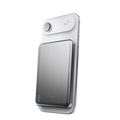
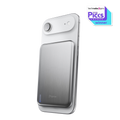
Every SolidSafe power bank from Better Mobile Xperience uses semi-solid-state battery architecture. The SolidSafe 5K and 10K are the everyday carry workhorses - built-in cables, 20W and 30W output, enough capacity for one to two full charges. The SolidSafe Air is the travel specialist: 6.8mm thin, titanium shell, Qi2 wireless. All three share the same cell chemistry, and that chemistry is what separates them from every conventional lithium-ion power bank on the market.
Rather than free-flowing liquid electrolyte, the cells contain a gel-like polymer electrolyte - structurally different from the liquid electrolyte in conventional lithium-ion batteries, and the difference that matters for thermal runaway risk.
In a conventional lithium-ion cell, the liquid electrolyte can vaporize rapidly when the cell overheats. That vaporization is what drives pressure buildup, and pressure is what causes cells to vent, rupture, and ignite. The liquid is the fuel for the chain reaction. In a semi-solid-state cell, the gel electrolyte resists that vaporization. It does not flow freely into damaged areas of the cell, and it requires significantly more thermal energy to reach the vapor state. The escalation chain is interrupted at its first link.
SolidSafe cells have been tested by drilling, cutting, puncturing, and bending them while fully charged. In those tests, the cells heat momentarily and then stop without ignition or sustained thermal runaway. The same tests on conventional lithium-ion cells can produce rapid ignition. That difference is a direct consequence of the semi-solid-state architecture: a gel-like electrolyte structure rather than the free-flowing liquid electrolyte in a standard lithium-ion cell.
The SolidSafe Air adds a titanium-reinforced enclosure to that chemistry. At 6.8mm thick, it is the world's slimmest semi-solid-state Qi2 power bank - thinner than most phones. The titanium shell resists the kind of physical compression and impact that can initiate internal short circuits in conventional cells. It is also why the Air earned TechRadar's CES 2026 Picks Award and Best in Show recognition from Android Headlines and Trusted Reviews: it is the first product to combine sub-7mm thickness with a genuinely safer battery architecture, rather than trading one for the other.
Every SolidSafe model is under 100 Wh and compliant for carry-on travel under ICAO, FAA, and IATA guidelines. SolidSafe Air ($59.99), SolidSafe 5K ($59.99), and SolidSafe 10K ($79.99) are available at heybmx.com.


What should you do before flying with a power bank?
The single most important step is checking your specific airline's current policy before you travel. Rules have been changing quickly, and the gap between what was allowed in 2024 and what is allowed now is significant on many carriers. "I didn't know" is not an exemption, and confiscation at the gate is a real outcome for non-compliance.
Beyond that, here is what applies universally:
- Pack your power bank in carry-on luggage only. Never in checked bags. This rule has no exceptions.
- Confirm the Wh rating is printed on the device. If it is not visible, you may be stopped at security.
- Do not plug your power bank into in-seat USB ports to charge it. The IATA DGR 67th Edition, effective January 2026, prohibits this globally. Individual airlines may enforce it differently in the near term, but the rule now exists.
- Assume you will not be able to use it to charge your devices in the air, regardless of what the in-flight entertainment screen says.
- Charge your devices fully before boarding on any route where your airline restricts in-flight power bank use.
- If you are traveling through Japan, Korea, India, Australia, or on any Lufthansa Group carrier, plan for zero in-flight charging from a power bank.
- If your airline requires under-seat storage rather than overhead, confirm the physical space on your aircraft type - some regional jets have limited under-seat room.
- On routes where use is still permitted, keep the power bank visible while it is in use. Several airlines require this explicitly, and it is good practice regardless.
Frequently asked questions
What are the United Airlines power bank rules for 2026?
As of March 1, 2026, United Airlines no longer allows power banks to be stored in overhead bins. They must stay on the passenger's person, in a seat pocket, or in an under-seat personal item where cabin crew can monitor them. The 100 Wh standard carry-on limit and the 100 to 160 Wh approval threshold are unchanged. United is the first major US carrier to ban overhead bin storage; the change followed the October 2025 Air China Flight CA139 overhead bin fire. Other US carriers (American, Delta, Southwest, JetBlue, Alaska) have not yet adopted the same rule as of April 2026, but the pattern is expected to spread.
Can I bring a power bank on a plane in 2026?
Yes, in almost all cases. Power banks under 100 Wh remain permitted in carry-on luggage on virtually all commercial airlines. What has changed is that many airlines now prohibit using them during flight, and a growing list (including United, Lufthansa, Emirates, ANA, Japan Airlines, Qantas) also restricts where you can store them while on board. Carriage and use are different rules, and storage is now its own rule too. Check all three before traveling.
Which airlines have banned power bank use in-flight?
As of February 2026, in-flight use bans are in place at Emirates, Singapore Airlines, Scoot, Korean Air, Asiana, all major Korean carriers, Cathay Pacific, Hong Kong Airlines, EVA Air, Thai Airways, AirAsia, VietJet, Starlux, Tigerair, ANA, Japan Airlines, and the entire Lufthansa Group (Lufthansa, SWISS, Austrian Airlines, Brussels Airlines, Eurowings, ITA Airways, Edelweiss, Air Dolomiti). Japan is adding a nationwide ban effective April 2026.
What is the 100 Wh limit for power banks on planes?
100 Wh is the threshold below which airlines must allow power banks without requiring prior approval. It comes from ICAO and IATA baseline guidelines adopted across international aviation. Most consumer power banks fall under this threshold. A 10,000 mAh power bank at 3.7V is approximately 37 Wh. A 27,000 mAh pack could approach 100 Wh depending on the design voltage.
Are power banks allowed in checked luggage?
No. Power banks must fly in carry-on luggage only, never in checked bags. This is a global rule enforced by the FAA, EASA, IATA, and ICAO because a thermal runaway event in the cargo hold cannot be detected or suppressed by the crew. If you forget and check a bag containing a power bank, you may be pulled aside at the gate and the bag offloaded. Keep every lithium battery (phone, laptop, power bank, spare cells) in the bag that stays in the cabin with you.
Why are airlines banning power bank use specifically?
Conventional lithium-ion power banks contain liquid electrolyte that can vaporize and ignite if the cell overheats, is damaged, or experiences an internal short circuit. This is called thermal runaway. Unlike phones and laptops, standalone power banks have no active thermal management - no sensors, no software to intervene. If something goes wrong in an overhead bin, the crew cannot see it developing. Airlines are moving from carrying restrictions to use restrictions because a dormant, unplugged battery in a pocket or bag is lower risk than one actively managing charge cycles at altitude.
Can I charge my phone from a power bank on a plane?
It depends on the airline. Some still permit it. Many do not as of 2026. Emirates, Singapore Airlines, Korean carriers, and the Lufthansa Group all prohibit in-flight use. Japan is adding a usage ban from April 2026. Check your carrier's current policy before the flight. If in doubt, assume no and charge your devices fully before boarding.
Does a power bank need to be in airplane mode?
Power banks do not connect to cellular or wireless networks, so airplane mode does not apply to them the way it does to phones. The relevant rules are about carrying and using them, not about their wireless settings. However, some airlines now require that power banks be fully powered off while in the cabin, not just disconnected. Check your airline's specific requirement.
Are there power banks that are safer for air travel?
The regulations focus on watt-hour capacity rather than battery chemistry, so no power bank is officially exempt from the new usage bans on chemistry grounds. However, the underlying physics that drive the airline bans - thermal runaway from liquid electrolyte - is addressed differently by semi-solid-state battery designs. The SolidSafe lineup from Better Mobile Xperience uses cells with a gel-like polymer electrolyte rather than the free-flowing liquid electrolyte in conventional lithium-ion batteries. That structural difference reduces the mechanism that makes thermal runaway possible. The SolidSafe Air ($59.99) is also the world's slimmest semi-solid-state Qi2 power bank at 6.8mm, with a titanium-reinforced body and an 18.5 Wh rating that sits well under the 100 Wh carry-on limit. All SolidSafe models are under 100 Wh and compliant with current carry-on rules.
What did the IATA DGR 67th Edition change for power banks?
The 67th Edition of the IATA Dangerous Goods Regulations, effective January 1, 2026, introduced new global baseline rules for power banks in the cabin. Charging power banks from in-seat USB ports or aircraft power outlets is now prohibited under baseline IATA guidance throughout the entire flight. During taxi, takeoff, and landing, using a power bank to charge other devices is also banned. These rules apply at the international standard level, meaning airlines that follow IATA guidelines - which is most commercial carriers worldwide - operate under these restrictions regardless of whether they have announced their own separate policy.
What is the difference between semi-solid-state and conventional lithium-ion?
Conventional lithium-ion batteries use free-flowing liquid electrolyte to carry ions between electrodes during charging and discharging. That liquid is flammable and can vaporize under thermal stress, which is the primary driver of thermal runaway. Semi-solid-state batteries replace most or all of that liquid with a gel-like polymer electrolyte. The gel still conducts ions but does not flow freely, which means it resists the rapid vaporization sequence that leads to runaway. The practical difference is structural: a gel-like electrolyte does not flow freely the way conventional liquid electrolyte does. SolidSafe power banks use this architecture. Most consumer power banks on the market today use conventional lithium-ion.
What should you look for in a travel power bank?
Most people shop for capacity and price. For frequent flyers, especially now that in-flight use is restricted on so many carriers, the more important factors are size, weight, and battery architecture.
Wh rating matters first - stay under 100 Wh and you are compliant everywhere without needing airline approval. Thickness matters more than it used to: a slim power bank fits in a seat pocket or a jacket, which is now the only place many airlines will let you keep it during flight. And battery chemistry matters because the regulations are a response to a real physics problem - a power bank built to reduce that risk at the cell level is a fundamentally different product than one that just happens to be under the watt-hour limit.
The other practical consideration: charge your devices fully before boarding on any route with in-flight restrictions. A power bank that stays in your bag the whole flight still needs to get you through a layover, a delayed connection, or a full day on arrival. Capacity and recharge speed matter for the hours around the flight, not just during it.
Which power banks are the safest for air travel in 2026?
Every power bank under 100 Wh is technically compliant with carry-on rules. But compliance and safety are different things. The airline bans exist because conventional lithium-ion batteries carry real thermal runaway risk - and a compliant battery can still be a conventional one.
Semi-solid-state architecture is the only commercially available technology that addresses the underlying chemistry rather than just meeting the watt-hour threshold. As of 2026, SolidSafe from Better Mobile Xperience is the only power bank lineup built on this technology with Qi2 wireless charging. The SolidSafe Air at 6.8mm is also the slimmest option for travelers who need to keep the power bank accessible in a seat pocket rather than overhead.
Travel-ready from the ground up
Every SolidSafe power bank is under 100 Wh, built with semi-solid-state battery architecture, and certified for carry-on travel under ICAO, FAA, and IATA guidelines.
Related guides
- Why Power Banks Catch Fire: The Battery Chemistry Explained
- Solid State Battery vs Lithium-Ion: What's the Difference?
- 1.7 Million Power Banks Recalled: What's Driving It


Leave a comment
This site is protected by hCaptcha and the hCaptcha Privacy Policy and Terms of Service apply.