
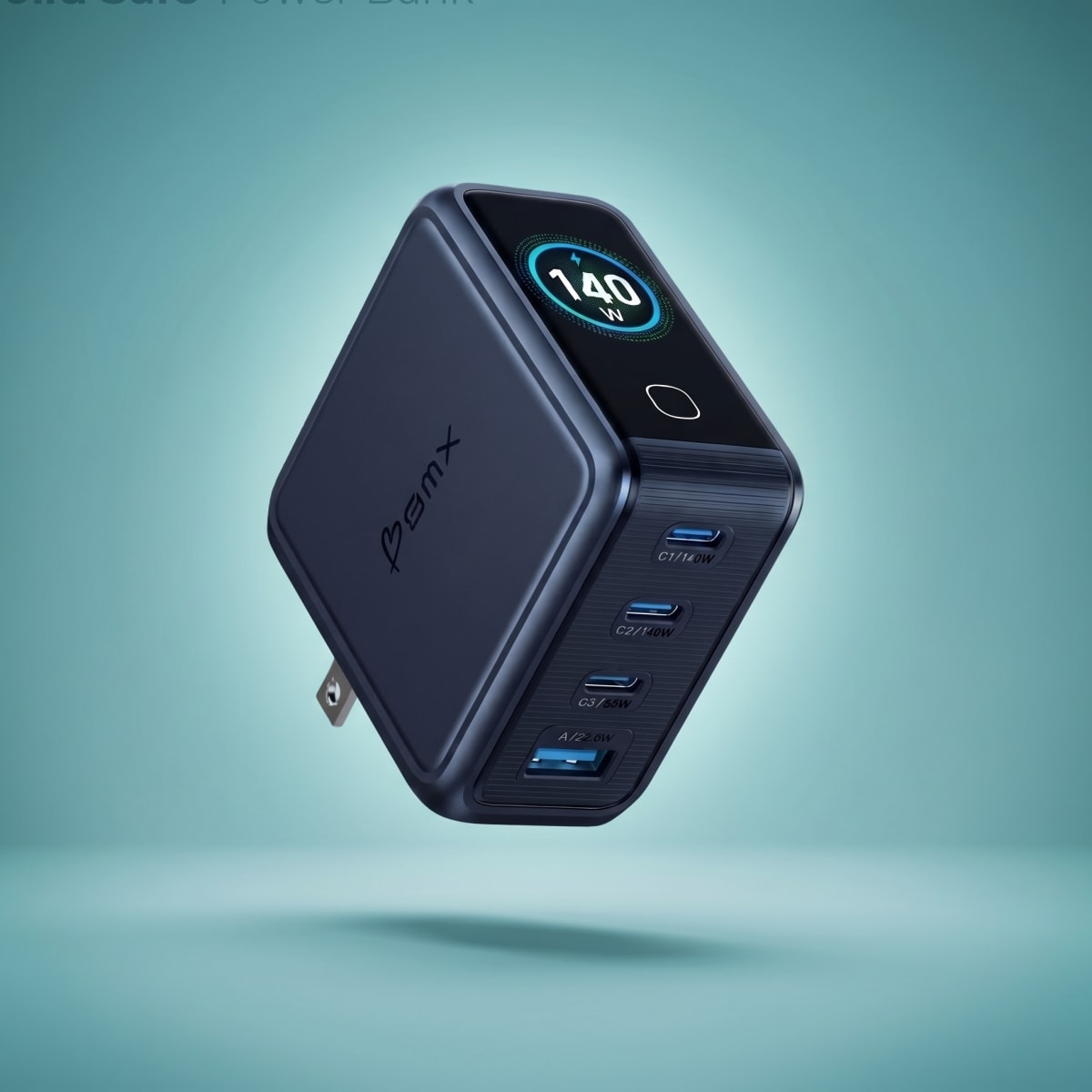
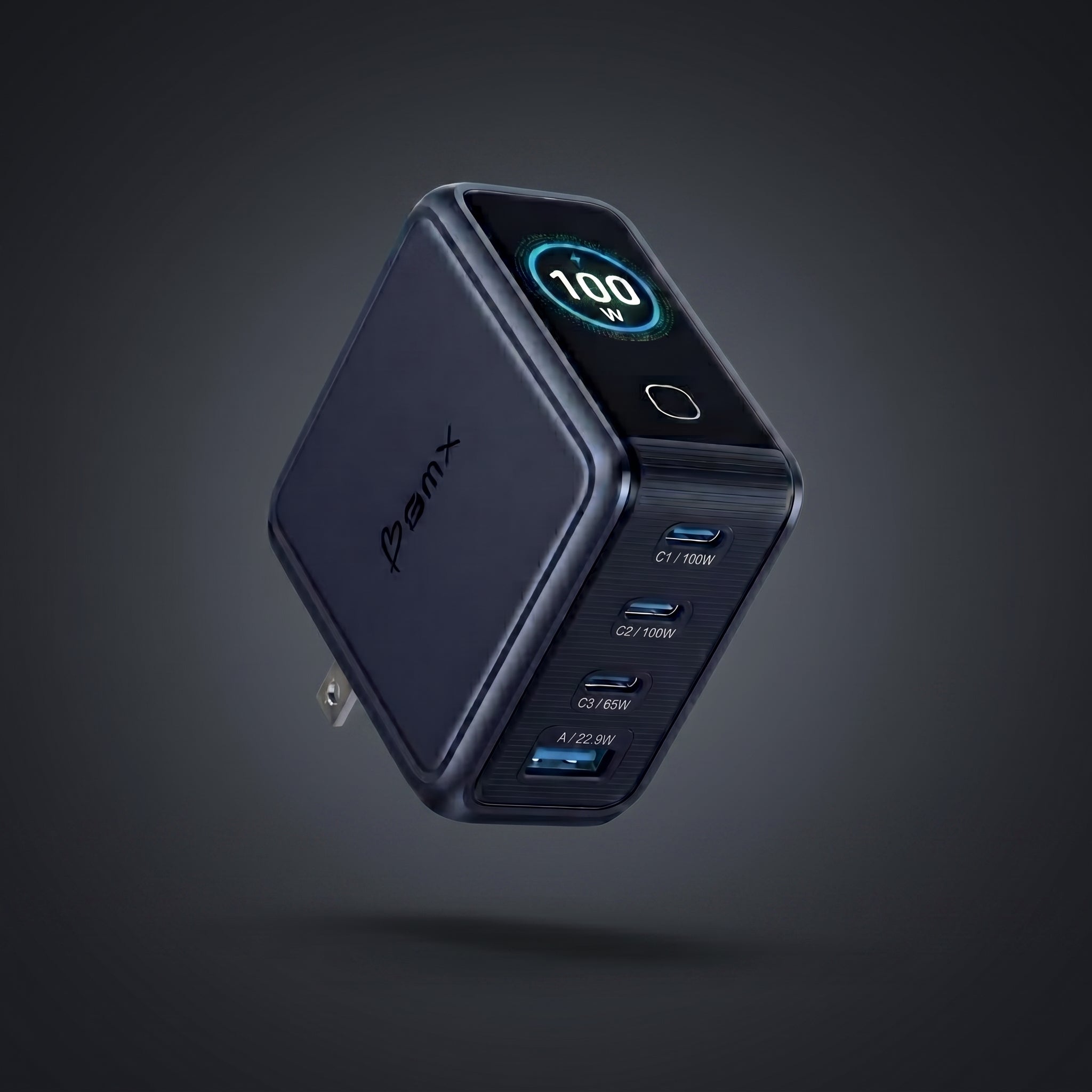
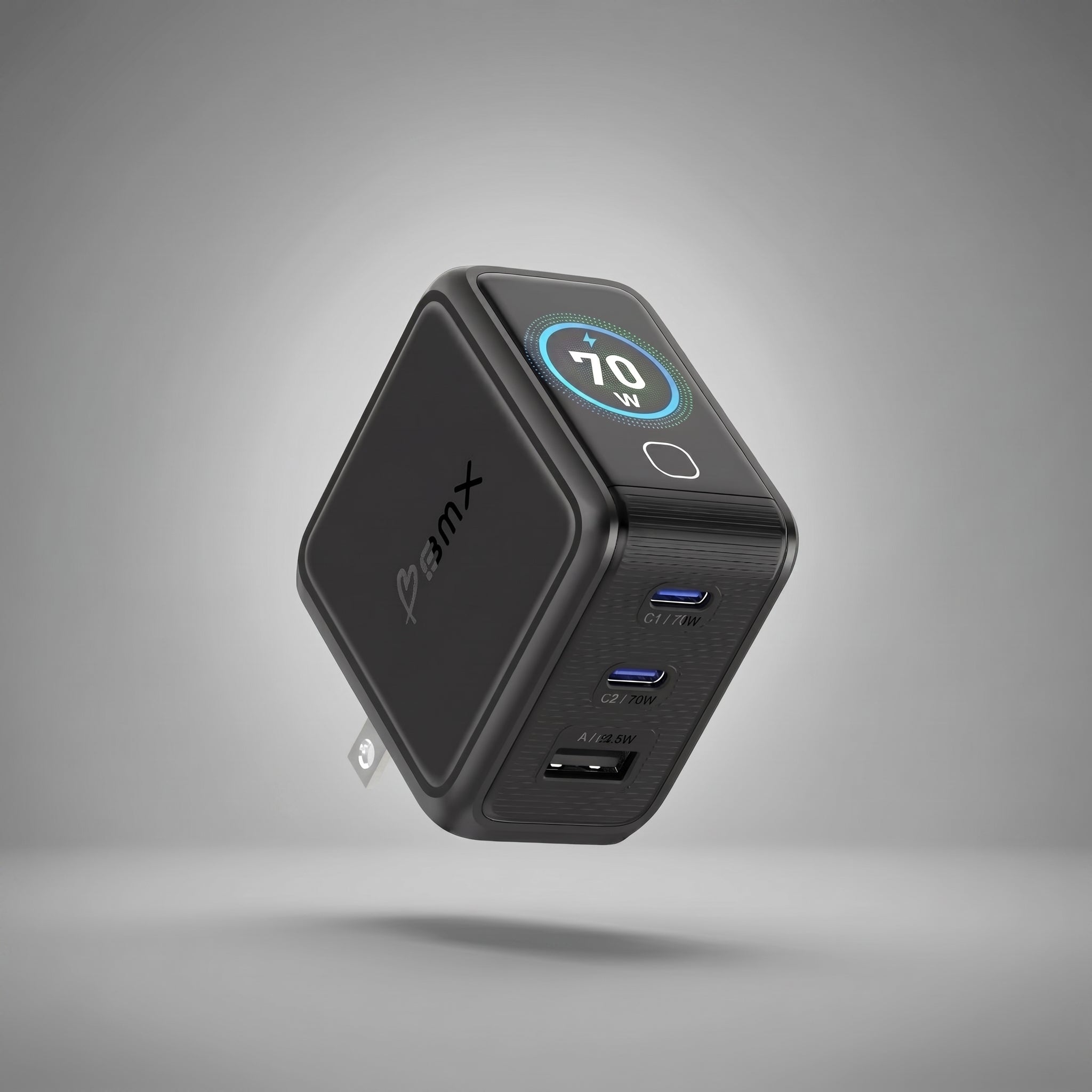


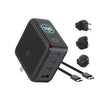
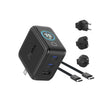
The best power bank for everyday carry in 2026 is the BMX SolidSafe 10K (10,000mAh, dual USB-C, Qi2 15W wireless, full-color LCD, 18mm thin) for daily commuters. For minimalists who want the slimmest possible thing in their pocket, the BMX SolidSafe Air 5K (5,000mAh, 6.8mm titanium, Qi2 15W magnetic) is the second pick. Both use semi-solid-state cells, which significantly reduce liquid electrolyte and lower the fire-risk profile that drove 1.7 million traditional power banks into recall since March 2025.
"Everyday carry" power banks live a different life than travel banks. They go in your jacket pocket, your jeans, your bag every single day. They sit against your laptop, ride in cup holders, end up in airport security trays. The criteria that matter for EDC are different from a power bank you toss in a suitcase twice a year.
This guide is built around four things: capacity for a real day, weight you'll actually carry, form factor that fits how you dress, and chemistry that's safer than the lithium-ion packs that have been all over the recall news. We'll rank picks against those four. We'll show you who BMX competes with. And we'll be honest about the trade-offs.
What does "EDC" actually mean for a power bank?
EDC stands for "everyday carry," a term that started in the knife and tool community and migrated into tech. An EDC power bank is one you carry literally every day, not the one you pack for vacation. It's the difference between a wallet and a passport.
The implications matter. A travel bank can be 20,000mAh, 400 grams, the size of a paperback. An EDC bank has to disappear into your daily fit. If it doesn't, you stop bringing it, which means it's useless on the day you actually need it.
Four criteria for an EDC power bank, in order:
- Form factor. If it doesn't fit in the pocket or pouch you actually use, you'll leave it home.
- Capacity that matches your day. Most people overbuy. Some underbuy.
- Weight. A pack you forget about gets carried. A pack you feel gets left at home.
- Chemistry. The pack is in your pocket, in your bag, sometimes against your skin. What's inside the cell matters more than the spec sheet suggests.
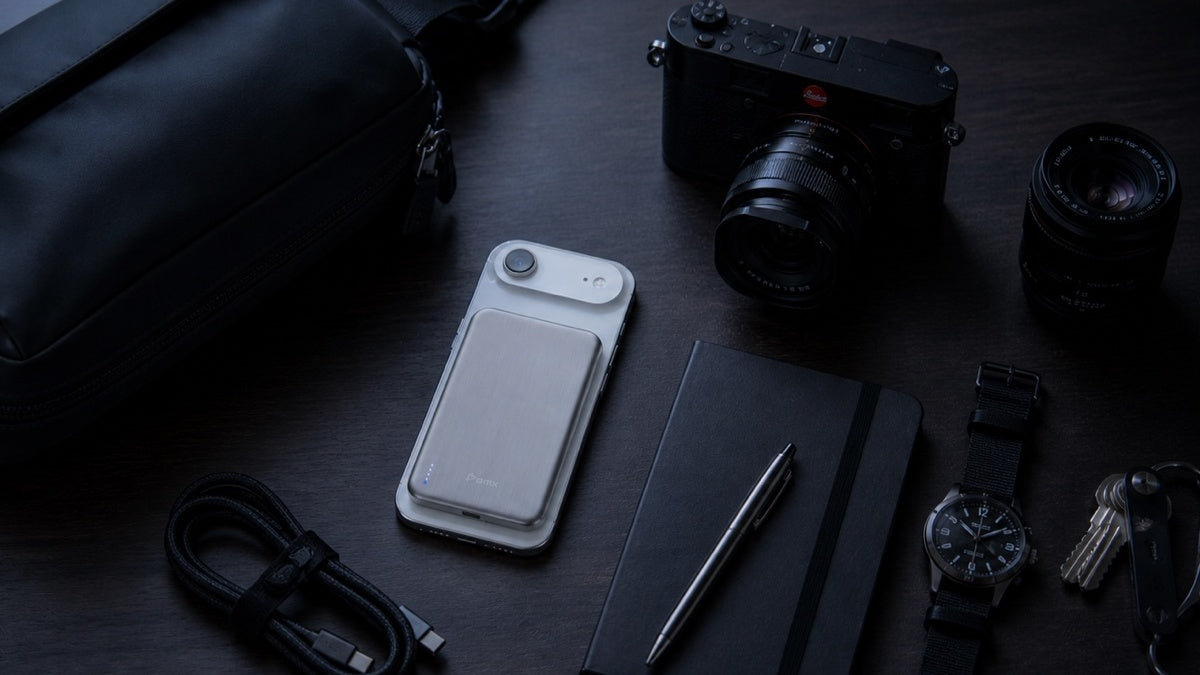
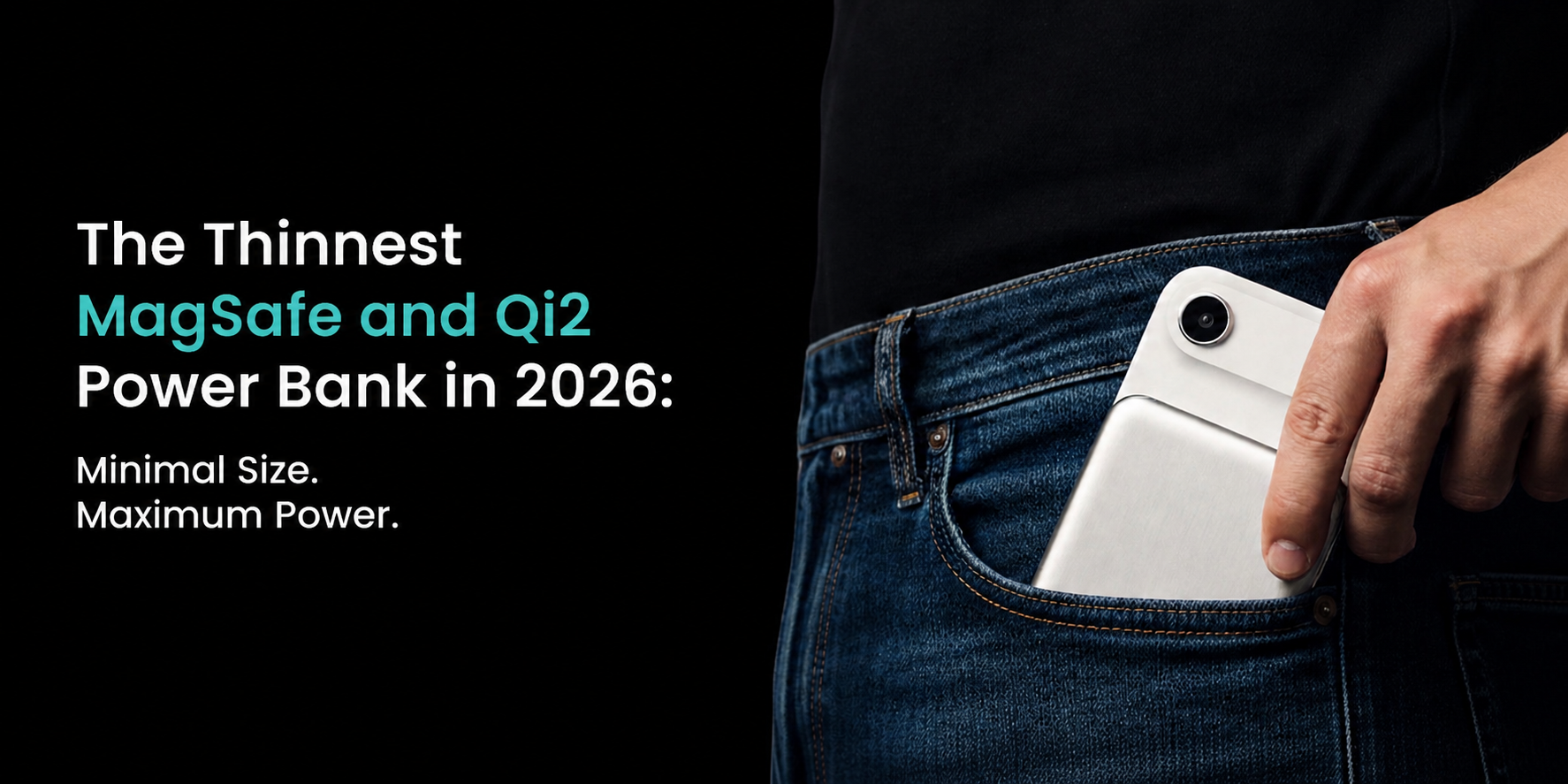
The BMX SolidSafe Air is 6.8mm thin, the same thickness as a MagSafe wallet. It snaps to the back of any iPhone with MagSafe or any Qi2-certified Android phone, charges wirelessly at 15W, and weighs 130 grams. See the SolidSafe Air 5K →
How much capacity do you actually need for daily carry?
10,000mAh is the EDC sweet spot for most people. It's enough to fully recharge a phone twice with reserve, top up earbuds and a watch, and still have something left for a friend at lunch. It fits in a jacket pocket. It weighs around 200 grams.
5,000mAh is a different story. It's the slim minimalist's pick. You charge once, top up, and you're done. If you're a light user with a short commute and outlets at the office, 5,000mAh is right. If you're out 12+ hours, traveling between meetings, or running multiple devices off it, you'll feel the bottom.
20,000mAh is overkill for daily carry. It's a travel pack. The weight and bulk make you stop bringing it after a week.
| EDC scenario | 5,000mAh | 10,000mAh | 20,000mAh |
|---|---|---|---|
| Single phone, short day | Right size | Comfortable | Overkill |
| Phone + watch + earbuds | Tight | Right size | Comfortable |
| 12+ hour day, multi-device | Will run dry | Right size | Right size |
| Daily commute, outlets at work | Right size | Comfortable | Overkill |
Why pocket safety matters more than people think
An EDC power bank lives where it can do the most damage if something goes wrong. It rides in jacket pockets, against laptop bags, on car dashboards in summer, near keys that can scratch the casing. Traditional lithium-ion power banks are mostly fine, but "mostly fine" hides the tail risk: 1.7 million units have been recalled since March 2025 across major brands, two power-bank fires per week occur on commercial flights, and over 20 airlines now ban in-flight use entirely.
The root cause is the liquid electrolyte inside lithium-ion cells. When that liquid leaks, swells, or short-circuits, it ignites. Most "safety" features on power banks (BMS chips, thermal cutoffs, protection circuits) are reactive layers that try to interrupt a thermal runaway after it starts. They help. They don't change the chemistry that started the runaway.
Semi-solid-state batteries replace most of that liquid electrolyte with a gel-polymer composite. It's not magic. It doesn't make the pack indestructible. But it significantly reduces the liquid component that fuels thermal runaway, which is what makes lithium-ion fires propagate. We've drilled, cut, and punctured SolidSafe cells while fully charged, on camera, no fire and no thermal runaway:

For everyday carry specifically, this matters because the pack is the closest battery to your body almost every day. The chemistry is the layer of safety nothing else replicates.


Which one fits where
The form factor decision usually beats the capacity decision for EDC. Here's how the two BMX picks fit into real carry methods.
SolidSafe Air 5K (6.8mm, 130g): back of an iPhone or Pixel via Qi2 magnet, slim wallet pocket, jeans front pocket, jacket inner pocket, between phone and case if you wear a thin case. Thin enough to disappear from awareness within a week.
SolidSafe 10K (18mm, ~210g): jacket pocket, coat pocket, small bag pouch, EDC organizer slot, cup holder. The lanyard cable means it stays attached to your phone while charging through your bag. Not pocketable in jeans for most builds, but disappears in any bag or jacket.
How BMX compares to other EDC picks
EDC reviewers in 2026 typically include the Anker Nano 10K (lipstick-case form factor, 30W USB-C, 10,000mAh), the Anker MagGo Slim 5K (5,000mAh magnetic, slim aluminum), and the Mophie Snap+ (magnetic, lithium-ion). All three are reasonable picks. All three are lithium-ion.
BMX competes on chemistry first, form factor second. The Air 5K is in the same thinness conversation as the Anker MagGo Slim 5K and the Mophie Snap+ Mini, and the Air 5K is the only one in that group with a semi-solid-state cell. The 10K is competing with the Anker Nano 10K on form factor and capacity, with the same chemistry differentiator.
Where competitors lead: Anker has more capacity-per-dollar at the high end (their 27,650mAh Prime is uncatchable on price for travel use). Mophie has deeper Apple ecosystem integration (case fit, find-my). Belkin has the widest retail distribution. Those are real advantages, just not specifically advantages for EDC.
Where BMX leads, specifically for EDC: chemistry that doesn't catch fire under the same conditions that have driven 1.7 million traditional power banks into recall, plus a 6.8mm thinness target that no lithium-ion pack at the same capacity has matched.
EDC scenarios: which pick wins each
"I just need to top up my phone at lunch." Air 5K. Slim, magnetic, you'll never feel it. Charge once at lunch, you're set.
"I'm out 12+ hours and might need to charge a watch, earbuds, and phone." 10K. Three-device output (dual USB-C plus Qi2) handles the stack. Capacity covers the day with reserve.
"I keep it in my bag and only use it on travel days." 10K. Capacity-per-dollar wins for occasional use. The lanyard cable means you don't have to pack a separate cable.
"I want the thinnest possible thing in my pocket." Air 5K. 6.8mm titanium, 130 grams. Same thickness as a MagSafe wallet.
"I have a dog walker / kid pickup / second job and need to last a long evening on top of a full work day." 10K. The reserve capacity is what makes the difference between "comfortable" and "anxious" by 8pm.
Carrying a power bank safely (pocket and bag rules)
Semi-solid-state chemistry reduces the risk envelope. It does not replace good carry habits. A few rules apply to any EDC pack regardless of brand:
- Don't carry it in the same pocket as keys or coins. Keys can scratch USB-C ports and short the case in rare cases.
- Don't leave it in a hot car. 65°C+ ambient is the temperature range where even good cells degrade fast.
- Charge on a hard surface, not on a bed, couch cushion, or pile of laundry. This is the single biggest cause of overnight charging fires.
- If a pack swells, gets unusually hot during normal use, or the casing cracks, stop using it. Take it to a battery recycler.
- For air travel, keep it in your carry-on, not checked luggage. Power banks are airline safe in carry-on under the FAA 100Wh limit (about 27,000mAh). Both BMX EDC picks are well under that limit.
SolidSafe Power Banks
Built for the way you actually carry them.
Semi-solid-state cells, titanium and aluminum bodies, drilled on camera without fire. The two picks above cover most everyday carry needs.
See SolidSafe Power BanksFrequently Asked Questions
What is the best power bank for everyday carry in 2026?
The BMX SolidSafe 10K is the EDC sweet spot for most people: 10,000mAh, dual USB-C, Qi2 magnetic, 18mm thin, full-color LCD. For minimalists who want the slimmest possible thing in their pocket, the BMX SolidSafe Air 5K at 6.8mm titanium is the second pick. Both use semi-solid-state cells.
Is 10,000mAh enough for daily carry?
For most people, yes. 10,000mAh fully recharges a modern phone twice with reserve, tops up earbuds and a watch, and still has something left for a friend's phone at lunch. Heavier users running multiple devices or 12+ hour days may want 15,000mAh or 20,000mAh in a bag, but 10K is the right starting point for daily carry.
Is it safe to carry a power bank in your pocket?
Yes, with normal precautions. Don't carry it in the same pocket as keys or coins, don't leave it in a hot car, and stop using any pack that swells or gets unusually hot. Semi-solid-state cells like the BMX SolidSafe line further reduce the risk by replacing most of the liquid electrolyte that fuels thermal runaway in traditional lithium-ion packs.
Should I carry a 5,000mAh or 10,000mAh power bank?
If form factor wins for you (jeans pocket, slim wallet, "I forget I'm carrying it"), 5,000mAh and the SolidSafe Air 5K is the call. If capacity wins (12-hour days, multiple devices, "I need a buffer"), 10,000mAh and the SolidSafe 10K. Most daily carriers land on 10K once they've experienced both.
What is the safest power bank to keep on you?
A power bank with semi-solid-state cells is the safest option in 2026. Most "safety" features on traditional lithium-ion packs are reactive layers (BMS chips, thermal cutoffs) that try to interrupt thermal runaway after it starts. Semi-solid-state replaces most of the liquid electrolyte that fuels the runaway in the first place. The BMX SolidSafe Air 5K and SolidSafe 10K both use semi-solid-state cells.
How thin can a power bank actually get?
The thinnest production power bank in 2026 is the BMX SolidSafe Air 5K at 6.8mm, which is the same thickness as a MagSafe wallet and slightly thinner than an iPhone. The thinness is enabled by semi-solid-state cells, which can be packed flatter than liquid lithium-ion cells without thermal-runaway risk going up.
Can I carry an EDC power bank on a plane?
Yes, in your carry-on. Both BMX EDC picks (Air 5K at 19.25Wh and 10K at 38.5Wh) are well under the FAA 100Wh airline-safe carry-on limit. Power banks are not allowed in checked luggage. The Air 5K also carries CCC certification, which makes it compliant with China's June 2025 domestic-flight rule.
What is the difference between an EDC power bank and a travel power bank?
An EDC power bank prioritizes daily-carry comfort: form factor, weight, "I won't leave it home." Capacity is typically 5,000-10,000mAh. A travel power bank prioritizes capacity and laptop output: 20,000-25,000mAh, USB-C PD up to 100W or 140W. They are different tools. The same person often owns both.

Leave a comment
This site is protected by hCaptcha and the hCaptcha Privacy Policy and Terms of Service apply.