









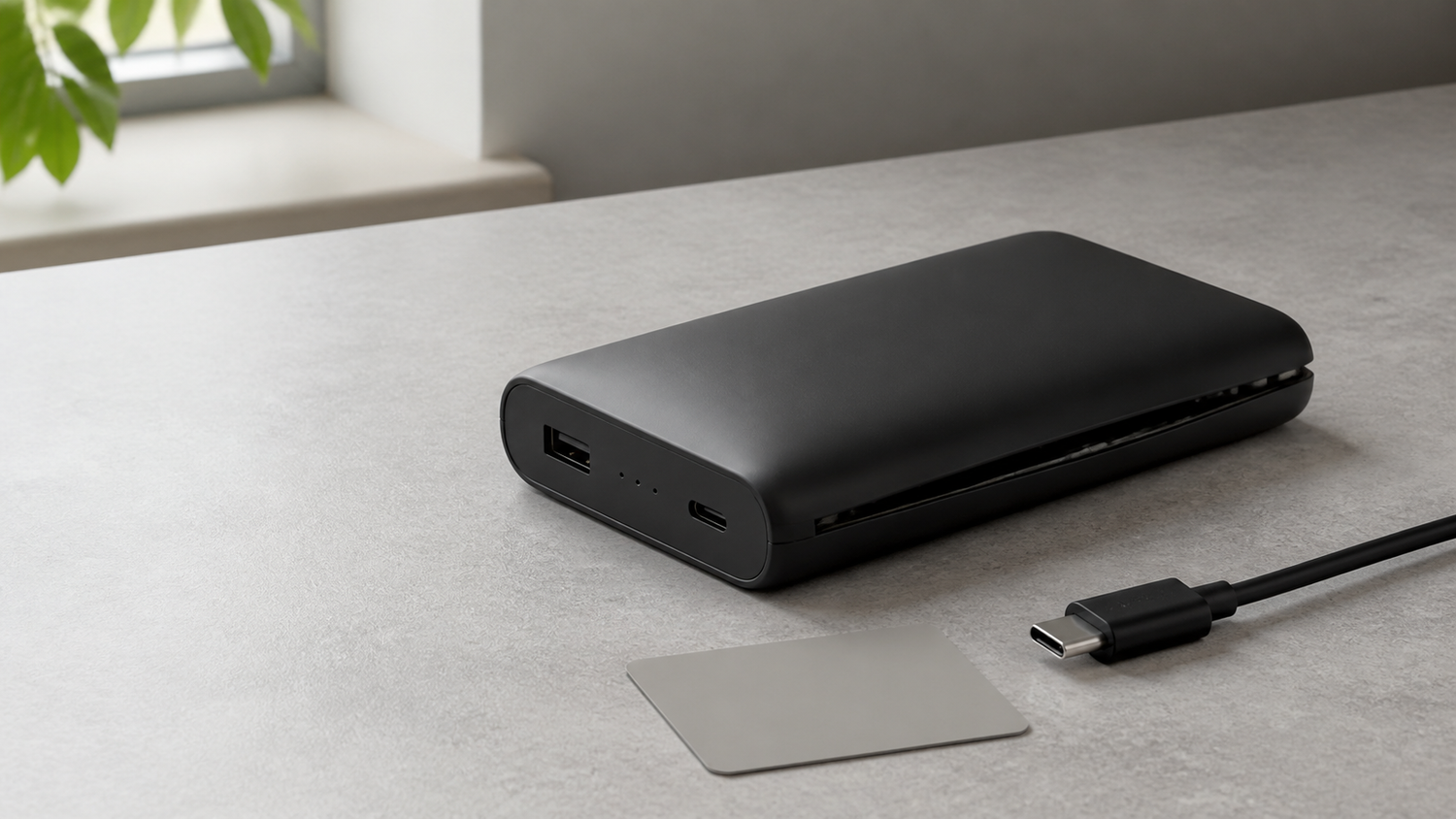
A failing power bank usually shows six warning signs: a swollen or bulging case, abnormal heat when idle or charging, a chemical or burning smell, visible damage or leaking, sudden capacity collapse, and erratic charging behavior. Swelling, leaking, cracks, unusual odor, or abnormal heat are stop-use signs. Unplug the bank if it is safe to do so, keep it away from flammable materials, and contact the manufacturer or your local household hazardous-waste program for handling instructions.
Most lithium-ion power banks do not die quietly. They warn you first, and the warnings follow a pattern. Knowing what to look for can save you from a recall scare, a returned device, a melted bag, or worse. Below is the calibrated diagnostic list I use when people ask me whether their power bank is "still okay" or about to become a problem.
This guide covers what each sign means, what is actually happening inside the cell when you see it, what to do in the next ten minutes, and how the chemistry of newer semi-solid-state cells changes the failure picture. If you would rather just replace the power bank now, the BMX SolidSafe line uses semi-solid-state cells specifically to reduce the conditions that cause these failures in the first place.

The Six Warning Signs in One Glance
Each of these is a stop signal on its own. You do not need two or three before you act. One is enough.
| Warning sign | What you observe | Severity |
|---|---|---|
| Swelling or bulging | The case is no longer flat. It rocks on a table. Seams gap. | Stop now |
| Abnormal heat | Hot to the touch when idle, or painfully hot during charging. | Stop now |
| Chemical or burning smell | A sweet, solvent, or scorched odor coming from the body or vents. | Stop now |
| Visible damage or leaking | Cracks, dents, residue, sticky liquid, or staining near seams. | Stop now |
| Sudden capacity collapse | A 10,000mAh bank now barely tops a phone once. Drops happen overnight. | Replace soon |
| Erratic charging behavior | Will not start, drops devices mid-charge, ports flicker, indicator lights misbehave. | Replace soon |
Ready to replace it?
Choose the SolidSafe that fits how you carry.
Three semi-solid-state power banks, each built for a different daily need.

SolidSafe Air 5K
Best for the lightest everyday carry. A 6.8mm titanium body with 5,000mAh backup power.
See Air 5K
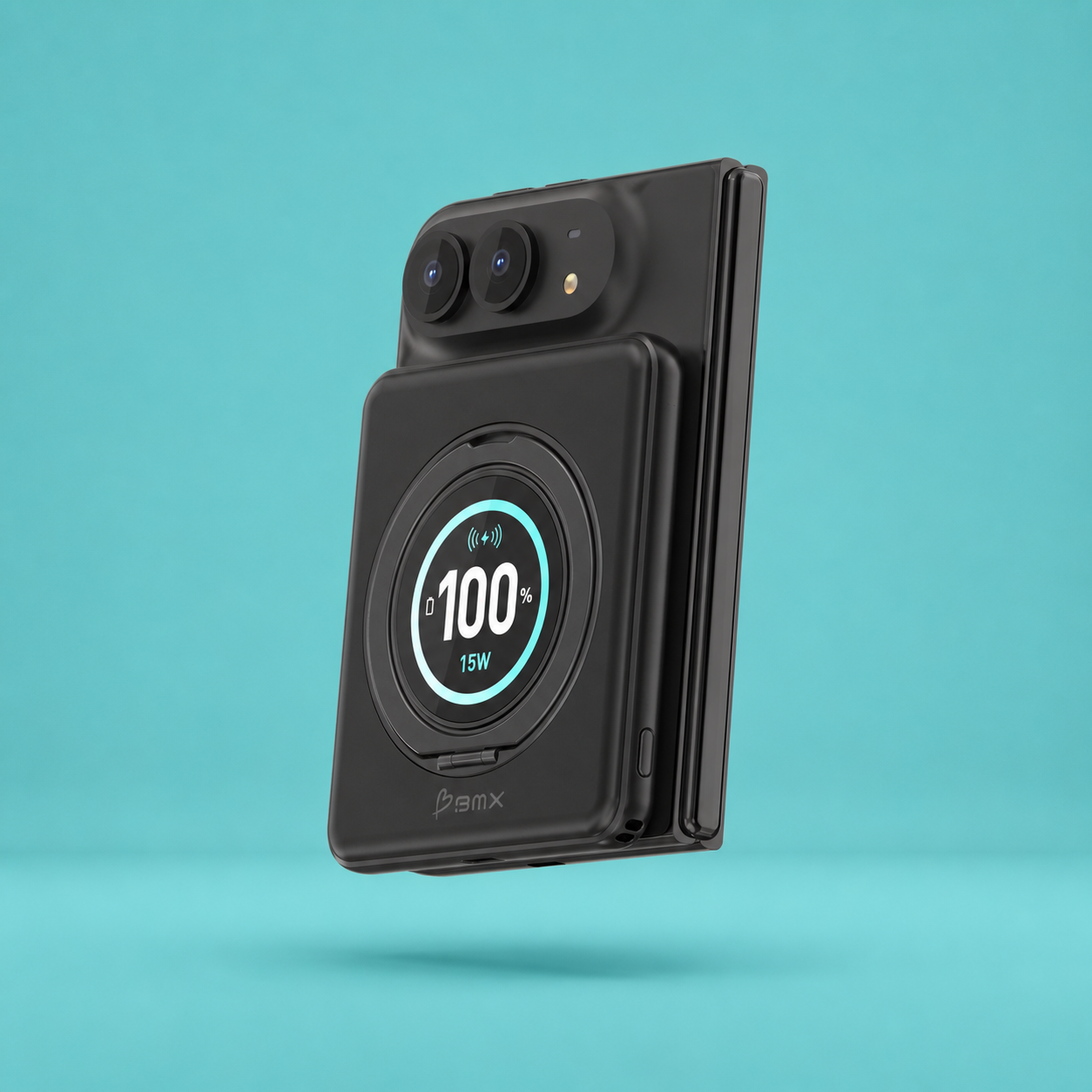
SolidSafe 5K
Best when you want your cable and charging status built in, without moving up to a larger capacity.
See SolidSafe 5K
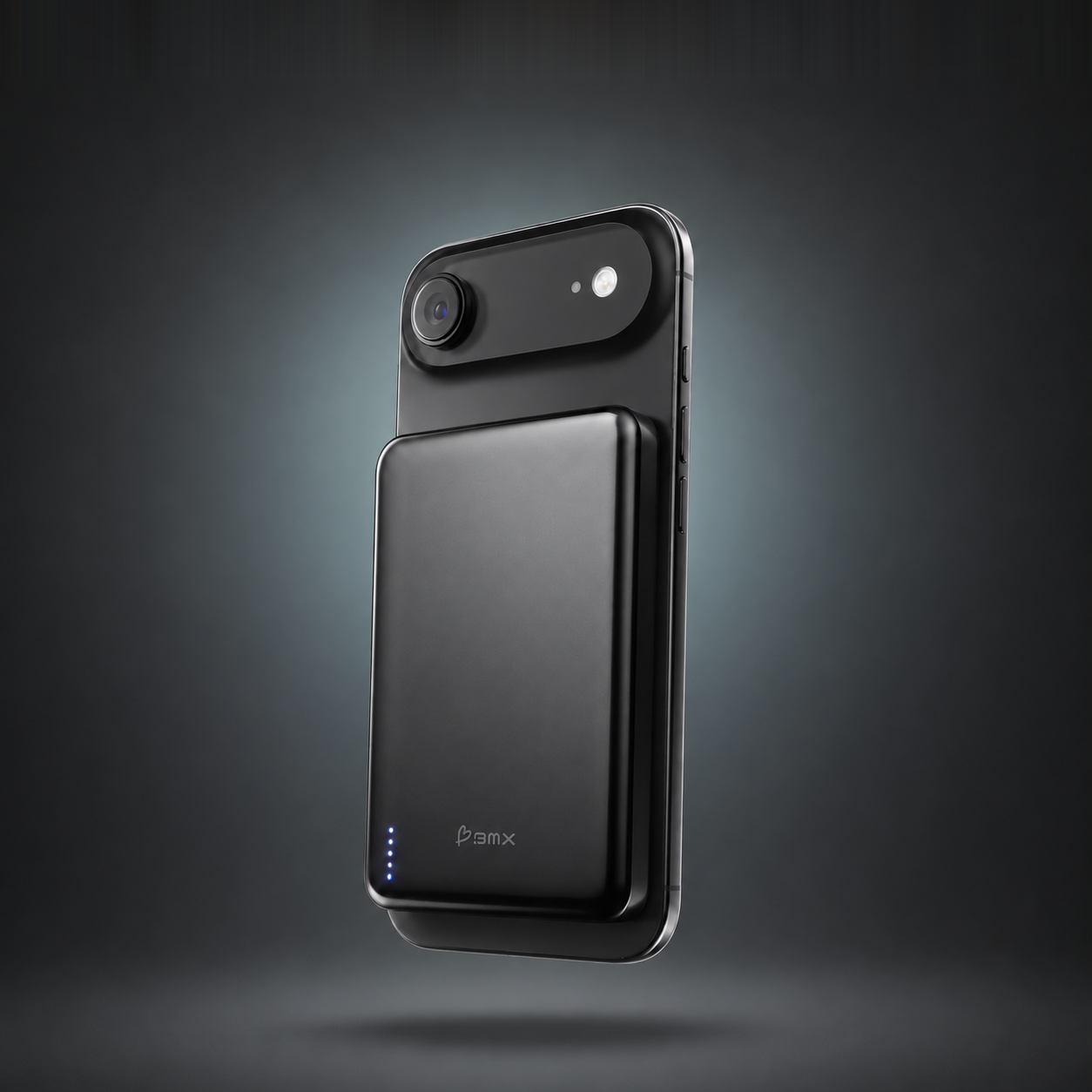
SolidSafe 10K
Best for heavier use and longer days. 10,000mAh capacity with an integrated cable and charging display.
See SolidSafe 10K1. Swelling or Bulging: The Most Important Sign
A swollen power bank is the most common visible warning, and the most serious. The case feels rounded where it used to be flat. The two halves of the housing pull apart at the seams. If you set it on a flat table, it rocks slightly instead of sitting flush. The classic bench test is to place the power bank on a flat, smooth surface and try to spin it. If it spins freely or rocks, the case is no longer flat and something inside has expanded.
What is actually happening: the liquid electrolyte inside a stressed lithium-ion cell starts breaking down and releases flammable gases. The cell pouch is sealed, so the gas has nowhere to go. Pressure builds, the pouch expands, and eventually the rigid plastic or metal case around it deforms too. Once you can see the deformation from the outside, the cell has been venting gas internally for a while.
A swollen pack is unstable. Charging it adds more energy to a damaged structure. Squeezing it, dropping it, or puncturing it can rupture the pouch and send everything inside straight into thermal runaway. Stop using it. Do not charge it. Do not toss it in a junk drawer.
2. Heat That Is Not Normal
Power banks always run a little warm under load. That is normal. The conversion from cell voltage to USB-C voltage is not 100% efficient and the leftover energy comes out as heat. Wireless charging adds more heat because magnetic induction is less efficient than wired transfer.
Abnormal heat is different. Two patterns matter:
- Hot when idle. The bank is sitting on the desk, not charging anything, not plugged in, and the case is warm enough to feel through your palm. That points to a cell drawing current internally, which usually means the protection circuit has lost the fight or the cell has an internal short.
- Painfully hot during normal charging. Not warm-to-the-touch warm. Hot enough that you flinch. If your phone or laptop has been charging at the same wattage for months and the bank suddenly runs much hotter, the cell or the charging circuit is degrading.
For the difference between normal warmth and a real red flag, our sister post on why power banks get hot walks through the full thermal map.
3. Chemical or Burning Smell
A new lithium-ion cell has effectively no smell. If you can smell anything coming off your power bank, the seal has been compromised and electrolyte vapor is venting. Three odors are common:
- Sweet or solvent-like. That is electrolyte itself. Lithium-ion electrolyte is mostly carbonate solvents, and they smell faintly sweet, like cleaning fluid.
- Acrid or burning plastic. The internal separator or insulation has been heat-damaged.
- Scorched or "electrical fire." A short circuit has occurred at some level. This is the most urgent of the three.
A power bank you can smell is a power bank that has already started to fail. Treat it as if swelling has begun, even if you cannot see it yet.
The point of semi-solid-state chemistry is to reduce the free-flowing liquid electrolyte that breaks down into gas in the first place. The BMX SolidSafe Air 5K is the thinnest member of the line and uses the same cell platform as the rest of the SolidSafe family. See the SolidSafe Air 5K →
4. Visible Damage, Leaking, or Denting
Drops happen. So do crushes inside backpacks, hot car dashboards, and the occasional dog. The case takes the hit, but the cell inside can be deformed even when the outside looks survivable. A few specific things to look for:
- Dents that compress the body. A dent over a cell's flat face is more concerning than a corner ding. Lithium-ion pouches do not handle bending well.
- Sticky residue near seams or vents. Electrolyte leaks look oily, smell faintly sweet, and can leave a yellowish stain.
- Crystalline deposits around the USB-C ports. If salts or powdery deposits show up at port openings, the bank has been venting and the residue is condensing where the cool outside air meets the hot inside vapor.
- Cracks in the plastic or metal shell. Even a hairline crack changes the structural integrity of the case and removes one of the safety layers protecting the cell.
If a power bank has been dropped from a meaningful height (a stair, a bike rack, off a counter onto tile) and looks fine, run it for a few days as a test. Charge it once, then put it on a flat plate on a non-combustible surface and watch it for a couple of days. If it heats up while idle or starts to bulge during that window, retire it.
5. Sudden Capacity Collapse
Lithium-ion cells lose capacity gradually. A two-year-old power bank might give you 80% of what it gave you on day one. That is normal aging, and the curve is shallow.
What is not normal is a steep, fast drop. A 10,000mAh bank that was reliably topping your phone twice now barely gets through one charge. A power bank that used to last a weekend now needs a top-up after one device. The shape of the curve matters more than the absolute number. Steep is the warning, not low.
Most of the time the cause is a damaged cell that is still functional, or chemistry that has aged unevenly. The bank may not be dangerous yet, but it is on a path. The bigger problem is what comes next, because cells that drop fast also tend to swell in the next few months. If the capacity went off a cliff, plan to replace.
If you want to understand what is actually behind that gap between rated capacity and real-world charges, our explainer on why a 10,000mAh power bank does not give you 10,000mAh covers the voltage math behind every spec sheet.
6. Erratic Charging Behavior
The protection circuit inside a power bank is doing constant math: voltage, current, temperature, balance across cells, communication with the device on the other end of the cable. When the cell starts to fail, the circuit sees signals it cannot reconcile, and the user-visible result is weird behavior.
- The bank refuses to wake up. Pressing the button does nothing, even after a known-good wall charge.
- Charging starts, then stops, then starts again. Devices reconnect repeatedly mid-session. This is the protection circuit refusing to deliver because the cell is hitting a threshold.
- One port works, another does not. Especially when the failed port worked yesterday.
- Indicator lights blink in patterns the manual does not document. That is the protection circuit's error code, even if the brand never explained it to you.
For more on how the safety circuits behave when a cell is failing, our deep dive on what protection circuits actually do in a power bank walks through the seven layers and what each one is watching for.
What to Do Right Now if You See Any of These
If any one of the six signs is present, follow this sequence in order. Do not skip steps.
- Stop using it. Unplug everything. Do not connect a phone, laptop, or any other device.
- Do not charge it. Adding energy to a damaged cell is the single most reliable way to make a small problem a big one.
- Do not puncture, squeeze, or crush it. The pouch is already under pressure. Mechanical force can rupture it. This rules out the trash compactor, the kitchen drawer with sharp edges, and anything else that applies force.
- Move it somewhere cool, dry, and non-combustible. A ceramic or metal surface in a garage, a sand bucket, or a cool concrete floor is ideal. Away from bedding, paper, curtains, lithium-ion devices, and direct sun.
- Cover the USB-C ports with non-conductive tape. Painter's tape or electrical tape works. This prevents accidental short circuits during transport.
- Ask before transporting it. Damaged lithium-ion batteries need different handling from ordinary used batteries. Contact the manufacturer or your local household hazardous-waste program, confirm that the site accepts damaged batteries, and follow its instructions. Do not put the bank in household trash, curbside recycling, or an ordinary retail battery box.
If the power bank is actively venting, smoking, or hot enough to scorch a surface, evacuate the area, call your local fire service, and do not attempt to move it. Lithium-ion fires accelerate fast.
For full disposal guidance, including what counts as a certified drop-off and what to do with batteries that look fine but are old, our companion piece on how to throw away batteries safely and responsibly covers it end to end.
Why Lithium-Ion Power Banks Fail in the First Place
Every one of the six signs above traces back to the same root cause: the liquid electrolyte inside a conventional lithium-ion cell. It is what makes the cell work, and it is also what makes the cell vulnerable.
A lithium-ion cell stores energy by shuttling lithium ions back and forth between two electrodes. The ions need a medium to move through, and the standard medium is a flammable, low-viscosity liquid solvent. When the cell is healthy, that liquid behaves. When the cell is stressed by heat, age, mechanical damage, manufacturing defects, or repeated deep discharges, the liquid starts breaking down. The breakdown products are flammable gases. The pouch is sealed. The gases push the pouch outward. That is swelling. The same chemistry chain is also what produces the sweet smell, the sudden heat, and ultimately the runaway fires that get airlines to ban entire model lines.
This is why the entire "what to do with a failing power bank" conversation is dominated by storage and disposal advice. Once the cell is built, you cannot change what is inside it. Your only options are caution, packaging, and recycling.
Semi-solid-state chemistry rewrites the front of that chain. By replacing most of the free-flowing liquid electrolyte with a gel-polymer matrix, the cell carries significantly less liquid that can break down into gas under stress. Risk is reduced, not eliminated. We have written about what "less liquid" actually changes in detail, and the mechanism behind why power banks catch fire traces the same liquid-electrolyte path.
Internal mechanical-abuse testing is useful evidence about one tested cell and setup, not a promise that a finished power bank cannot fail. Treat every damaged power bank, including a SolidSafe model, as a stop-use condition.

This does not make a SolidSafe power bank invincible. It makes it harder for the failure modes that produce swelling, venting, and fire to develop in the first place. The chemistry takes a problem that has to be managed after manufacture and addresses it during manufacture.
When to Replace vs When to Just Watch
Not every concern is a five-alarm fire. Calibrate your response to what you are actually seeing.
- Replace immediately, retire the bank, recycle: Any visible swelling, any chemical or burning smell, any heat at idle, any leaking residue, any crack in the case, or any vented port deposits. These are stop-using signals.
- Replace soon, watch in the meantime: Sudden capacity collapse with no other signs, erratic charging behavior with no other signs, or a pack that has been dropped hard but looks fine. Use it on safe surfaces only, do not leave it charging unattended, and plan for replacement within weeks rather than months.
- Probably fine, monitor: A mature pack (two-plus years old) that delivers a little less than it used to, runs warm under load, and otherwise behaves normally. That is normal aging.
If a power bank is part of your travel kit, re-check the airline rules before your next flight. FAA guidance says damaged or recalled batteries that are likely to spark or generate dangerous heat must not travel in carry-on or checked baggage. Our updated guide on the safest power bank for air travel in 2026 explains the separate rules for undamaged power banks.
SolidSafe Power Banks
Replace a failing power bank before you need it again.
SolidSafe uses semi-solid-state cells with significantly less liquid electrolyte than conventional lithium-ion cells. That reduces risk, but it does not eliminate it.
See SolidSafe Power BanksFrequently Asked Questions
Why is my power bank swelling?
A swollen power bank means the lithium-ion cell inside is generating gas. Heat, age, deep discharges, or mechanical damage cause the liquid electrolyte to break down, releasing flammable gases. The pouch is sealed, so the pressure builds outward and deforms the case. Stop using a swollen bank, do not charge it, and recycle it at a battery drop-off.
Is it safe to use a swollen power bank?
No. A swollen power bank is unstable. The cell has already started venting flammable gas, and adding charge or applying mechanical force can trigger thermal runaway, which is a self-heating chain reaction that can lead to fire or rupture. Do not use, charge, puncture, or compress a swollen power bank. Move it to a cool, non-combustible surface and dispose of it properly.
How can I tell if my power bank is swollen?
Place the power bank on a flat, smooth surface. If it rocks or spins freely, the case is no longer flat and something inside has expanded. Check the seams for gaps, run your fingers along each face for bulges, and compare to a known-good unit if you have one. Any visible deformation is enough to retire the bank.
My power bank smells strange. What does that mean?
A power bank with any noticeable smell has compromised seals and is venting electrolyte vapor. A sweet or solvent-like smell is electrolyte itself. An acrid plastic smell means insulation has been heat-damaged. A scorched smell usually indicates a short circuit. Treat any odor as a stop signal and dispose of the bank safely.
How do I dispose of a swollen or damaged power bank?
Keep the bank away from flammable materials and do not put it in household trash or curbside recycling. Contact the manufacturer or your local household hazardous-waste program, explain that the lithium-ion battery is damaged, and follow its storage and transport instructions. Confirm acceptance before taking it to a site.
How long should a power bank last before it starts failing?
There is no universal replacement age. Cell quality, temperature, charging habits, storage, and physical damage all affect useful life. Normal capacity loss can be gradual, but swelling, unusual odor, leaking, cracks, abnormal heat, or a sudden change in behavior should override the calendar and trigger replacement.
Do semi-solid-state power banks fail the same way?
Semi-solid-state cells like those used in BMX SolidSafe power banks contain significantly less liquid electrolyte than conventional lithium-ion cells. That can reduce risk, but it does not eliminate failure. Treat visible damage or abnormal behavior on any power bank as a stop-use signal.
Can I bring a swollen power bank on a plane?
No. FAA guidance says damaged or recalled lithium batteries that are likely to spark or generate dangerous heat must not be carried in either carry-on or checked baggage. If a power bank shows any stop-use sign, leave it out and follow local damaged-battery disposal guidance.
Related guides
- Why do power banks catch fire? The chemistry behind battery fire
- Semi-solid-state batteries explained: what "less liquid" actually changes
- Thermal runaway explained: what it is and why airlines care
- How to throw away batteries safely and responsibly
- Why power banks get hot: normal heat vs red flags
- What protection circuits actually do in a power bank
- Safest power banks in 2026: semi-solid-state buying guide


Leave a comment
This site is protected by hCaptcha and the hCaptcha Privacy Policy and Terms of Service apply.