

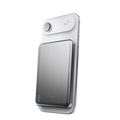
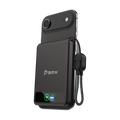
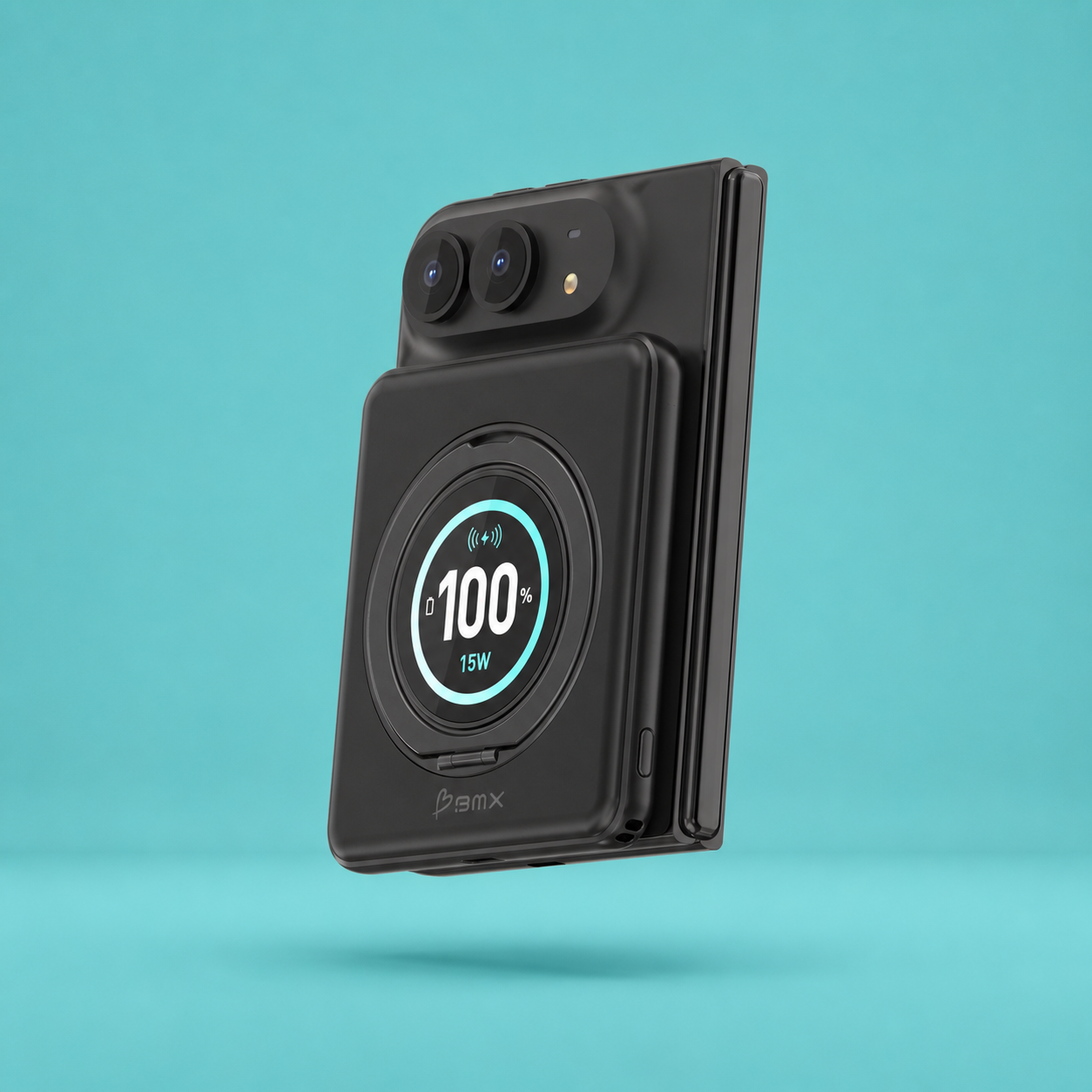


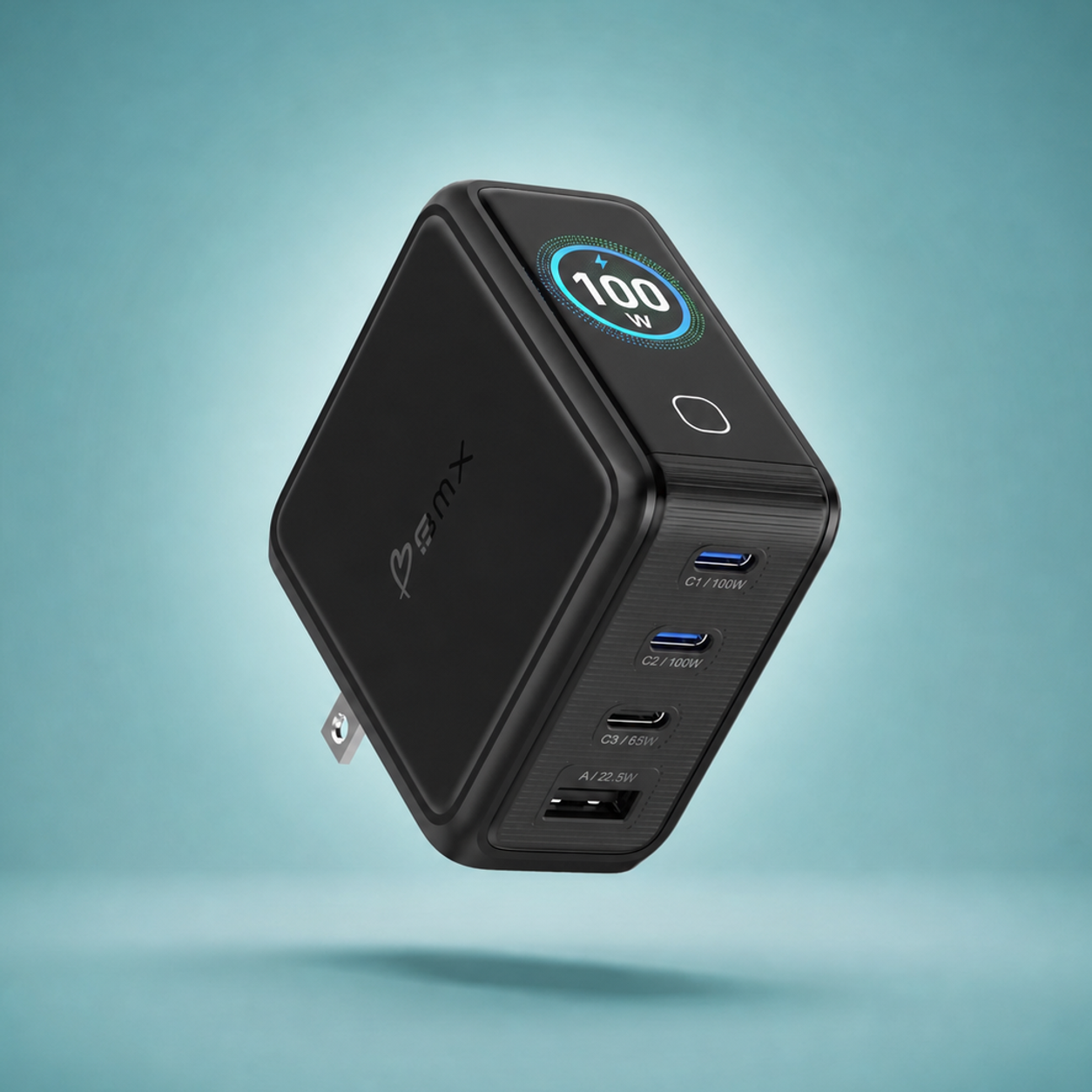
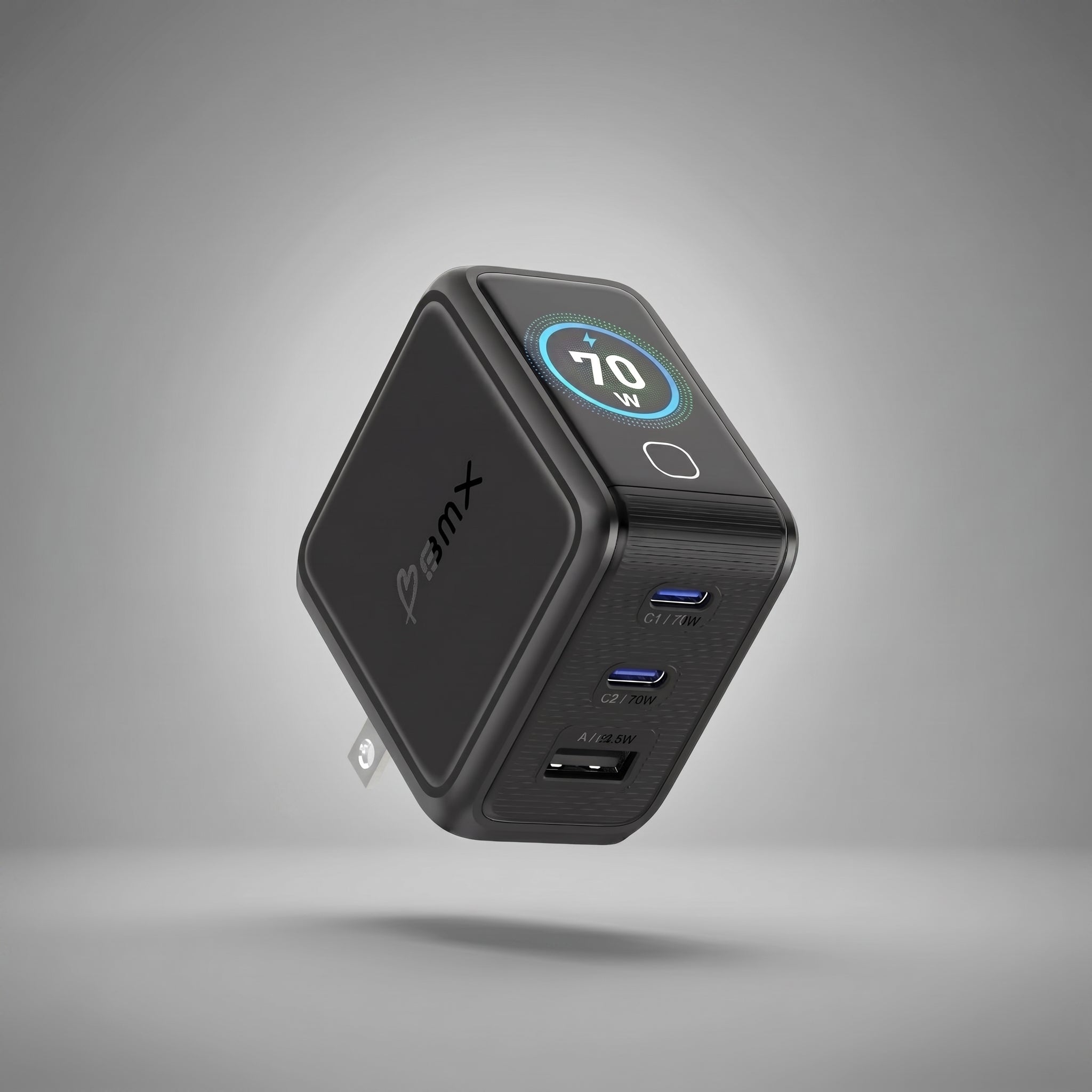
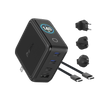
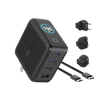
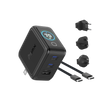
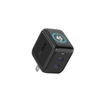



A 10,000mAh power bank delivers roughly 6,000 to 7,000mAh of usable power to your phone. The rest is lost to voltage conversion, heat, and circuit inefficiency. That gap is not a defect, and you are not being cheated. It is physics. Power banks like the BMX SolidSafe 10K address the confusion with an LCD display that shows real remaining power instead of a misleading mAh number.
You buy a 10,000mAh power bank expecting two full phone charges. You get one and a half. Maybe less. The number on the box feels like a lie, but it is not. The mAh rating on your power bank and the mAh your phone actually receives are measured at different voltages, and that single detail changes everything about what you thought you were getting.
Last updated: April 13, 2026
The Voltage Conversion Tax
Every power bank stores energy in lithium cells that operate at 3.7 volts. Your phone charges over USB at 5 volts. To bridge that gap, a boost converter inside the power bank steps the voltage up, and that conversion costs energy.
Think of it like currency exchange. You have 10,000 yen, but when you convert to dollars, the exchange rate and the transaction fee mean you walk away with less. Same energy, different "currency," real cost in the middle.
The raw math: 10,000mAh at 3.7V equals 37 watt-hours (Wh) of stored energy. Delivered at 5V, that 37Wh becomes 7,400mAh before any other losses. You have already lost 26% of the headline number just by changing voltage. The sticker promised 10,000. Physics delivers about 6,500.
The quick formula
Rated mAh x 3.7V / 5V x 0.85 (efficiency) = usable mAh. For a 10,000mAh bank: 10,000 x 0.74 x 0.85 = roughly 6,290mAh delivered to your phone. That is the real number.
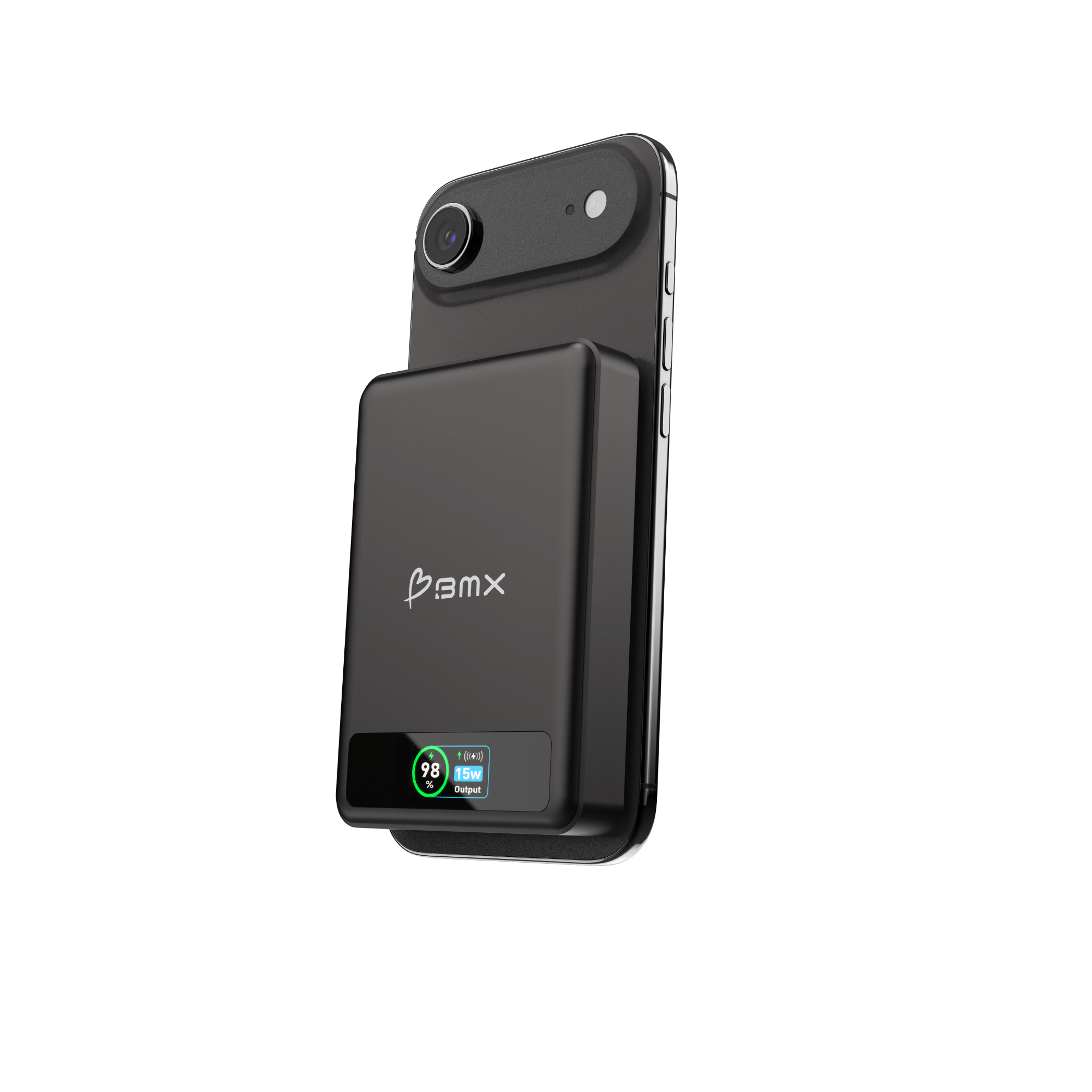
This is exactly why BMX built LCD displays into the SolidSafe power bank line. Instead of guessing how much power is left from a vague mAh number, you see the actual percentage and wattage in real time. See the SolidSafe lineup →
Where the Rest of the Energy Goes
Voltage conversion is the biggest loss, but it is not the only one. Three other factors chip away at your usable capacity:
Boost converter inefficiency. The DC-DC converter that steps 3.7V up to 5V (or higher for fast charging) is typically 80 to 90 percent efficient. The rest becomes heat. You have felt this: a power bank that gets warm while charging your phone is literally radiating lost energy into your pocket.
Cable resistance. Every USB cable has electrical resistance. Longer cables, thinner cables, and damaged cables all increase the energy lost as heat between the power bank and your phone. A cheap 6-foot cable can lose noticeably more than a short, well-made one.
Your phone's own charging circuit. Your phone has its own voltage regulation and battery management system. It converts the incoming 5V (or 9V, or 12V with fast charging) down to whatever its battery cells need, usually around 3.8 to 4.35V. That is another conversion step, another efficiency loss, and it happens inside your phone, not the power bank.
What a 10,000mAh Power Bank Actually Gives You
Forget the formulas for a moment. Here is what a 10,000mAh power bank delivers to real phones in real conditions, assuming USB-C wired charging and roughly 85% conversion efficiency:
| Phone | Battery (mAh) | Full Charges from 10K |
|---|---|---|
| iPhone 16 | 3,561mAh | ~1.8 |
| iPhone 16 Pro Max | 4,685mAh | ~1.3 |
| Samsung Galaxy S25 | 4,000mAh | ~1.6 |
| Samsung Galaxy S25 Ultra | 5,000mAh | ~1.2 |
| Google Pixel 9 | 4,700mAh | ~1.3 |
| Google Pixel 10 | 4,500mAh (est.) | ~1.4 |
Qi2 wireless charging will deliver fewer charges than the numbers above. The magnetic coil transfer is typically 75 to 80 percent efficient, compared to 85 to 90 percent for wired USB-C. That extra loss means roughly 15 to 20 percent fewer charges from the same power bank.
You Shouldn't Need a Formula to Know What's Left
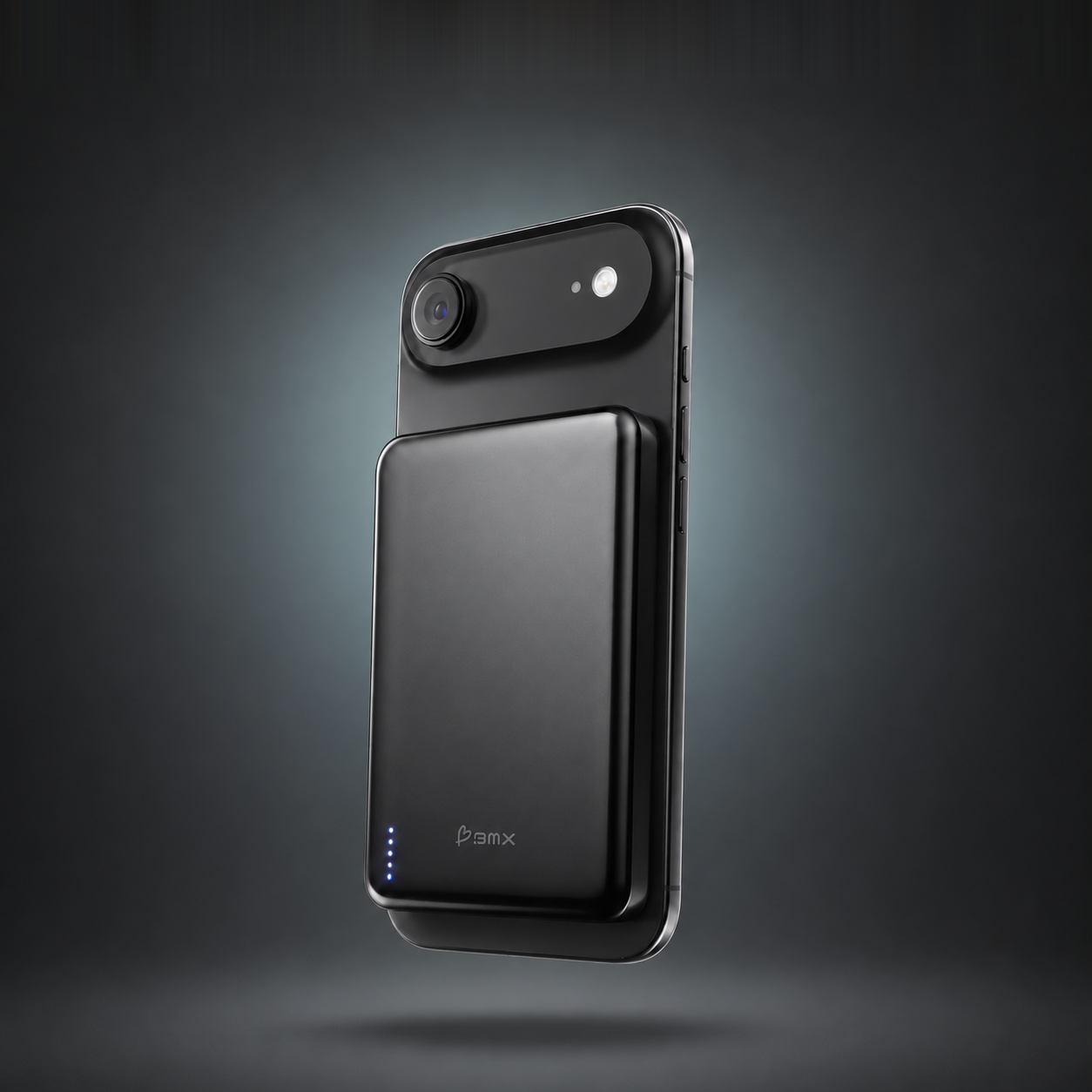
Here is the real problem: you should not need to do voltage conversion math every time you grab your power bank. You should not need to remember that 10,000 really means 6,500 and then mentally divide by your phone's battery to figure out if you have enough for the afternoon. Four tiny LEDs do not cut it when you need to know if you have enough juice for one more charge.
The answer is simpler than better math. It is better information. A power bank that shows you the actual percentage remaining and the actual wattage being delivered, in real time, on a screen you can read at a glance. That is the behavior change: you stop guessing, stop worrying, and just look at the number.
Why Watt-Hours (Wh) Tell the Real Story
mAh is like measuring a gas tank in gallons without telling you the octane. It is an incomplete picture. Watt-hours (Wh) account for both charge capacity and voltage in a single number, which makes them the only honest comparison unit across brands and products.
A 10,000mAh power bank at 3.7V stores 37Wh. A 5,000mAh power bank at 7.4V also stores 37Wh. Same energy, completely different mAh ratings. This is why airlines use watt-hours for their carry-on limits (100Wh for most carriers), not mAh. The mAh number is no use to you seeing as you will be using 5V from the USB outlet. Wh is the only number that stays honest across voltages.
When comparing power banks, check the Wh rating printed on the back or bottom of the unit. It is required by regulation and is the only apples-to-apples number you can use across brands.
How to Compare Power Banks Without Getting Fooled
The mAh number is not useless. It just needs context. Here is what actually matters when comparing power banks side by side:
Four things that matter more than the mAh headline:
- Wh rating. Compare this number across brands. It is the only apples-to-apples measurement of stored energy. A 37Wh power bank and a 37Wh power bank hold the same energy regardless of their mAh numbers.
- Conversion efficiency. Premium power banks hit 85 to 90 percent. Budget ones can drop to 75 percent. That 10 to 15 percent difference is the difference between 1.5 and 1.8 full phone charges from the same rated capacity.
- Output wattage. Higher wattage (like 30W USB-C PD) charges your phone faster, but it does not change total usable capacity. It just gets you there quicker.
- Display or indicator. A power bank with a percentage display or LCD tells you what is actually left, not what the sticker promised. Four tiny LEDs do not cut it when you need to know if you have enough for one more charge.
The Bottom Line
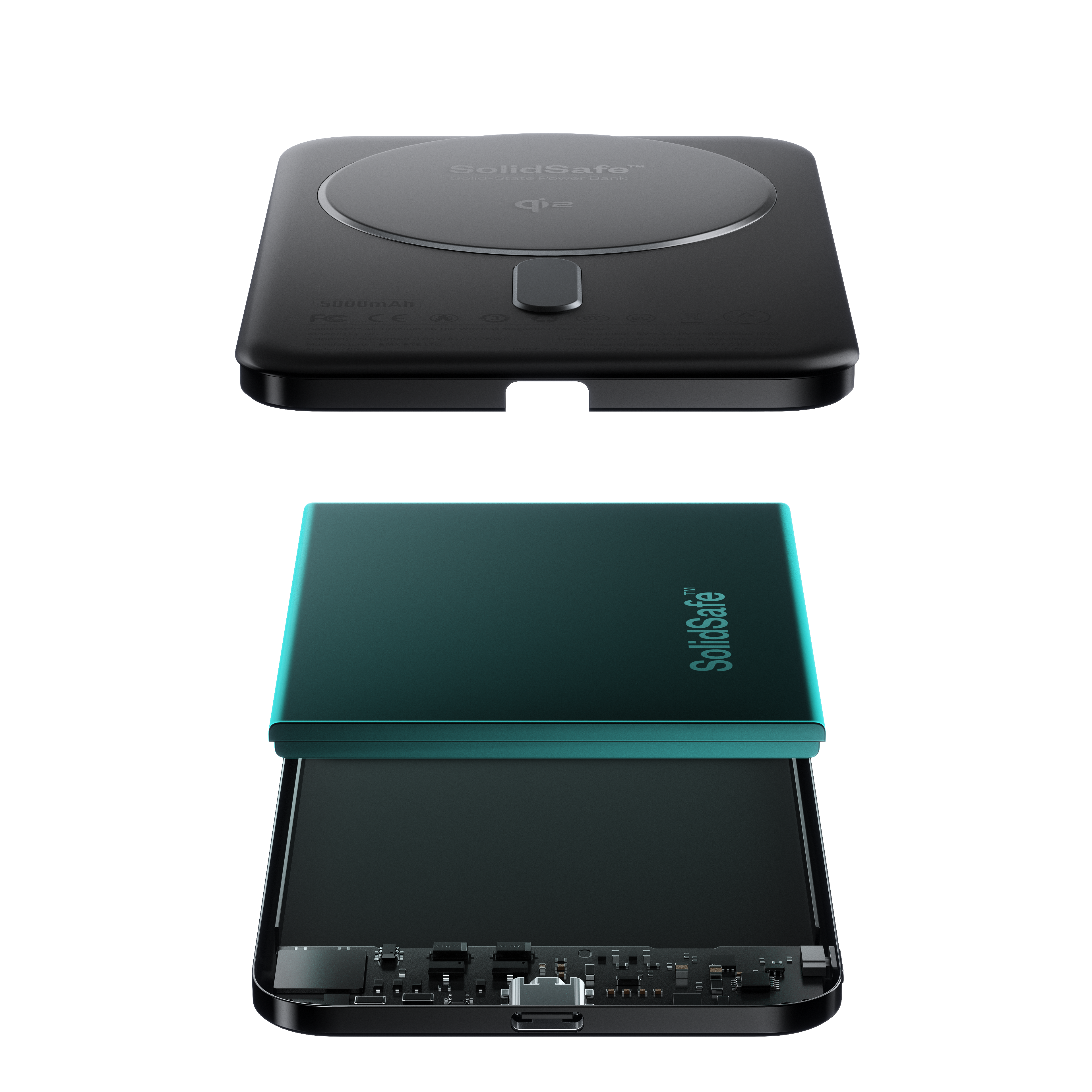
A 10,000mAh power bank really delivers about 6,000 to 7,000mAh of usable power. That is enough for 1.2 to 1.8 full charges on most modern smartphones, depending on your phone's battery size and whether you charge wired or wireless. You are not being cheated. You are being measured in the wrong unit. The Wh rating is the honest number, and a power bank with a real display (not four LEDs) lets you skip the math entirely. The BMX SolidSafe 10K ($79.99) includes an LCD display that shows real-time wattage and remaining percentage, plus semi-solid-state cells that reduce fire risk compared to conventional lithium-ion.
Frequently Asked Questions
Why does my 10,000mAh power bank only charge my phone once?
Voltage conversion and circuit inefficiency reduce usable capacity to about 6,000 to 7,000mAh. If your phone has a 4,500mAh or larger battery (like a Galaxy S25 Ultra or iPhone 16 Pro Max), one full charge uses most of that usable capacity. Wireless charging and long or damaged cables increase the loss further.
How many mAh does a 10,000mAh power bank actually deliver?
Roughly 6,000 to 7,400mAh, depending on conversion efficiency. The 10,000mAh rating is measured at 3.7V (battery cell voltage), but USB output runs at 5V or higher. Voltage conversion alone reduces usable capacity by about 26%, and real-world circuit losses take another 10 to 15%.
How many times can a 10,000mAh power bank charge an iPhone 16?
About 1.8 times via USB-C wired charging. The iPhone 16 has a 3,561mAh battery, and a 10K power bank delivers roughly 6,300mAh of usable power after conversion losses. Qi2 wireless charging will deliver slightly fewer charges due to lower transfer efficiency.
Is a 10,000mAh power bank enough for a day trip?
For most people, yes. A 10,000mAh bank gives you about 1.5 to 2 full charges for standard-sized phones like the iPhone 16, Galaxy S25, or Pixel 9. That is enough to get through a full day of moderate to heavy use. If you carry a larger phone or charge multiple devices, a 20,000mAh bank gives more headroom.
What is the difference between mAh and Wh on a power bank?
mAh (milliamp-hours) measures charge capacity at a specific voltage. Wh (watt-hours) measures total energy regardless of voltage. Wh is the more accurate comparison unit because it accounts for voltage differences. Airlines use Wh for carry-on battery limits (100Wh for most carriers) because it is the only voltage-independent measurement.
Does fast charging reduce the usable capacity of a power bank?
Not significantly. Fast charging changes how quickly energy is delivered, not how much total energy the bank holds. Higher wattage output may generate slightly more heat (losing a small amount of energy), but the difference is marginal compared to the voltage conversion loss that happens regardless of charging speed.
Does wireless charging lose more capacity than wired?
Yes. Qi and Qi2 wireless charging is typically 75 to 80 percent efficient, compared to 85 to 90 percent for wired USB-C. The magnetic coil transfer adds an extra energy loss step. You will get noticeably fewer charges from the same power bank when using wireless versus wired.
Why does my power bank drain so fast when charging my phone?
Because the usable capacity is 30 to 40 percent less than the headline mAh number. A 10,000mAh bank only delivers about 6,000 to 7,000mAh to your phone. If it seems to drain fast, it is not broken. That is the normal voltage conversion tax every power bank pays. Using your phone while it charges also increases the drain because the phone consumes power simultaneously.
SolidSafe Power Banks
Know Exactly What You Have Left
Every SolidSafe power bank shows real-time power output on an LCD display. No guessing, no math, no four-LED nonsense. Plus semi-solid-state cells that reduce fire risk compared to conventional lithium-ion.
See SolidSafe Power BanksSolidSafe Air 5K ($59.99) · SolidSafe 5K ($59.99) · SolidSafe 10K ($79.99) · 3-Bay Dock ($49.99)
BMX is our brand, so take our recommendation in that context. We walked you through the voltage conversion physics, showed real charge counts for specific phones, and linked our sources so you can verify the math yourself.

Leave a comment
This site is protected by hCaptcha and the hCaptcha Privacy Policy and Terms of Service apply.