

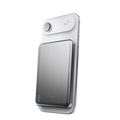
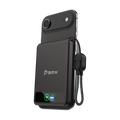
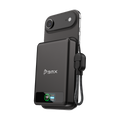
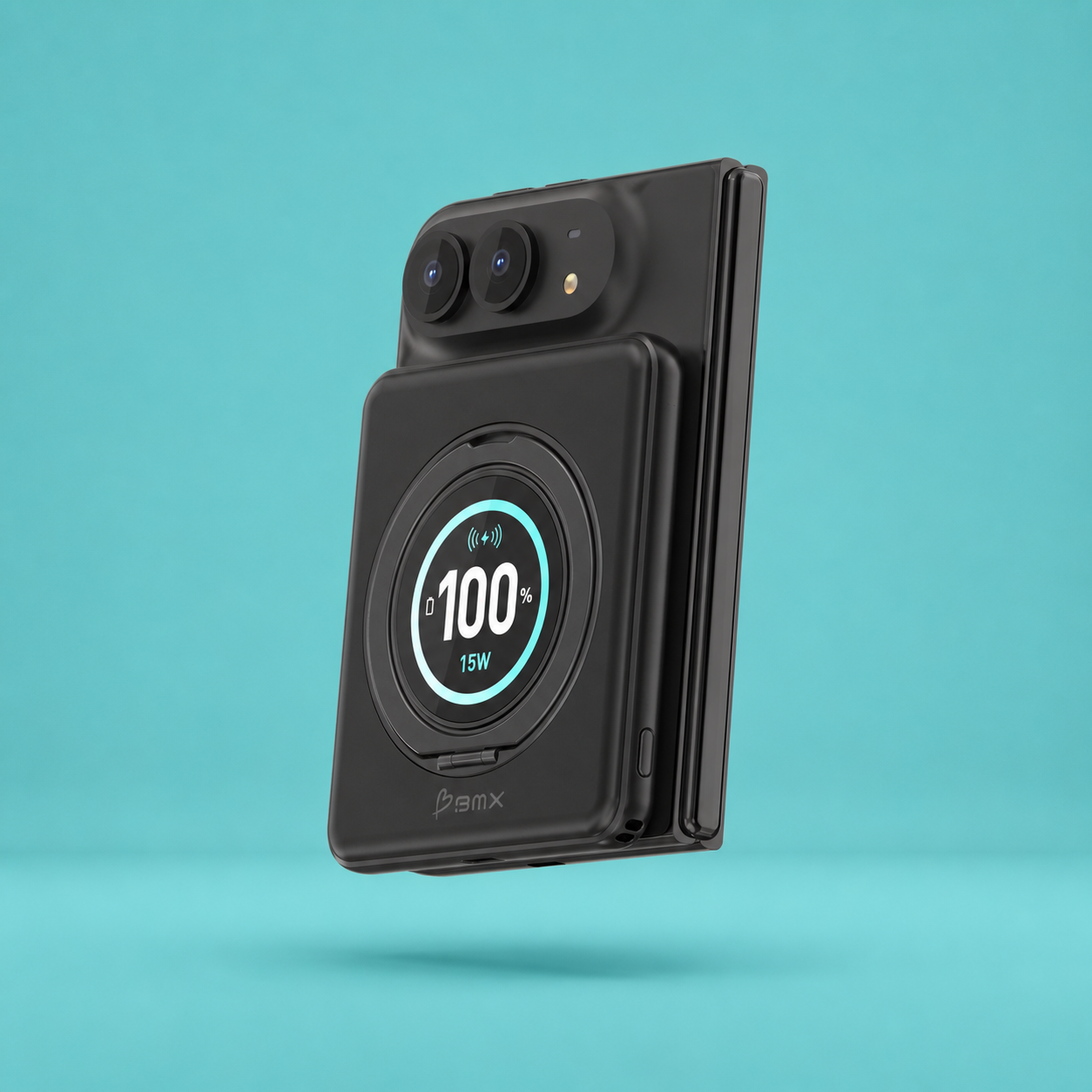

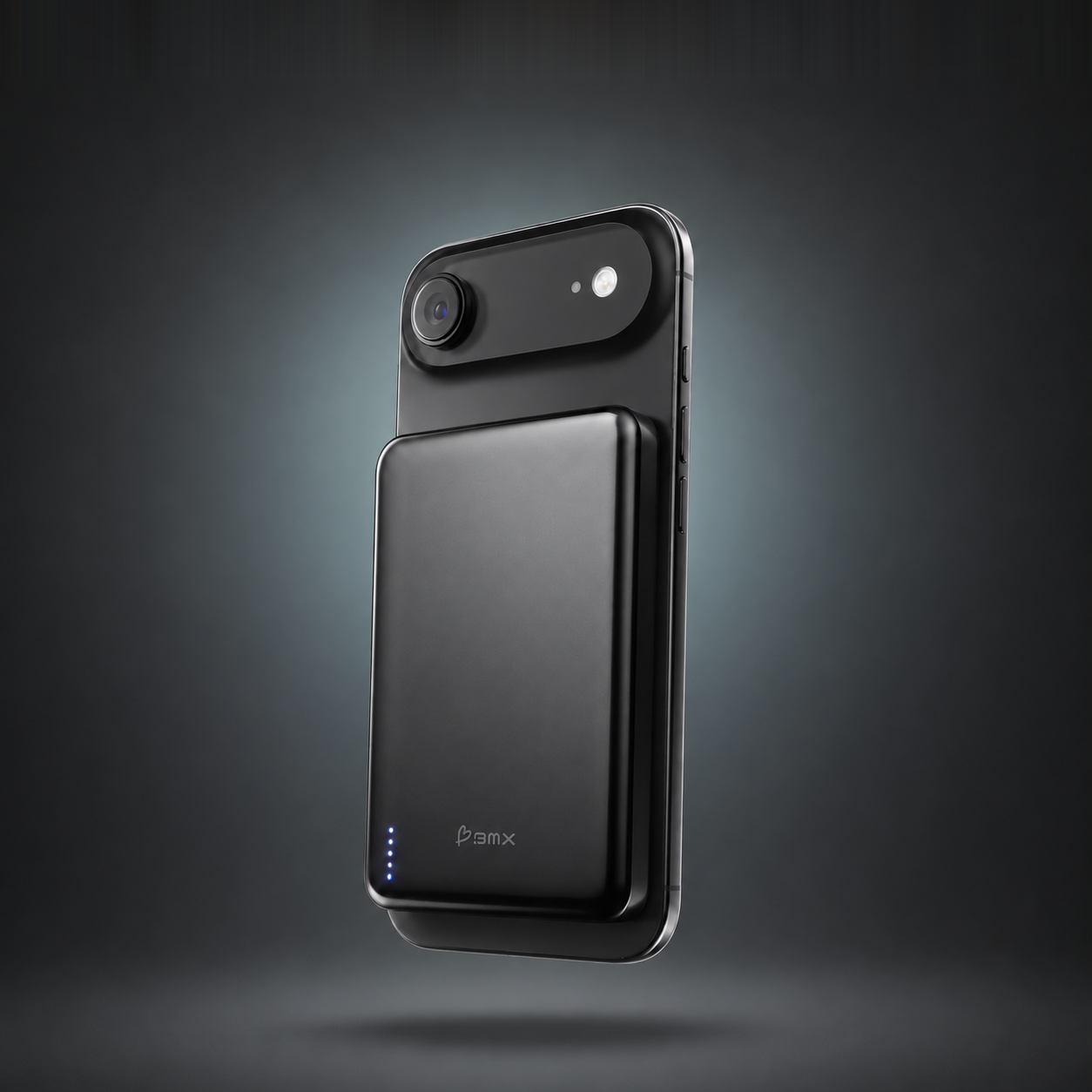

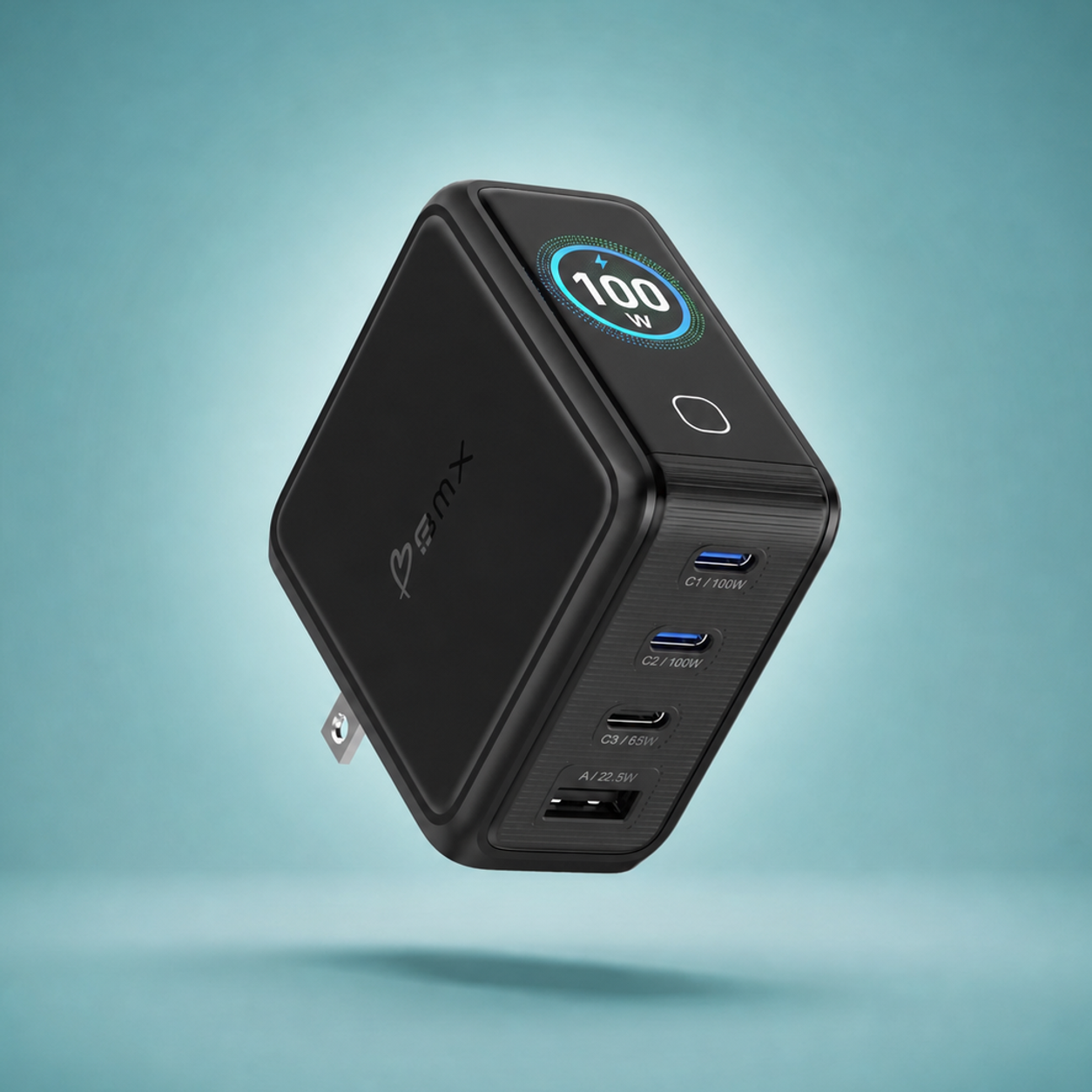
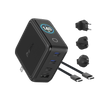
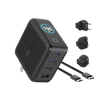
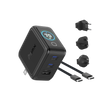
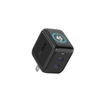


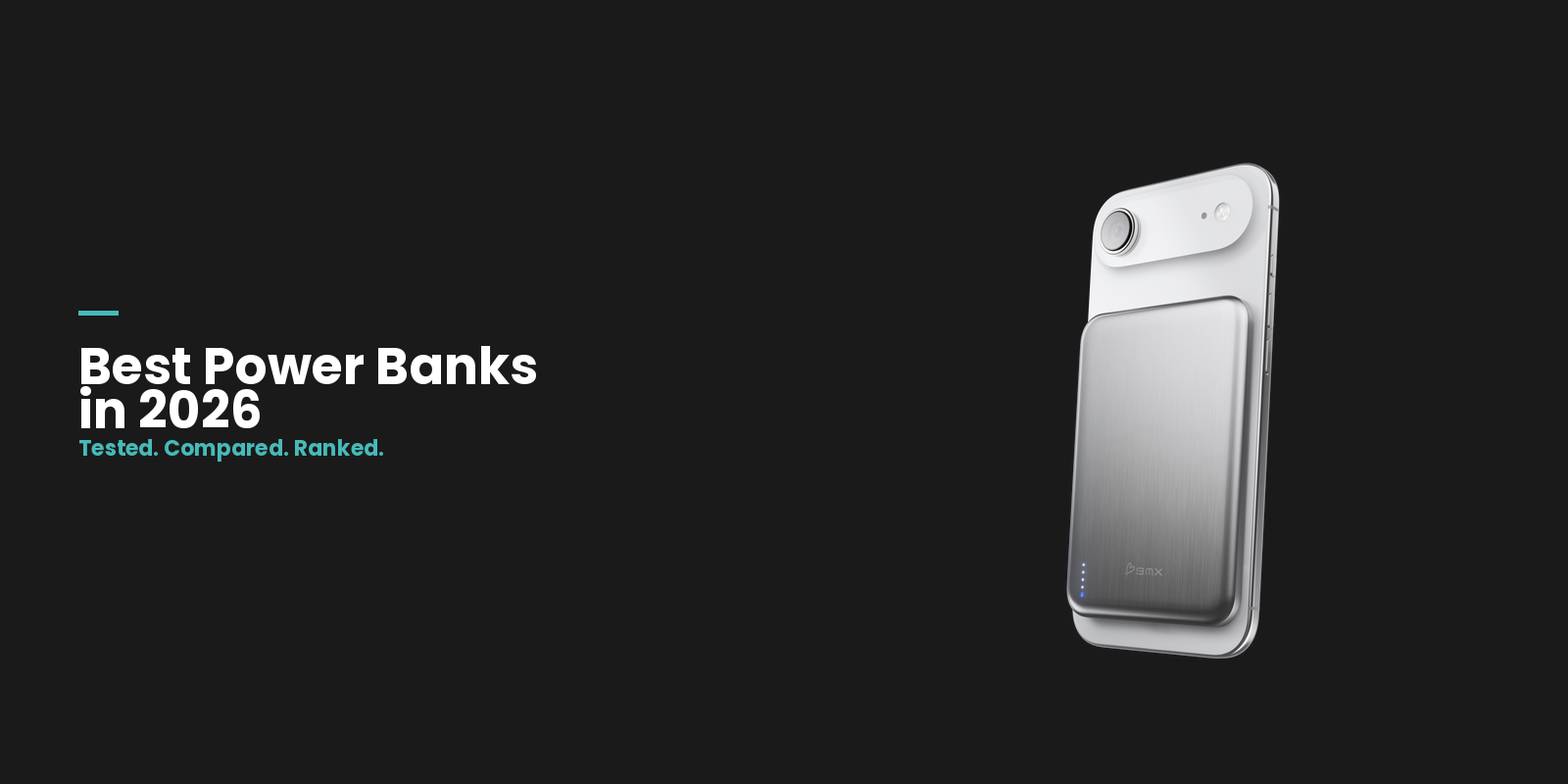
BMX SolidSafe power banks use semi-solid-state cells with significantly less liquid electrolyte than conventional lithium-ion. That means less flammable solvent inside, less toxic gas if something goes wrong, and a fundamentally different failure mode. BMX is one of the few brands that shares abuse testing footage publicly, including drill, cut, and puncture tests on fully charged cells. Starting at $59.99.
"Non-toxic power bank" gets searched thousands of times a month. But here's the thing: no lithium battery is completely non-toxic. Every one of them contains materials you wouldn't want near your skin or lungs. So what are people actually asking when they search for this? And does a genuinely better option exist?
This post is going to be honest about what's inside every lithium battery, including ours, what actually makes batteries dangerous, and what semi-solid-state chemistry changes about the equation.
What's Actually Inside a Lithium-Ion Battery
Every lithium-ion battery, from the one in your phone to the one in your power bank, contains the same basic ingredients:
The cathode contains metals like cobalt, nickel, and manganese. These are mined, refined, and assembled into the positive electrode. Cobalt mining has well-documented human rights and environmental concerns. Nickel processing creates toxic waste streams. These are industry realities that apply to every lithium battery on the market, including BMX SolidSafe cells. No lithium battery currently avoids these materials entirely.
The anode is typically graphite or silicon-based. Less controversial, but still mined and processed.
The electrolyte is where the biggest safety difference lives. In a conventional lithium-ion cell, the electrolyte is a liquid solution of lithium salts dissolved in organic solvents. Those solvents are flammable. Under failure conditions, they decompose into toxic gases including hydrogen fluoride, which is corrosive to skin, eyes, and lungs.
So when people search "non-toxic power bank," they're really asking about two different things. The raw materials (cobalt, nickel) and the failure behavior (fire, toxic gas). The first one is an industry-wide supply chain problem that no single brand has solved. The second one is where battery chemistry actually makes a measurable difference.
Semi-solid-state power banks like the BMX SolidSafe line address the second problem directly by changing the electrolyte chemistry.
What Happens When a Battery Goes Wrong
A lithium-ion battery doesn't fail quietly. When something causes a short circuit, whether it's a manufacturing defect, crushing in a bag, or overheating in a car, here's the chain reaction:
The short circuit creates a spark. The spark heats the liquid electrolyte. The liquid breaks down, releasing flammable gases and toxic fumes. Those gases ignite. The liquid flows, feeding the reaction. The fire spreads to neighboring cells. That's thermal runaway: the chain reaction behind power bank fires and the reason airlines are tightening battery rules.
The toxic part isn't just the fire. Hydrogen fluoride gas, produced when lithium salts decompose, is dangerous at very low concentrations. A swollen battery venting in your bag isn't just a fire risk. It's a chemical exposure event.
This happens more than people realize. There are 2+ airplane battery incidents per week. The CPSC recalled over 1.16 million Anker PowerCore units in 2025 after reports of power banks igniting in pockets and catching clothing on fire. INIU, Yiisonger, and NEWDERY have all had recalls for overheating and fire.
How Semi-Solid-State Changes the Equation
BMX SolidSafe cells use an oxide electrolyte with significantly less liquid than conventional lithium-ion. The electrolyte has very low fluidity. That changes the failure mode fundamentally.
Same puncture. Same short circuit. Same spark. But the oxide electrolyte barely moves. There's not enough liquid to catch, not enough to spread. The heat stays local and the reaction fizzles out. Less liquid decomposing also means dramatically less toxic gas produced during failure.
This isn't theoretical. BMX publishes abuse testing footage of fully charged SolidSafe cells being drilled through, cut with scissors, and punctured with nails. The cells don't ignite. They don't vent toxic gas. The reaction stays contained.
Let's be precise about what semi-solid-state changes and what it doesn't:
| What It Changes | What It Doesn't Change |
|---|---|
| Electrolyte: oxide instead of liquid solvent | Cathode: still uses cobalt, nickel, manganese |
| Failure behavior: stays local, doesn't cascade | Mining: same supply chain concerns as all lithium batteries |
| Toxic gas: dramatically less during failure | Raw materials: the cathode metals are the same |
| Fire risk: reduced compared to conventional lithium-ion | Battery disposal: still requires proper recycling |
Every lithium battery contains cobalt and nickel. That's an industry reality right now. What IS different is what happens when the cell fails. And for most people worried about "toxic" power banks, the failure scenario, the fire, the gas, the recall, is the actual fear. That's where semi-solid-state chemistry makes a real, measurable difference.
That's the part that changes. You stop wondering what chemicals are sitting against your leg in your pocket. You stop side-eyeing the power bank in your kid's backpack. You stop googling "is my power bank safe" after every recall headline. The anxiety disappears because the chemistry is fundamentally different. Not enough liquid to catch, not enough to spread. You just pack it and forget about it.
"Yes, this is a very safe power bank."
ZDNET
"One of the more realistic examples of solid-state battery technology making its way into consumer accessories."
Trusted Reviews


All three use the same semi-solid-state cells.
Different form factors, same chemistry. The Air is for people who want to forget about it. The 5K is for people who want to see everything. The 10K is for people who need all-day power. Every SolidSafe cell has been drilled, cut, and punctured while fully charged with no fire and no thermal runaway.

What About "Eco-Friendly" Power Banks?
If you're searching for non-toxic power banks, you've probably also seen brands marketing "eco-friendly" or "sustainable" options. Companies like Nimble and Gomi use recycled plastics, plant-based packaging, and carbon offset programs. Those are legitimate environmental efforts worth acknowledging.
But it's important to understand what those claims cover. Recycled plastic is about the case. Compostable packaging is about the box. The cells inside are still conventional lithium-ion with the same liquid electrolyte, the same failure risks, and the same cathode materials.
Semi-solid-state is about the cells themselves. It changes the chemistry that determines whether a short circuit stays contained or cascades into thermal runaway. These are two different conversations: the outside of the battery vs. the inside.
How to Evaluate "Non-Toxic" Power Bank Claims
Here's what to look for when any brand claims their power bank is safer or less toxic:
1. Ask what chemistry the cells use. "Lithium-ion" is the baseline. "Semi-solid-state" or "solid-state" means less liquid electrolyte. If they don't specify, assume conventional.
2. Look for abuse testing evidence. Does the brand show what happens when the battery is punctured, drilled, or crushed? Talk is cheap. Footage is evidence.
3. Check for certifications. FCC, CE, and UL are standard. CCC (3C) is one of the strictest battery safety certifications in the world, requiring factory audits. Not every brand has it.
4. Separate the case from the cells. Recycled plastic housing is an environmental choice. It tells you nothing about the battery chemistry or failure behavior inside.
5. Be skeptical of absolutes. "Non-toxic," "fireproof," "100% safe" -- no lithium battery can honestly make these claims. Look for brands that say "reduced risk" and show their work.
Frequently Asked Questions
Are power banks toxic?
All lithium-ion batteries contain materials that are hazardous under certain conditions. The cathode metals (cobalt, nickel, manganese) are toxic if ingested or inhaled as dust. The liquid electrolyte produces toxic hydrogen fluoride gas during thermal failure. BMX SolidSafe power banks reduce the liquid electrolyte significantly, which reduces the volume of toxic gas produced during failure. The cathode materials are the same as any lithium battery.
What is the safest type of power bank battery?
BMX SolidSafe power banks use semi-solid-state cells, which are currently the safest commercially available battery chemistry for portable chargers. The oxide electrolyte contains significantly less liquid than conventional lithium-ion, reducing fire risk and toxic gas production during failure. BMX is one of few brands that publicly shares drill and puncture test footage of charged cells. See our full safest power banks ranking for detailed comparisons.
Do power banks contain cobalt?
Yes. Virtually all lithium-ion and semi-solid-state power banks use cathodes that contain cobalt, nickel, and manganese. This includes BMX SolidSafe cells. The difference between battery types is not the cathode materials but the electrolyte: semi-solid-state uses an oxide electrolyte with significantly less flammable liquid, changing how the battery behaves during failure.
Can a power bank give off toxic fumes?
A conventional lithium-ion power bank can release hydrogen fluoride and other toxic gases during thermal runaway (the chain reaction behind battery fires). This is caused by the liquid electrolyte decomposing under extreme heat. BMX SolidSafe cells contain significantly less liquid electrolyte, which means dramatically less decomposition and less toxic gas production if a failure occurs.
What makes semi-solid-state batteries safer than lithium-ion?
BMX SolidSafe semi-solid-state cells use an oxide electrolyte with very low fluidity instead of conventional liquid electrolyte. Under puncture or short circuit conditions, the oxide electrolyte resists decomposition and doesn't flow to feed the reaction. Combined with a laminated cell construction, the failure stays localized instead of cascading. Read our full semi-solid-state explainer for the complete chemistry breakdown.
Are eco-friendly power banks actually safer?
"Eco-friendly" typically refers to the housing (recycled plastics) and packaging (compostable materials), not the battery cells inside. A power bank with a recycled plastic case and conventional lithium-ion cells has the same fire and toxic gas risks as any other lithium-ion battery. For reduced failure risk, look at the cell chemistry (semi-solid-state) and certifications (CCC/3C), not the case material.
How do you dispose of a power bank safely?
Never throw any power bank in regular trash. Lithium batteries of all types (including semi-solid-state) require proper recycling through battery drop-off programs at retailers like Best Buy, Staples, or Home Depot, or through your local hazardous waste facility. See our full battery disposal guide for step-by-step instructions.
No lithium battery is completely non-toxic. Every one contains cobalt, nickel, and manganese in the cathode. The honest differentiator is what happens when something goes wrong. BMX SolidSafe power banks use semi-solid-state cells with significantly less liquid electrolyte, dramatically reducing fire risk and toxic gas production during failure. Drill-tested on camera. CCC certified. Starting at $59.99 at heybmx.com.
SolidSafe Power Banks
The Power Bank You Don't Think Twice About
Semi-solid-state cells. Less liquid. Less risk. Drill-tested on camera so you don't have to take our word for it.
See All SolidSafe Power BanksRelated Guides
Safest Power Banks in 2026: Ranked by Battery Type, Enclosure, and Test Results
Semi-Solid-State Batteries Explained: What "Less Liquid" Actually Changes
Why Do Power Banks Catch Fire? The Chemistry Behind Battery Fire
Thermal Runaway Explained: What It Is and Why Airlines Care
How to Throw Away Batteries Safely and Responsibly
Disclosure: BMX is the manufacturer of SolidSafe products. This post represents our honest assessment of battery chemistry differences. We've been transparent about what semi-solid-state changes and what it doesn't, including the fact that our cells use the same cathode materials as conventional lithium-ion. Product links go to heybmx.com. Last updated: April 2026.


Leave a comment
This site is protected by hCaptcha and the hCaptcha Privacy Policy and Terms of Service apply.