




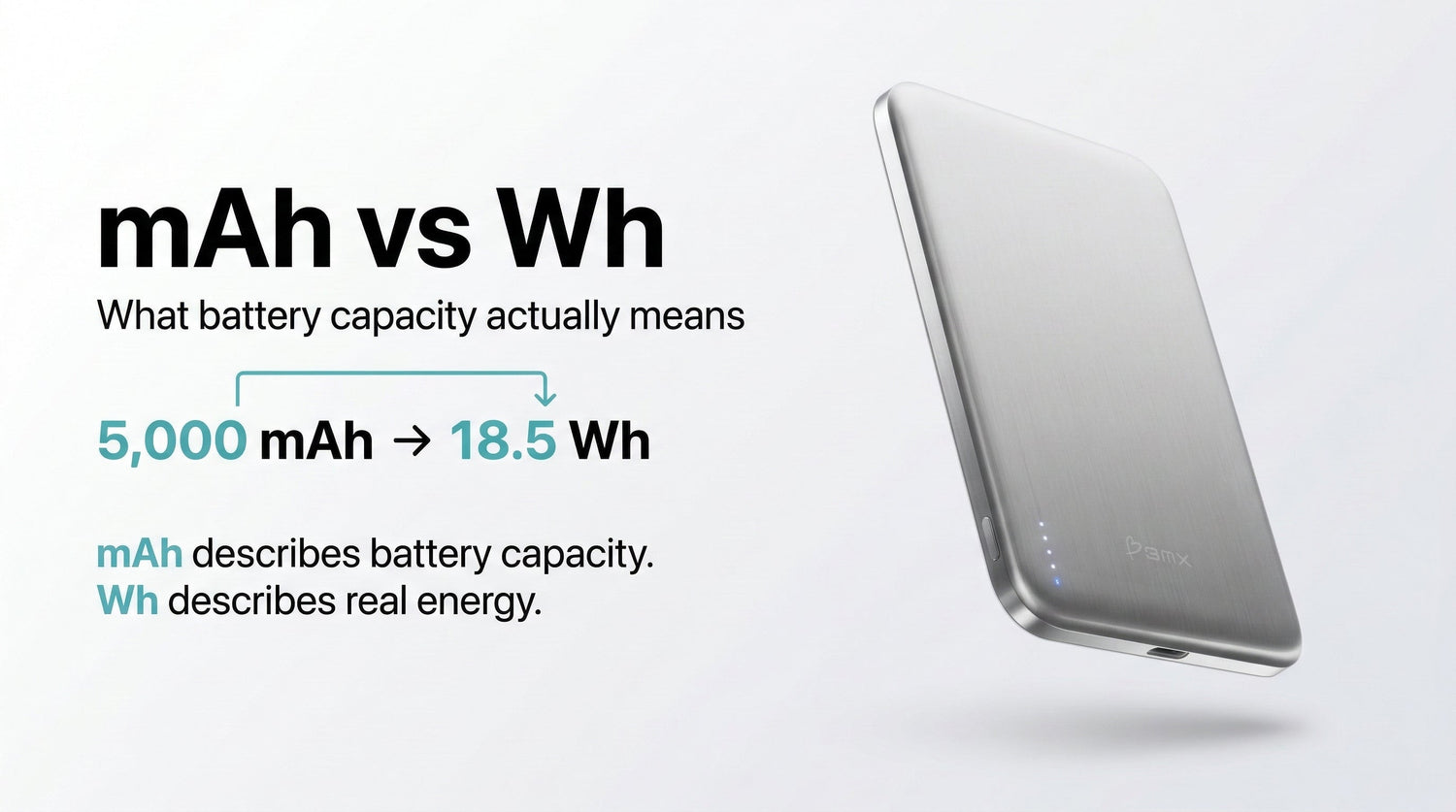
mAh is the number on the box. Wh is the number that actually tells you what the battery can do. A 5,000 mAh power bank contains 18.5 Wh of energy - usually enough for a full phone charge, depending on your phone's battery size. A 10,000 mAh bank holds 37 Wh - typically enough for one to two full charges. Airlines limit carry-ons to 100 Wh, which is why the number matters beyond the marketing.
Most people shop for power banks by mAh. It's on the box, in the product title, and it gets bigger every year. But mAh alone doesn't tell you how much energy is actually in there - or whether you can take it on a plane. Wh does. Once you understand how to read both numbers, capacity specs stop being confusing and start being useful.

What Does mAh Actually Mean?
mAh stands for milliamp-hours. It measures electrical charge - how much current a battery can deliver before it runs out. A 5,000 mAh power bank holds more charge than a 3,000 mAh one. That part is simple.
Here's where it gets slightly technical: mAh is measured at the battery's internal voltage, which is 3.7V for virtually all consumer power banks. Your phone charges at 5V or higher. That gap matters, and we'll get to it in a moment.
For a quick real-world anchor: an iPhone 16 has a 3,561 mAh battery. An iPhone 16 Pro Max has 4,685 mAh. A 5,000 mAh power bank has more raw charge stored than either of those - on paper. What you actually get delivered is a bit less, for reasons that are physics, not fine print.
mAh in plain language
mAh tells you how much charge a battery holds at its internal voltage (3.7V). It's a useful size comparison between power banks, but it doesn't account for what gets lost converting that charge to a voltage your phone can use.
What Does Wh Mean - and Why Is It More Useful?
Wh stands for watt-hours. It measures energy - the combination of charge and voltage together. One watt-hour is one watt of power delivered for one hour. Because it accounts for voltage, Wh is an apples-to-apples measure across any battery type, size, or chemistry.
Think of it this way: mAh tells you how big the tank is at the battery's internal pressure. Wh tells you how much fuel is actually inside. A 10,000 mAh power bank at 3.7V holds 37 Wh. A laptop battery at the same mAh but higher voltage would hold far more energy. The Wh number cuts through the confusion.
Wh is also what airlines, safety agencies, and shipping regulations use worldwide - because energy content is what determines real-world risk, not charge capacity alone.
Wh in plain language
Wh tells you the true energy a battery holds, accounting for both charge and voltage. It's what determines how many times you can charge your phone, whether you can take it on a plane, and what is actually at stake if a battery fails.
How to Convert mAh to Wh
Want the practical version? Use the charge-count guide to see how many times a power bank can charge your phone.
The math is simple. For any consumer power bank, the internal cell voltage is 3.7V (nominal). So:
The formula
Wh = (mAh / 1,000) x 3.7
Worked examples: a 5,000 mAh power bank equals 18.5 Wh - usually enough for a full charge on a standard phone, or close to it on a larger model. A 10,000 mAh bank equals 37 Wh - typically one to two full charges depending on your phone. A 20,000 mAh bank equals 74 Wh - still under the airline 100 Wh carry-on limit. Going the other way: mAh = (Wh / 3.7) x 1,000.
| Rated mAh | = Wh (at 3.7V) | Airline carry-on? | Real-world phone charges |
|---|---|---|---|
| 5,000 mAh | 18.5 Wh | Yes - no limit | ~1 full charge (smaller phones); ~80-90% on larger ones |
| 10,000 mAh | 37.0 Wh | Yes - no limit | ~2 full charges (iPhone or Android) |
| 20,000 mAh | 74.0 Wh | Yes - no limit | ~4 full charges |
| 27,000 mAh | 99.9 Wh | Yes - right at the limit | ~5-6 full charges |
| 30,000 mAh | 111.0 Wh | No - over 100 Wh limit | ~6-7 full charges |
Airline limits are per battery. Phone charge estimates assume a 3,500-4,500 mAh flagship battery and approximately 85% conversion efficiency. Actual results vary by phone, cable, and temperature. Always verify carry-on rules with your airline before flying.
Why a Full Charge Is Less Than the Number on the Box
If you plug a 10,000 mAh power bank into an iPhone 16, you won't get 10,000 mAh into the phone. You'll get roughly 6,500-7,500 mAh - enough for about two full charges. The other 25-35% disappears as heat and overhead. This is not a flaw or false advertising. It's physics.
Here's why: your power bank stores energy at its internal cell voltage of 3.7V. Your phone's charging circuit needs 5V or higher. To bridge that gap, the power bank runs an internal voltage conversion process every time it charges something. That conversion runs at roughly 85-90% efficiency under real conditions. Some energy becomes heat. A small amount powers the power bank's own electronics. A little trickles away in standby.
The practical result: plan for a 5,000 mAh power bank to deliver around 4,000-4,500 mAh to your phone - enough for one full charge on most models. A 10,000 mAh bank delivers roughly 6,500-7,500 mAh - comfortably enough for two full charges on an iPhone or Galaxy. This pattern holds across all power bank brands. The math is universal.
What to actually expect
A 5,000 mAh power bank delivers roughly 4,000-4,250 mAh to your device - usually enough for a full charge, though it depends on your phone. Smaller phones like the iPhone 15/16 will hit 100%. Larger phones like a Pro Max or big Android may land around 80-90%. A 10,000 mAh bank typically covers one to two full charges for most people. The step-up from 3.7V to 5V+ runs at about 85-90% efficiency - same across all brands.
Why Airlines Measure in Wh - and What That Means When You Pack
Flying soon? Check the current 2026 power bank rules for planes before you pack.
The FAA, IATA, and most aviation regulators worldwide set power bank limits in watt-hours, not milliamp-hours. The standard carry-on limit is 100 Wh. Batteries between 100 Wh and 160 Wh require individual airline approval. Above 160 Wh is not permitted in the cabin on commercial flights.
They use Wh for the same reason it's the better number in general: it captures the actual amount of energy stored, regardless of voltage or design. A 20,000 mAh pack at 3.7V equals 74 Wh - well under the limit. A hypothetical 20,000 mAh pack at 5V would equal 100 Wh. Same mAh number, very different energy levels. Wh removes that ambiguity for regulators and travelers alike.
In practical terms: most power banks people carry on flights are comfortably under the limit. A 10,000 mAh bank equals 37 Wh - that is less than 40% of the 100 Wh ceiling. Even a 20,000 mAh bank at 74 Wh clears it with room to spare. The limit only comes into play when you're looking at very large packs - around 27,000 mAh and above.
The 100 Wh limit exists because of what happens when a conventional lithium-ion battery fails at altitude - where suppressing a fire is extremely difficult and evacuation is not an option. The FAA recorded 89 lithium battery incidents on aircraft in 2024, roughly two per week. About 40% involved portable chargers. The limit is a risk management threshold based on how much stored energy a battery can release in a failure scenario.
Airline carry-on rules at a glance
Under 100 Wh (~27,000 mAh) - allowed in carry-on on virtually all airlines, no approval needed
100-160 Wh - allowed with individual airline approval, limited to 2 batteries per person
Over 160 Wh - not permitted in the cabin on commercial flights
Important: power banks are never allowed in checked luggage. Always carry them on, regardless of size.
Wh and Battery Chemistry: What the Limit Is Actually About
Here is something worth knowing that most power bank coverage skips entirely: the 100 Wh airline limit exists because of chemistry, not just size.
In a conventional lithium-ion battery, more watt-hours means more flammable liquid electrolyte inside the cell. The electrolyte - a lithium salt dissolved in an organic solvent - is what makes the energy exchange work. It is also what can vaporize, ignite, or sustain combustion if a cell is punctured, crushed, or short-circuits. Higher Wh means more of that material. The 100 Wh limit reflects that reality directly.
BMX SolidSafe power banks use semi-solid-state cells with oxide electrolyte architecture. The electrolyte is not a free-flowing liquid - it is more viscous, more contained. SolidSafe cells contain approximately 2.5% liquid content compared to 25% or more in conventional lithium-ion cells. Less free-flowing liquid means less material to vaporize or ignite if something goes wrong. The risk is reduced, not eliminated - but the difference is significant.
BMX's internal testing put SolidSafe cells through drill penetration, cutting, and puncture while fully charged. No fire, no thermal runaway. The same tests on conventional lithium-ion cells produced immediate ignition. That gap is why BMX can talk about the 100 Wh limit differently from most power bank brands - most cannot honestly connect their own chemistry to the question of why the limit exists.
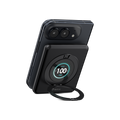
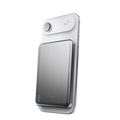
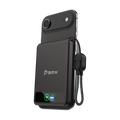
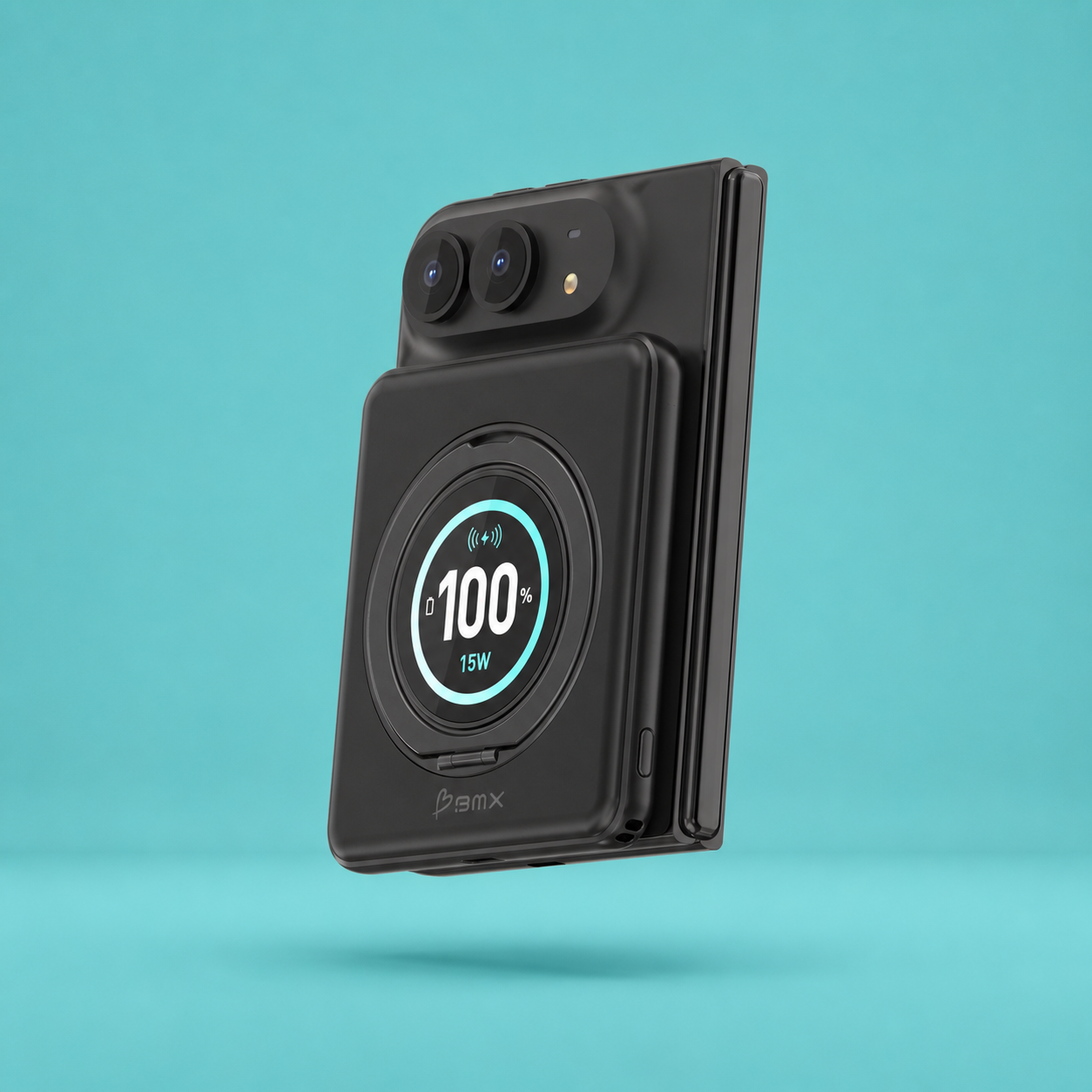
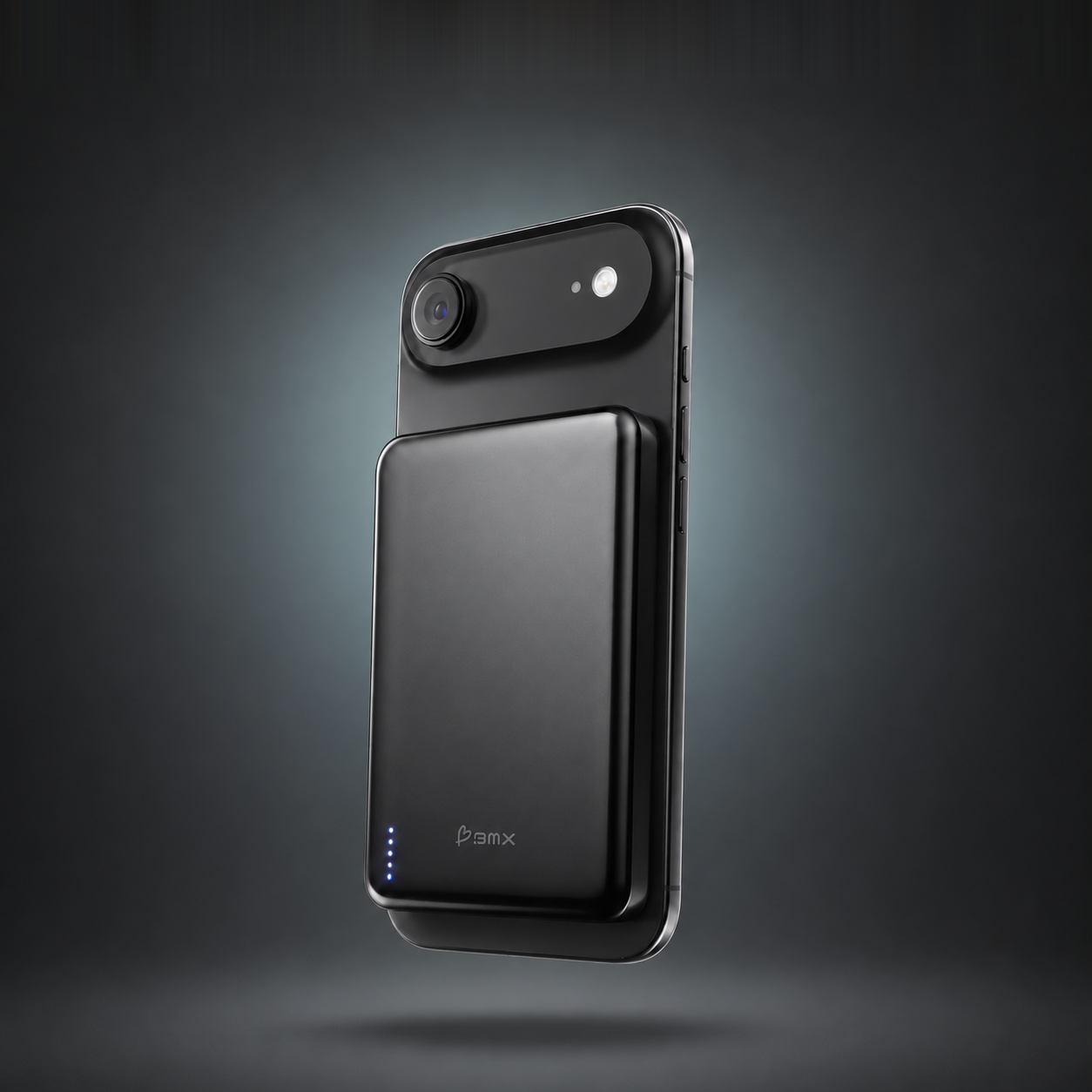
The SolidSafe Air 5K, SolidSafe 5K, and SolidSafe 10K all land at 18.5 Wh, 18.5 Wh, and 37 Wh respectively - well under the 100 Wh ceiling, and built with the chemistry that greatly reduces the risk that ceiling was designed to manage.
SolidSafe Airplane Mode
SolidSafe power banks include a built-in Airplane Mode that disables Qi2 wireless output, putting the battery in a controlled low-emission state for flights and storage. To activate: press the power button 10 times in quick succession. The display confirms the mode is active. This works on the Air 5K, SolidSafe 5K, and SolidSafe 10K.
SolidSafe Power Banks: The Wh Numbers, Applied
All three SolidSafe models are well within the 100 Wh airline carry-on limit and built with semi-solid-state cells that greatly reduce the thermal risk that limit was created for.


Frequently Asked Questions
What is the difference between mAh and Wh in a power bank?
mAh measures electrical charge at the battery's internal cell voltage, typically 3.7V. Wh measures true energy by multiplying charge by voltage. A 10,000 mAh power bank at 3.7V equals 37 Wh. In practical terms: mAh tells you the size of the tank, Wh tells you how much is actually in it - which is why airlines, safety agencies, and regulators use Wh rather than mAh.
How do I convert mAh to Wh for a power bank?
Use the formula: Wh = (mAh / 1,000) x 3.7. The 3.7 is the nominal internal cell voltage for virtually all consumer power banks. So a 5,000 mAh battery equals 18.5 Wh (one full phone charge), a 10,000 mAh battery equals 37 Wh (two full charges), and a 20,000 mAh battery equals 74 Wh. To go the other direction: mAh = (Wh / 3.7) x 1,000.
Why does my power bank not give me as much charge as the mAh number says?
Because energy is lost converting from the battery's internal voltage (3.7V) to the voltage your phone needs (5V or higher). That conversion runs at about 85-90% efficiency. A 10,000 mAh power bank realistically delivers 6,500-7,500 mAh to your phone - enough for roughly two full charges on an iPhone or Galaxy. This efficiency gap is the same across all brands. It's physics, not a product defect.
What is the airline limit for power banks in mAh?
Airlines set limits in Wh, not mAh. The standard carry-on limit is 100 Wh per battery, which equals roughly 27,000 mAh at 3.7V. Batteries between 100 Wh and 160 Wh require airline approval. Above 160 Wh is not permitted in the cabin. Power banks are never allowed in checked luggage, regardless of capacity. Always confirm the rules with your specific airline before flying.
Is a 10,000 mAh power bank allowed on a plane?
Yes. A 10,000 mAh power bank at 3.7V equals 37 Wh - well under the 100 Wh carry-on limit. You can bring it in your carry-on on virtually all commercial airlines without any special permission. Even a 20,000 mAh bank at 74 Wh clears the limit with room to spare. The 100 Wh ceiling isn't reached until around 27,000 mAh.
How many phone charges does 10,000 mAh give you?
It depends on your phone. After the voltage conversion, a 10,000 mAh bank delivers roughly 6,500-7,500 mAh to your device. An iPhone 16 has a 3,561 mAh battery, so yes - you'd get about two full charges. An iPhone 16 Pro Max has a 4,685 mAh battery, so you'd get closer to one and a half. A large Android flagship at 5,000 mAh: roughly one and a quarter. The bigger your phone's battery, the fewer full cycles you'll get. Results also vary with ambient temperature and wireless vs. wired charging.
Why do airlines measure power bank limits in Wh instead of mAh?
Because Wh is the true measure of stored energy regardless of voltage or design. Two batteries with identical mAh ratings but different voltages can contain very different amounts of actual energy - mAh alone doesn't capture that. Airlines use Wh because it reflects the real thermal risk if a battery fails at altitude, where fire suppression is extremely limited. The 100 Wh limit is based on how much energy a conventional battery can release in a failure scenario - not just how large it is.
SolidSafe Power Banks
Under 100 Wh. And built different inside.
The SolidSafe Air 5K, SolidSafe 5K, and SolidSafe 10K are all well under the airline carry-on threshold - and built with semi-solid-state cells that greatly reduce the thermal risk the limit was designed to address.
See SolidSafe Power BanksRelated guides
Last updated: March 2026. Airline rules and power bank specifications are subject to change. Verify carry-on limits with your airline before travel.

Leave a comment
This site is protected by hCaptcha and the hCaptcha Privacy Policy and Terms of Service apply.