




A 5,000mAh power bank is usually enough for up to about one more phone charge. Enough to get home, keep maps running, or stop watching the battery icon all afternoon. A 10,000mAh bank gives you more room for delays, photos, rideshares, and earbuds. The number on the box helps, but it is not the number that actually reaches your phone.
That is the part most power-bank charts skip. mAh tells you how much energy the power bank stores. Before your phone can use it, the bank has to convert that energy, send it through a cable or wireless charger, and deal with heat along the way.
So yes, the label still matters. Just read it like a range, not a promise. In practice, a 10,000mAh bank like the SolidSafe Air 10K works out to about two phone charges.
Quick calculator
Use this fast estimate: take the power bank rating, multiply it by 0.6 to 0.7, then divide by your phone battery size. Example: 10,000mAh x 0.65 = about 6,500mAh usable. If your phone battery is around 3,250mAh, expect about two full charges in normal use.
Which size should you buy?
Capacity charts are useful, but the real question is simpler: which one would you actually carry?
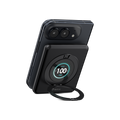
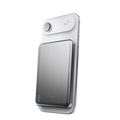
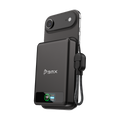
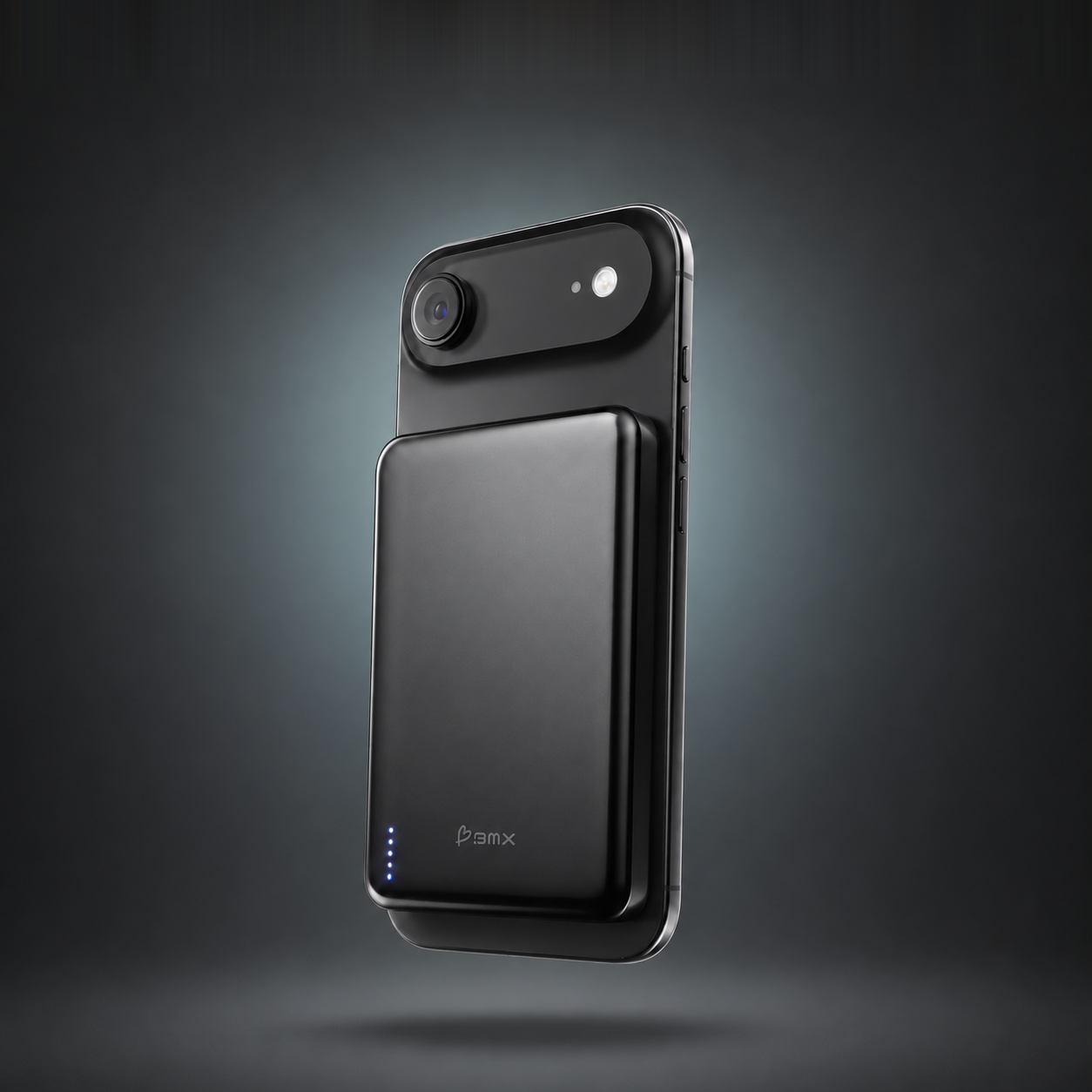
- Smallest carry: SolidSafe Air 5K is the one you keep with you because it barely changes what you are carrying.
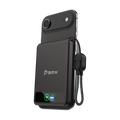
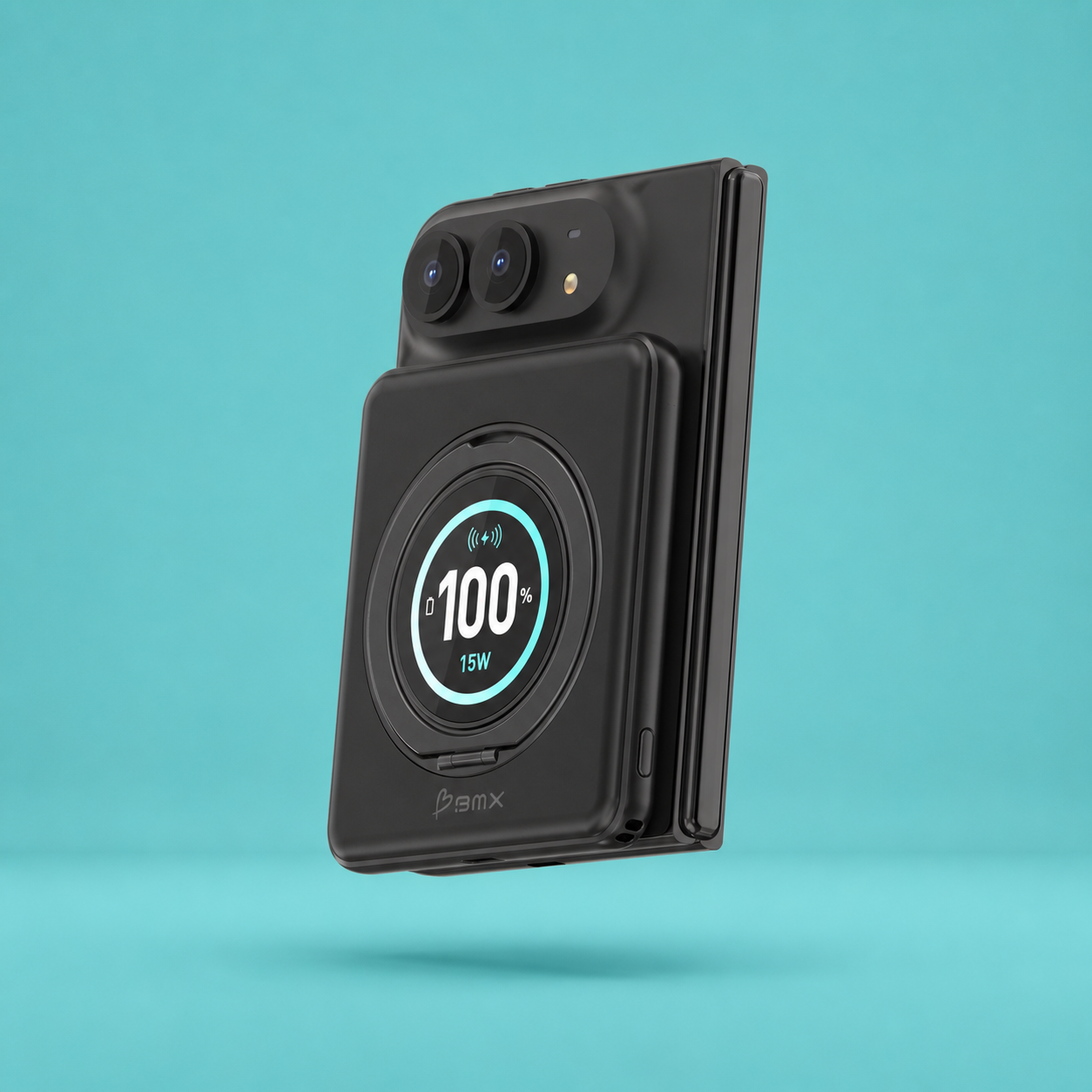
- Daily carry with a screen: SolidSafe 5K is for people who want the cable attached and the battery percentage visible.
- Travel days and multiple devices: SolidSafe 10K is the better fit when your day has delays, earbuds, rideshares, and no obvious outlet.
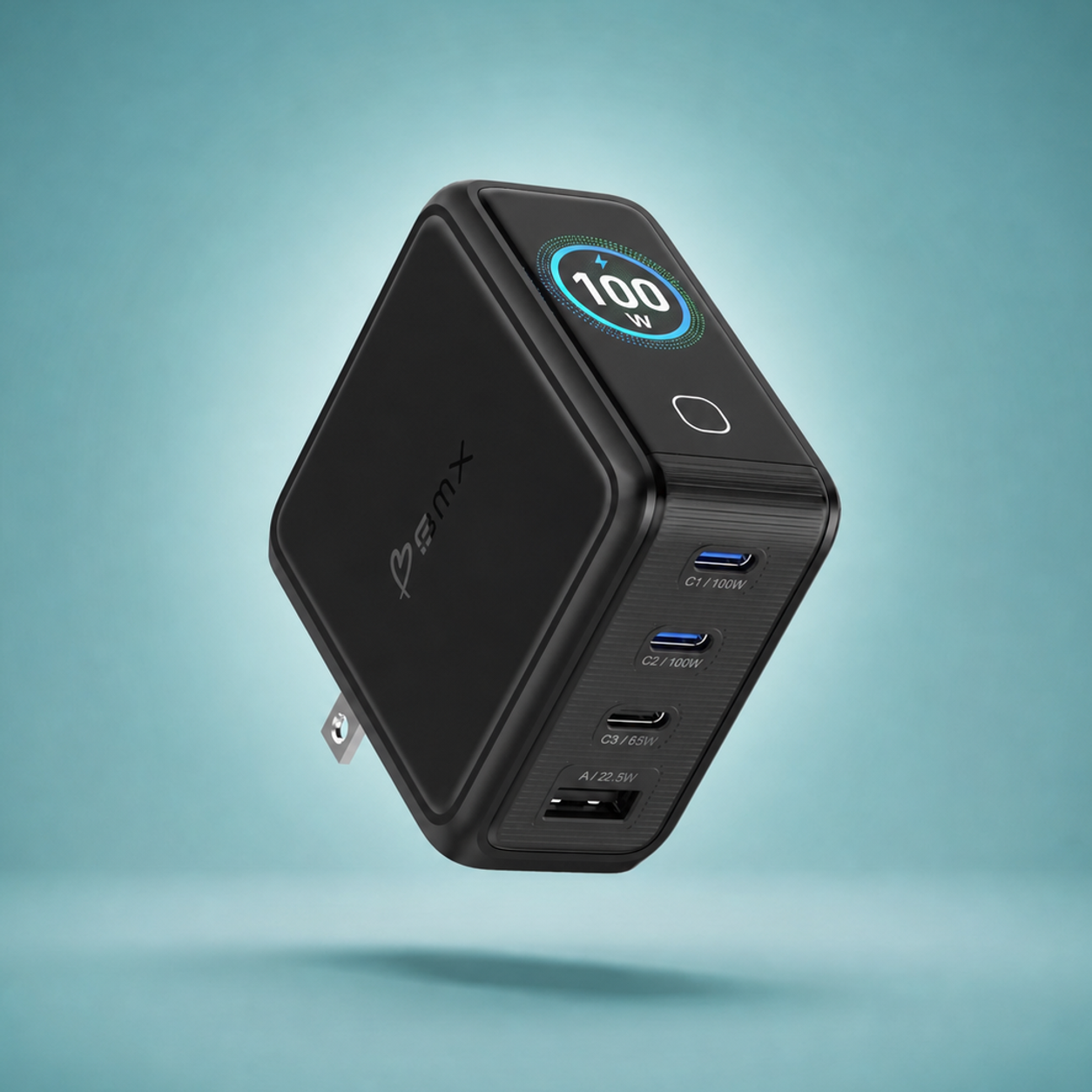
If the job is laptop backup, do not force a phone-first battery into the wrong role. Choose a laptop-class power bank instead.
The two capacities this page compares:


Why the label overstates real charges
The mAh rating is measured at the power bank's internal battery cells. Your phone charges at a different voltage, so the bank has to convert that stored energy before your phone can use it.
That conversion is never perfect. Some energy turns into heat. Some gets lost in the cable, the charging electronics, or the wireless connection. Your phone also slows down as it fills, especially near the top.
For a normal estimate, use 60% to 70% usable capacity. It is not lab-perfect. It is the range that keeps you from expecting every listed mAh to reach your phone.
| Power bank size | Usable estimate | What it usually means |
|---|---|---|
| 5,000mAh | About 3,000 to 3,500mAh usable | Up to about one more phone charge, or several smaller top-ups |
| 10,000mAh | About 6,000 to 7,000mAh usable | A full day away from outlets, often around two phone charges |
| 20,000mAh | About 12,000 to 14,000mAh usable | Multi-device travel, tablet use, or days when you cannot refill the bank |
What 5,000mAh is good for
A 5,000mAh bank is the daily-carry size. It is not about bragging rights. It is about the moment when your phone is at 12% and you still need maps, Apple Pay, a boarding pass, or two more hours of screen time.
Using the 60% to 70% rule, a 5,000mAh bank gives roughly 3,000 to 3,500mAh of usable phone charging. For many phones, that can be up to about one more full charge, or several smaller charges across the day.
The buying rule is simple: choose 5,000mAh when the job is carry it every day. A small bank in your pocket beats a bigger one sitting in a drawer.
What 10,000mAh is good for
A 10,000mAh bank is the all-day size. It is what you buy when one rescue is not enough: airport days, long work days, phone plus earbuds, or the kind of Saturday that starts as errands and somehow ends as dinner.
Using the same estimate, a 10,000mAh bank gives roughly 6,000 to 7,000mAh of usable phone charging. That is why people describe 10K banks as "about two charges," not exactly two charges.
The buying rule: choose 10,000mAh when you want margin. You are carrying a thicker bank, but you stop rationing your phone by 4 p.m.
| If your day looks like this | Buy this size | Why |
|---|---|---|
| Commute, lunch, errands, gym, dinner nearby | 5,000mAh | Small enough to carry, enough for the usual emergency |
| Airport, conference, long city day, phone plus earbuds | 10,000mAh | Enough margin for repeated top-ups and a second device |
| Tablet, laptop-class device, camping, multi-day backup | 20,000mAh or higher | More energy, more weight, and a different carrying decision |
What 20,000mAh is good for
A 20,000mAh power bank is not just "more phone charges." It is a different kind of carry. It is bigger, heavier, and more useful when you are charging tablets, several phones, or a device that behaves more like a small laptop.
Using the same range, 20,000mAh gives roughly 12,000 to 14,000mAh of usable phone charging. That can mean several phone refills. It also means you are carrying backup power as gear, not as pocket insurance.
That distinction matters. SolidSafe Air 5K and SolidSafe 5K are daily-carry products. SolidSafe 10K is the all-day phone and multi-device step-up. Larger laptop-class banks are a different buying job. Judge those by wattage, ports, and device fit, not just mAh.
Capacity is not speed
This is where people buy the wrong thing. mAh tells you how much energy the power bank can store. Wattage tells you how fast it can move that energy into a device.
A 5,000mAh bank with 20W USB-C can charge a phone faster than a 10,000mAh bank limited to slow output. A 10,000mAh bank with 30W total output can be better for charging multiple devices, but only if your setup uses the ports and cable correctly.
Buy capacity for how long you need to last. Buy wattage and ports for how fast you need to charge.
The honest bottom line.
If you only remember one rule, make it this: 5K is pocket backup. 10K is day backup. 20K is gear.
That rule works because it starts with the job, not the number. A small power bank you carry is better than a large one sitting in a drawer. A 10K bank is better when the day is longer than planned. A 20K bank is better when you are not just saving a phone anymore.
SolidSafe adds one more layer to that decision: the battery chemistry. SolidSafe 5K and 10K use semi-solid-state cells with significantly less liquid electrolyte than conventional lithium-ion. That does not make any battery risk-free. It does mean the better choice is not only about size or speed. It also starts with what is inside the pack.
Frequently Asked Questions
How many times can a 5,000mAh power bank charge a phone?
Usually up to about one more phone charge, or several smaller top-ups. A 5,000mAh bank often delivers about 3,000 to 3,500mAh of usable charging after conversion loss.
How many times can a 10,000mAh power bank charge a phone?
Usually around two full phone charges for many phones, depending on battery size and charging conditions. A practical estimate is about 6,000 to 7,000mAh of usable charging.
Why does a power bank give fewer mAh than the label says?
The label is measured at the internal battery cell level. Your phone charges at a different voltage, so the power bank converts energy before your phone can use it. That conversion loses energy as heat.
Is 5,000mAh enough for daily carry?
Yes, if your goal is emergency backup, including up to about one more phone charge. A 5,000mAh bank is the size most people are more likely to carry, which matters more than owning extra capacity that stays at home.
Is 10,000mAh enough for travel?
Yes for many travel days. A 10,000mAh bank gives more margin for navigation, photos, rideshare, earbuds, delays, and repeated top-ups without jumping into a much larger power bank.
Does a higher mAh power bank charge faster?
No. Capacity and speed are different specs. mAh tells you how much energy the bank stores. Wattage tells you how fast it can charge a device.
BMX is our brand, so take our recommendation in that context. We walked through the capacity math, named the conversion-loss caveat, and separated daily backup from all-day backup so you can decide for yourself.

Leave a comment
This site is protected by hCaptcha and the hCaptcha Privacy Policy and Terms of Service apply.