
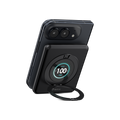
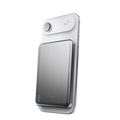
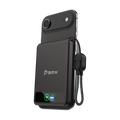




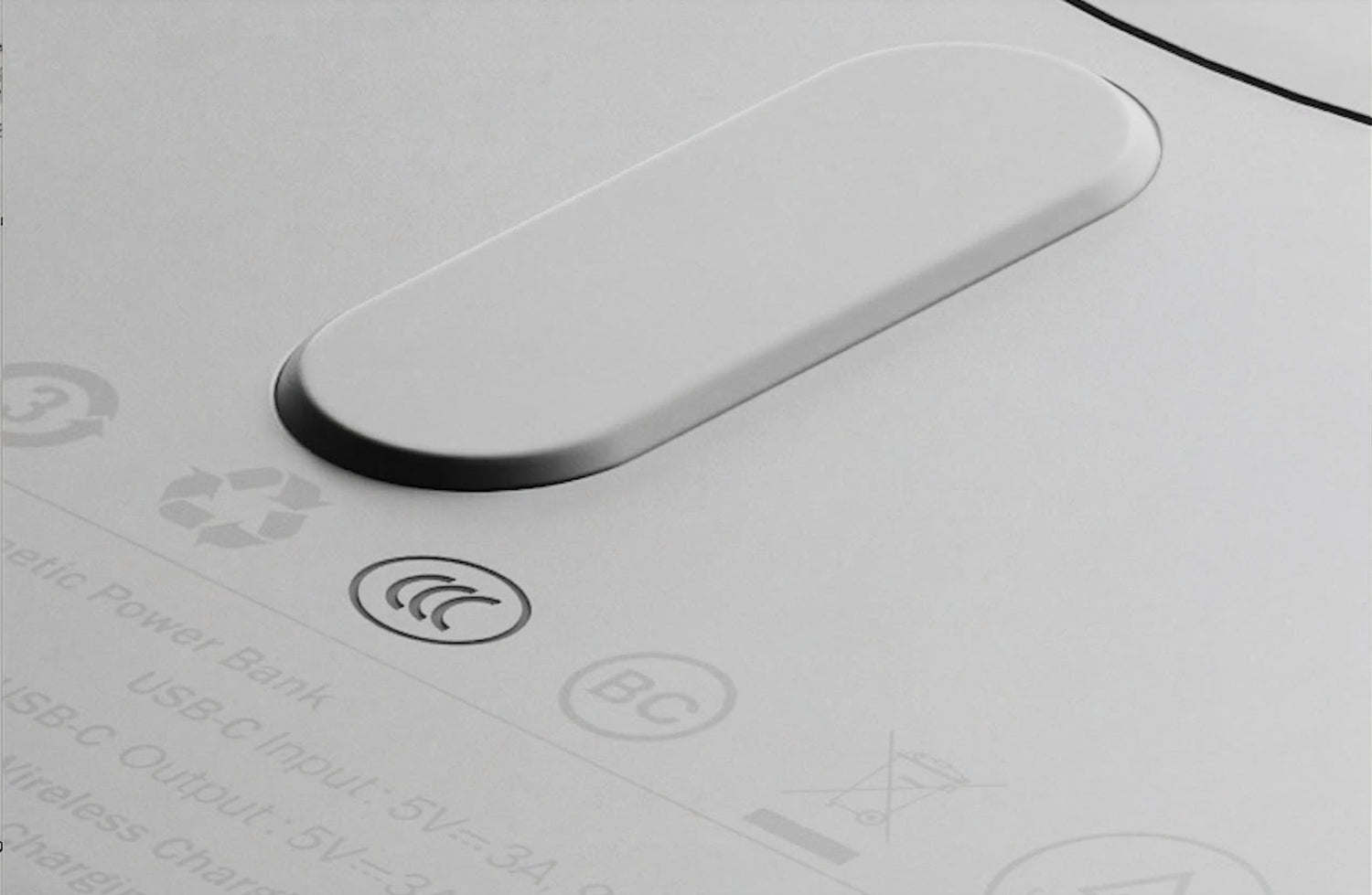
CCC stands for China Compulsory Certification, also called 3C. It is a mandatory safety standard that requires power banks to pass electrical abuse tests, mechanical stress tests, environmental extremes, and factory audits before they can be sold or carried on flights in China. It is the most rigorous battery safety certification currently enforced anywhere in the world.
If you are planning a trip to China, this certification now determines whether you can bring your power bank on the plane. Since June 28, 2025, any power bank without a visible CCC mark is banned from all domestic flights in mainland China. Thousands of travelers have had their power banks confiscated at airport security, including products from well-known international brands.
But CCC matters beyond travel. In 2025, China inspected 149 batches of power banks. Nearly half failed. Multiple major brands issued massive recalls after in-flight fires and explosions. Here is what CCC certification actually requires, why most power banks sold outside China do not have it, and what that means if you are traveling, buying online, or just want to know whether the power bank in your bag has actually been tested.
The China Flight Ban: What Happened on June 28, 2025
After a series of in-flight fire and smoke incidents linked to power banks in 2025, China's Civil Aviation Administration (CAAC) issued an emergency notice on June 26 with a two-day implementation window. Effective June 28, 2025, any power bank without a visible CCC mark is banned from all domestic flights in China. Power banks from manufacturers whose CCC certifications had been revoked or suspended, and power banks from recalled batches, are also banned regardless of whether a CCC mark is present.
The enforcement was immediate and strict. Airports set up disposal bins and temporary storage for confiscated power banks. Social media filled with travelers posting photos of bins overflowing with confiscated units. One traveler on X wrote: "We flew domestic before and had no issues, then suddenly it was confiscated on June 28. There were hundreds in the bin." The rule officially applies only to domestic flights within mainland China, but travelers have reported confiscations on international departures from Beijing, Shanghai, and Guangzhou as well.
The capacity limits remain unchanged: power banks under 100 Wh (roughly 27,000mAh at 3.7V) are allowed with a maximum of two per passenger. Power banks between 100 Wh and 160 Wh require airline pre-approval. Anything above 160 Wh is prohibited entirely. But the new requirement is on top of these limits: even a 5,000mAh power bank will be confiscated if it does not carry a CCC mark with clear brand, model, and capacity labeling.
What This Means If You Travel to China
If you fly domestically in China, your power bank must have a visible CCC mark, clear capacity and model labeling, and a current (non-revoked) certificate. Without all three, it will be confiscated at security. There are no exceptions for international brands, premium pricing, or other certifications. A $150 power bank with UL and CE marks will be confiscated if it does not also carry a CCC mark.
The practical problem is that most power banks sold outside of China do not have CCC certification. Many brands produce CCC-certified versions specifically for the Chinese domestic market, but the versions sold on Amazon US or European retailers are typically certified to UL, CE, and FCC only. If you buy a power bank in the United States and bring it to China, the odds are high that it does not have a CCC mark.
Your options: buy a CCC-certified power bank before your trip (available from Chinese e-commerce platforms and some international brands that ship CCC-certified models globally), or leave your power bank at home and buy one after you arrive. Some airports offer temporary storage for confiscated power banks, and travelers can arrange to have them mailed back, but the process is slow and not guaranteed.
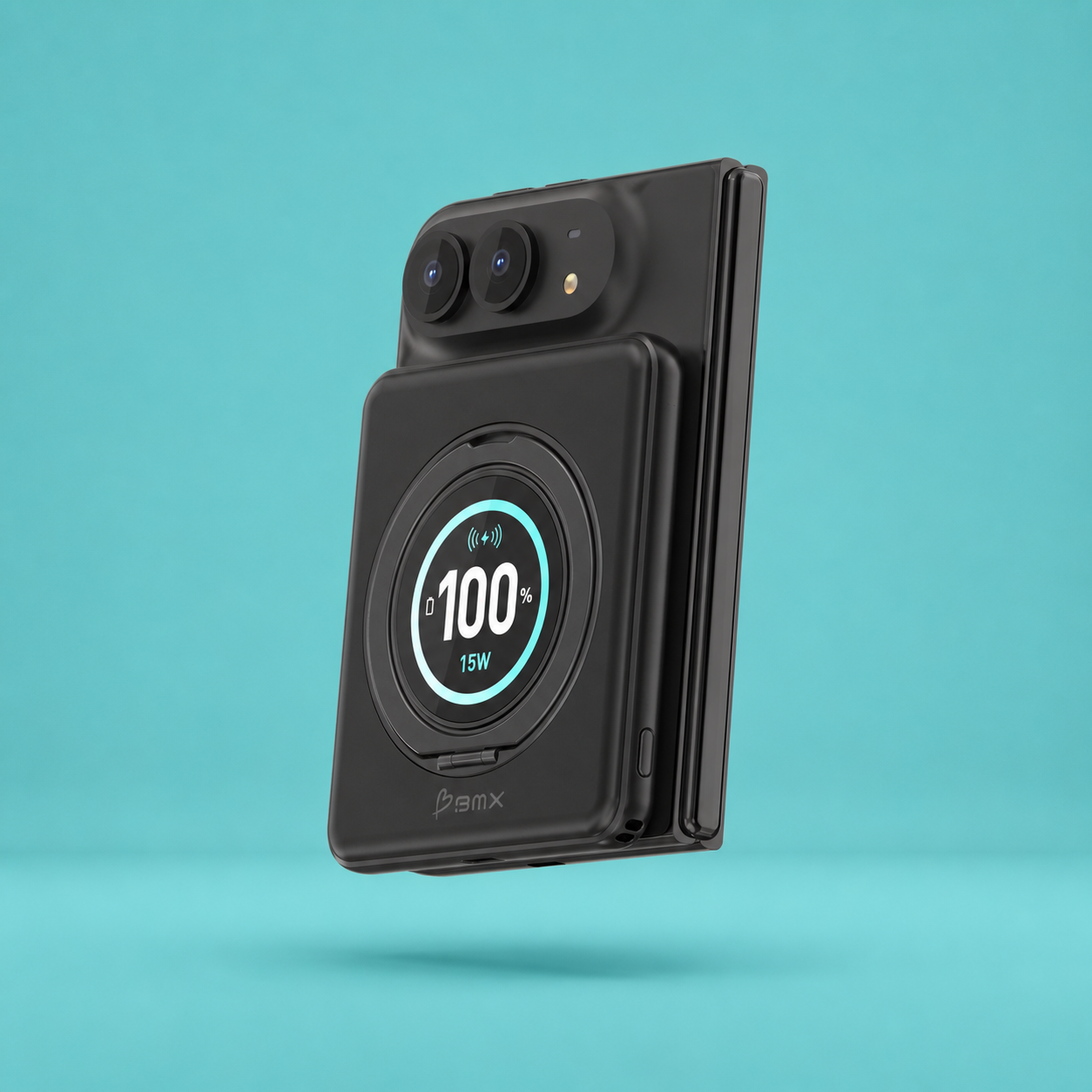
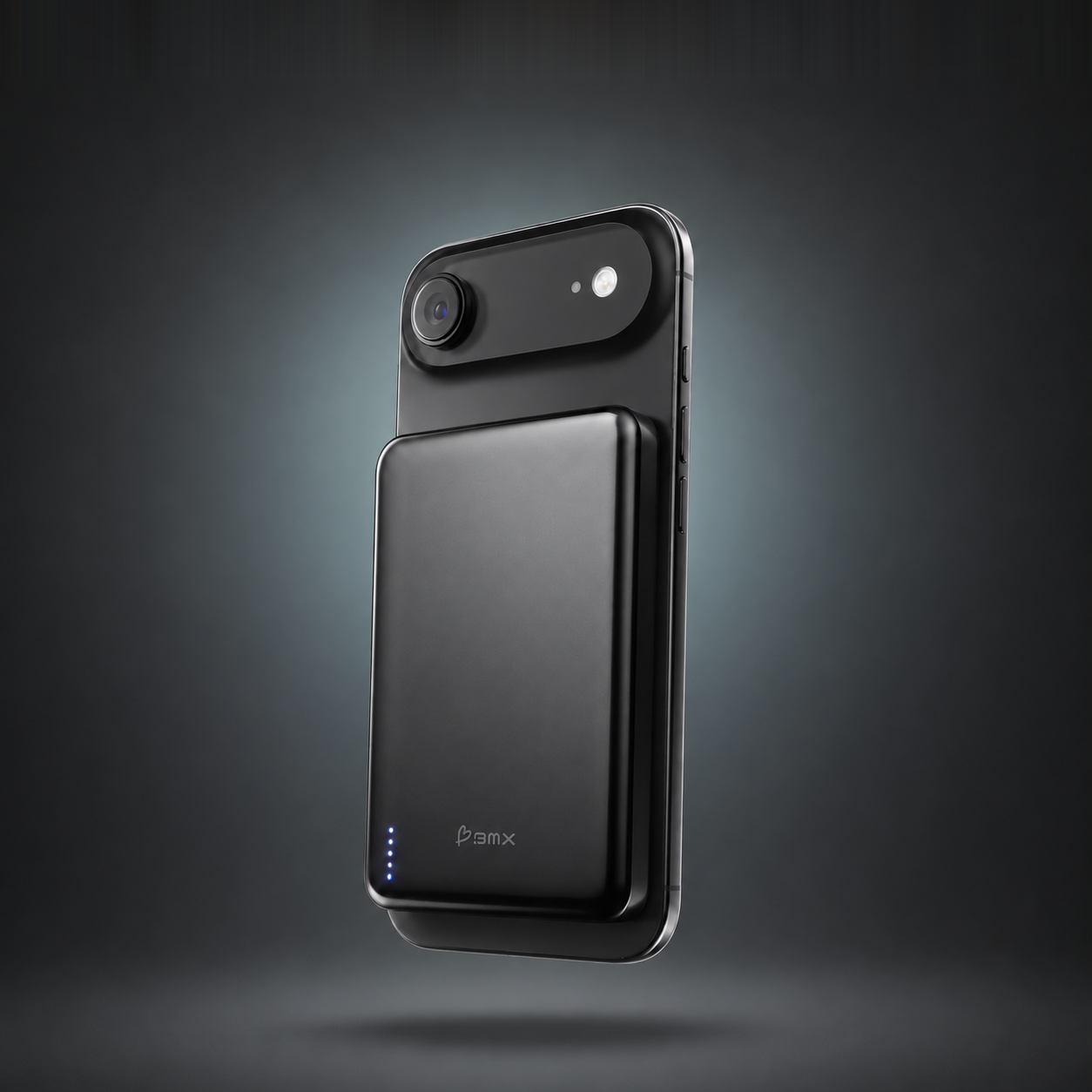
The BMX SolidSafe Air 5K carries CCC certification, including factory audits and ongoing surveillance, and ships globally from the US.
See the SolidSafe Air →What CCC Certification Actually Tests
CCC is not a sticker a company puts on its own product. It is a government-mandated certification program where an accredited third-party lab tests the power bank against Chinese national standards GB 31241-2022 (battery cell safety) and GB 4943.1-2022 (equipment safety). The testing covers four categories.
Electrical safety: Overcharge protection, overdischarge protection, external short circuit response, and abnormal charging behavior. The power bank has to survive conditions where the charging circuit fails, the cable shorts, or the battery gets pushed past its rated limits. If any protection circuit does not trigger correctly, the product fails.
Mechanical abuse: Drop tests, crush tests, vibration, and impact. These simulate what happens when a power bank falls off a nightstand, gets sat on in a backpack, or bounces around in checked luggage. The battery cells cannot rupture, vent, or ignite under these conditions.
Environmental extremes: Temperature cycling between extreme heat and cold, thermal abuse testing, and low air pressure testing that simulates the conditions inside an aircraft cargo hold at altitude. This last test is particularly relevant because lithium-ion cells under reduced atmospheric pressure behave differently than they do at sea level.
Electromagnetic compatibility: The power bank's electronics cannot interfere with other devices, and other devices' emissions cannot cause the power bank to malfunction. This matters in airports and aircraft where dozens of wireless devices operate simultaneously.
The part most certifications skip
CCC also requires an on-site factory audit. Inspectors verify that the production line matches the tested sample: same cell supplier, same separator material, same assembly process. After certification, unannounced "flying inspections" continue at random intervals. This is what makes CCC different from certifications that only test a lab sample and never check the factory again.
Why 43.6% of Power Banks Failed Inspection
In 2025, China's State Administration for Market Regulation (SAMR) tested 149 batches of power banks in a national safety review. The results were bad: 43.6% failed. The most common problems were poor insulation, missing overcharge protection, missing short-circuit cutoffs, and missing overdischarge protection. These are not exotic edge cases. They are the most basic safety features a power bank should have.
The failures triggered the largest power bank recall wave in history. One manufacturer recalled nearly 500,000 units across three models after one caught fire on a commercial flight from Hangzhou in March 2025. The investigation traced the problem to an upstream battery cell supplier that had outsourced production and substituted the separator material without authorization. The separator is the thin film between the positive and negative electrodes that prevents internal short circuits. Using a cheaper material increased the self-ignition risk to three times the industry average.
Separately, another major brand recalled over 1.6 million power banks globally across two CPSC recalls in 2025, covering six different models with 52 combined fire and explosion incidents and multiple burn injuries. These were not obscure brands selling $12 power banks on Temu. These were established, well-reviewed products sold through major retail channels.
The supplier problem nobody talks about
The 2025 recalls share a root cause: the brand that puts its name on the box does not always control what goes into the battery cells. Unauthorized material substitutions by upstream suppliers are invisible to consumers and difficult for brands to detect without rigorous factory audits. CCC certification's ongoing factory surveillance is specifically designed to catch this problem.
CCC vs UL vs CE vs FCC: How Safety Certifications Compare
Not all safety certifications are equal. They test different things, enforce differently, and have different legal weight. Here is how the major certifications compare for power banks.
| Certification | Region | Mandatory? | Factory Audit | Ongoing Surveillance |
|---|---|---|---|---|
| CCC (3C) | China | Yes | Yes | Yes (unannounced) |
| UL 2056 | United States | Voluntary (but major retailers require it) | Varies | Limited |
| CE | European Union | Yes | No | No |
| FCC | United States | Yes (for EMC only) | No | No |
| UN 38.3 | International (transport) | Yes (for shipping) | No | No |
The critical difference is the factory audit and ongoing surveillance. FCC and CE test a sample in a lab. If the manufacturer later changes cell suppliers, substitutes cheaper separators, or cuts corners on assembly, those certifications do not catch it. CCC does, because inspectors return to the factory unannounced after certification. This is exactly the failure mode behind the 2025 recalls: a cell supplier changed materials, and nobody caught it until a power bank ignited on an airplane.
UL 2056 is a strong standard for power banks, and most major US retailers require it. But it is voluntary. A power bank can legally be sold in the United States with only FCC certification (which only covers electromagnetic emissions, not battery safety). CCC is mandatory. If a power bank does not pass, it cannot legally be sold in China, carried on a Chinese flight, or imported into the Chinese market.

How to Check If Your Power Bank Is CCC Certified
A genuine CCC mark is printed or laser-etched directly onto the power bank's casing as part of the original manufacturing. It is not a removable sticker, a hang tag, or a separate label slapped on after production. The mark consists of the letters "CCC" in a specific typographic design with a white background and black characters. When you hold a genuine mark up to the light, the characters have sharp, clean edges with no blurring or double-image effects.
The power bank must also display the brand name, model number, and capacity (in mAh or Wh) on the casing. If any of these are missing, airport security in China will treat it as non-compliant regardless of whether a CCC mark is present.
To verify a CCC certificate is legitimate and current, enter the certificate number at cx.cnca.cn, China's official National Certification and Accreditation Information Public Service Platform. This will show you the manufacturer, model, certifying body, and whether the certificate is active, suspended, or revoked. This step matters because several brands had their CCC certifications suspended or revoked in 2025, meaning power banks with a CCC mark printed on the casing may no longer be valid.
Coming March 2026: QR code verification
Starting March 1, 2026, all newly CCC-certified power banks must carry a unique traceability QR code printed immediately to the right of the CCC mark. Scanning it instantly shows the certificate number, manufacturer, model, and certifying body. By March 2027, all CCC-certified power banks on sale must carry this QR code. This is designed to eliminate counterfeit CCC marks, which have become a problem on lower-quality products.
Why CCC Certification Matters Even If You Never Go to China
CCC certification is the only widely enforced power bank certification that combines lab testing with factory audits and ongoing surveillance. If a power bank has a current CCC certificate, it means a third-party lab tested it, an inspector audited the factory, and the manufacturer is subject to unannounced follow-up inspections. That is a higher bar than any other certification in the consumer electronics space.
The 2025 recall wave proved why this matters. The largest recall was not caused by a design flaw. It was caused by a supplier substituting a cheaper separator material without telling anyone. The brand did not know. The original lab tests passed. The only way to catch that kind of problem is factory-level oversight that verifies the actual production materials match the certified samples. CCC provides that. Most other certifications do not.
For consumers, a CCC-certified power bank is not just "legal for China travel." It is evidence that the product was tested more rigorously than what the US or European market requires. When you see a CCC mark on a power bank alongside UL and CE marks, you are looking at a product that passed three different certification regimes across three different regulatory frameworks. That is about as much third-party safety validation as you can get for a consumer electronic device.
CCC Certification and Semi-Solid-State: What Changes at the Chemistry Level
Everything in the 2025 recall wave traces back to the same material: the separator film inside conventional lithium-ion cells. In traditional lithium-ion batteries, a thin polymer membrane separates the positive and negative electrodes. If that separator is defective, degraded, or made from substituted materials, the electrodes can make contact, causing an internal short circuit that leads to thermal runaway. The mid-flight fire, the million-unit recalls, and the 43.6% inspection failure rate all involve this same vulnerability.
Semi-solid-state batteries use a fundamentally different approach. Instead of relying solely on a thin polymer separator in a liquid electrolyte, semi-solid-state cells use an oxide-based electrolyte that significantly reduces the amount of free-flowing flammable liquid inside the cell. This does not eliminate all risk (no battery technology does), but it greatly lowers the probability of thermal runaway from the exact failure modes that caused the 2025 recalls.
When a semi-solid-state power bank passes CCC certification, it is passing the same rigorous tests that nearly half of conventional lithium-ion power banks failed. The difference is that the underlying chemistry has fewer failure modes to begin with. CCC certification on a semi-solid-state power bank is not just a checkbox. It is third-party confirmation that a product built on safer chemistry also meets the most demanding manufacturing and safety standards in the industry.
The BMX SolidSafe Air 5K combines CCC-certified safety testing with semi-solid-state battery chemistry.
See the SolidSafe Air →Frequently Asked Questions
What does CCC certification mean on a power bank?
CCC stands for China Compulsory Certification, also called 3C. It is a mandatory safety standard administered by the Chinese government. Power banks must pass electrical safety tests, mechanical abuse tests (drop, crush, vibration), environmental stress tests (extreme temperatures, low air pressure simulating altitude), and electromagnetic compatibility checks. The manufacturer's factory is also audited. CCC is not self-declared like FCC. It requires third-party lab testing and ongoing factory surveillance.
Can I fly in China without a CCC certified power bank?
No. Since June 28, 2025, China's Civil Aviation Administration bans all power banks without a visible CCC mark from domestic flights. Airport security will confiscate non-compliant power banks at the checkpoint. This applies to all domestic flights and domestic legs of international connecting flights. International certifications like UL, CE, and FCC are not accepted as substitutes.
Is CCC the same as UL or CE certification?
No. CCC, UL, and CE are different certifications from different regions with different testing requirements. CCC is mandatory in China, includes factory audits and annual surveillance, and tests to Chinese national standards GB 31241 and GB 4943.1. UL 2056 is a US standard for power banks but is voluntary. CE is required for the EU market. FCC and CE do not require factory inspections or ongoing surveillance after certification.
How do I check if my power bank is CCC certified?
Look for the CCC mark printed directly on the power bank casing, not on a removable sticker. A genuine mark has a white background with black CCC characters and sharp, clean edges. You can verify the certificate number at cx.cnca.cn, China's official certification database. Starting March 2026, newly certified power banks also carry a scannable QR code next to the CCC mark for instant verification.
Why were so many power banks recalled in China in 2025?
A national inspection found a 43.6% failure rate across 149 power bank batches tested, with common issues including poor insulation and missing safety protections. One manufacturer recalled nearly 500,000 units after a mid-flight fire. Another recalled over 1.6 million units globally across multiple models. The root cause in many cases was unauthorized material substitutions by upstream battery cell suppliers.
What tests does CCC certification require for power banks?
CCC tests against GB 31241-2022 and GB 4943.1-2022. Electrical tests cover overcharge, overdischarge, short circuit, and abnormal charging. Mechanical tests simulate drops, crushing, vibration, and impact. Environmental tests include temperature cycling, thermal abuse, and low air pressure at simulated altitude. The factory is audited at certification and subject to unannounced inspections afterward.
Does the BMX SolidSafe Air have CCC certification?
Yes. The BMX SolidSafe Air 5K is CCC certified. It has passed China's mandatory safety testing including electrical, mechanical, and environmental abuse tests, plus factory audits. It is compliant for carry-on use on all domestic flights in China without risk of confiscation.
What is the CCC QR code on power banks starting in 2026?
Starting March 1, 2026, all newly CCC-certified power banks must have a unique traceability QR code printed next to the CCC mark. Scanning it shows the certificate number, manufacturer, model, and certifying body. By March 2027, all CCC-certified power banks on sale must carry this QR code. It is designed to combat counterfeit CCC marks.
CCC Certified. Semi-Solid-State. Travel Ready.
The SolidSafe Air 5K
Third-party lab tested, factory audited, and compliant for domestic flights in China. Semi-solid-state cells in a titanium enclosure at 6.8mm thin. Qi2 15W wireless, USB-C 20W fast charge.
See the SolidSafe AirKeep reading
- Best Power Bank for Travel in 2026: TSA Compliant and Airline Safe
- Safest Power Banks in 2026: Ranked by Battery Type, Enclosure, and Test Results
- Semi-Solid-State Power Bank vs Lithium-Ion: What Is the Difference?
- Can Lithium Batteries Catch Fire When Not in Use? Battery Safety Explained
- mAh vs Wh in Power Banks: How Many Phone Charges and What the Airline Limit Actually Means


Leave a comment
This site is protected by hCaptcha and the hCaptcha Privacy Policy and Terms of Service apply.