
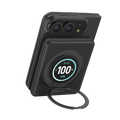
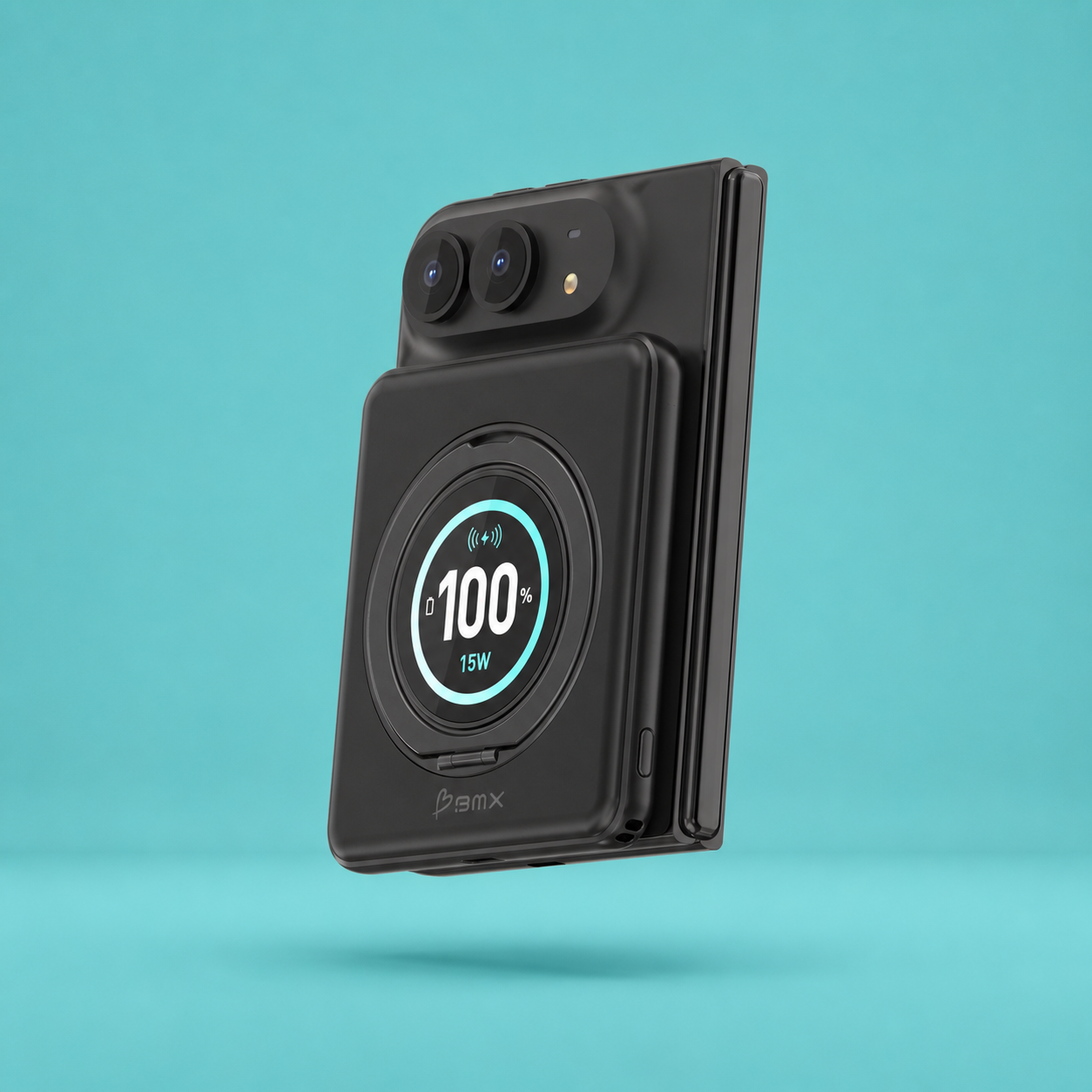




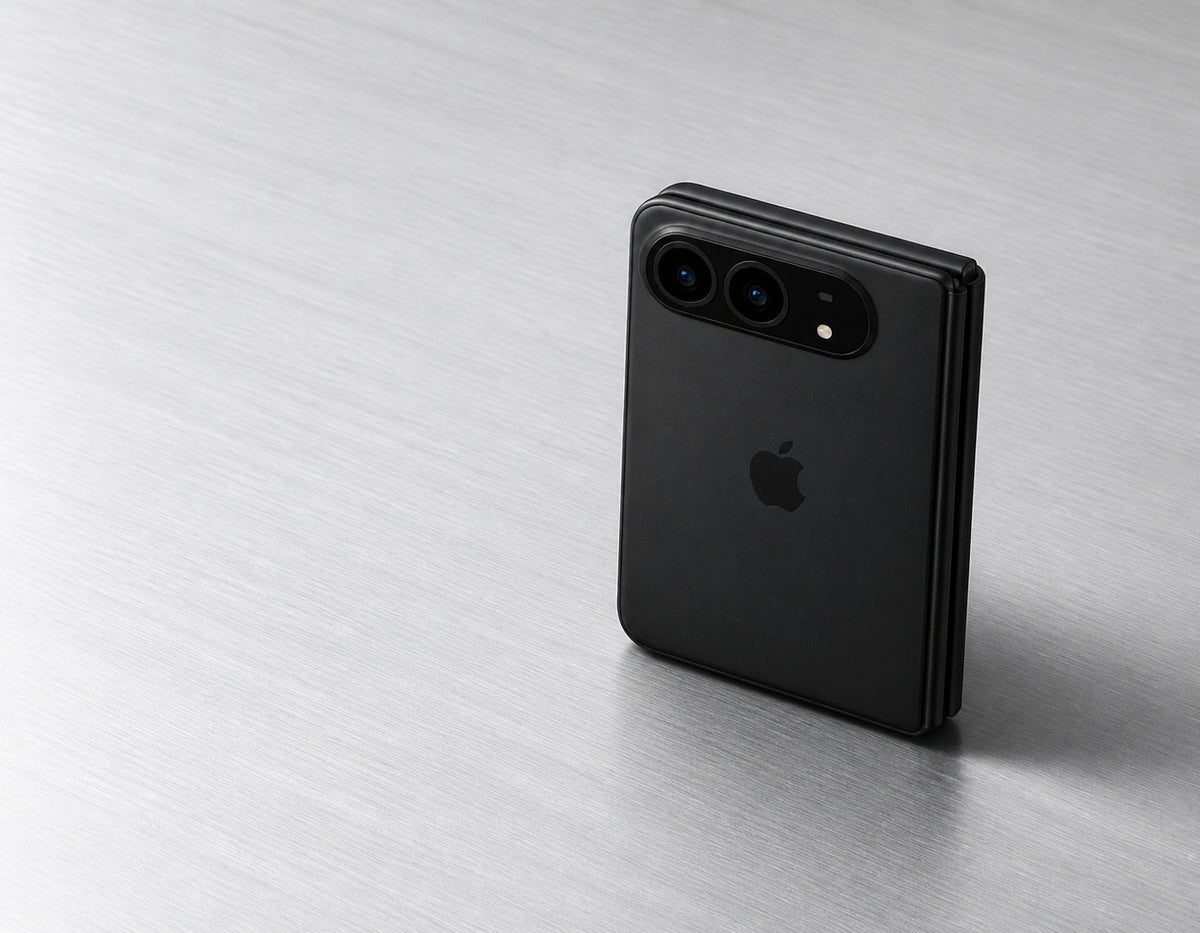
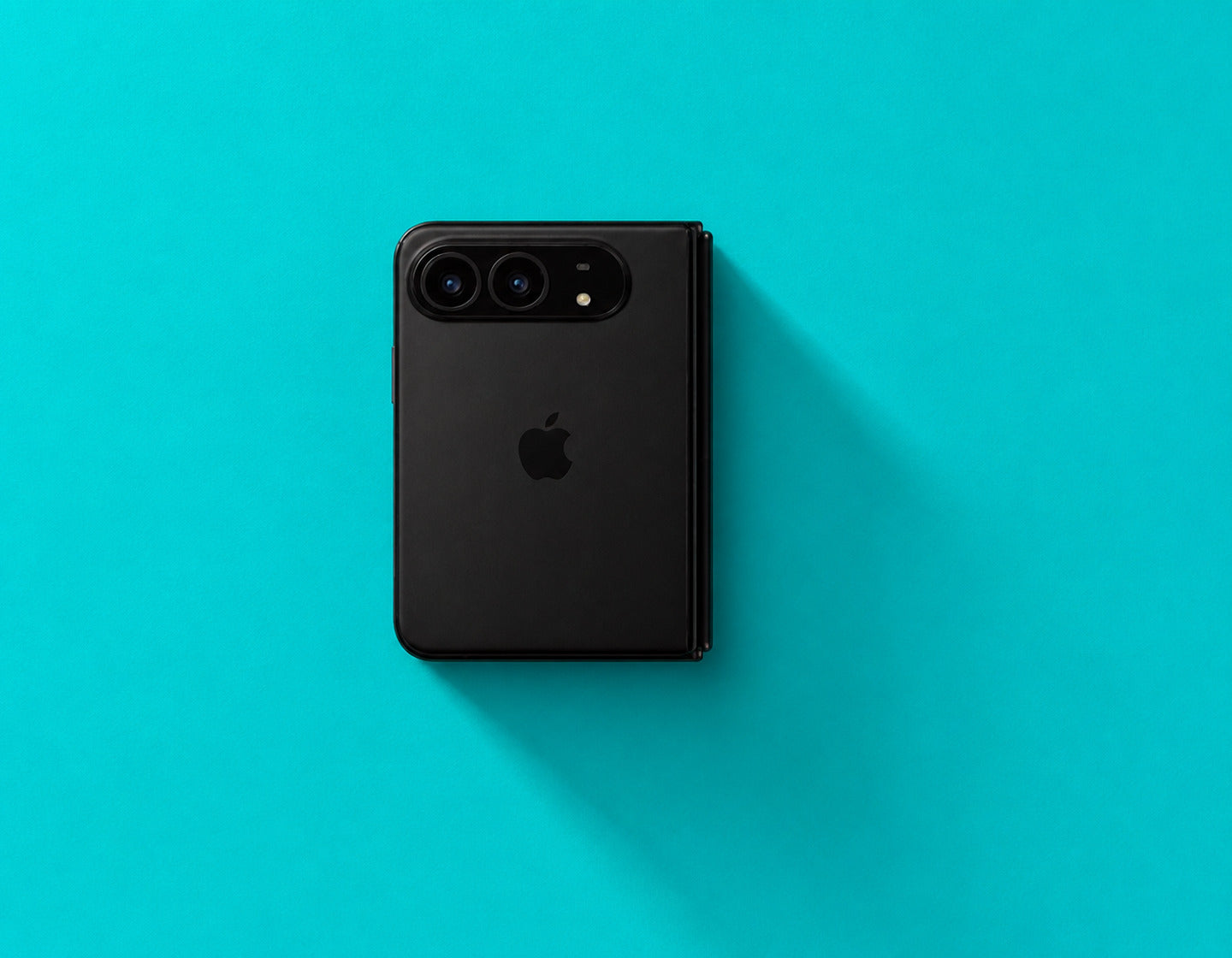
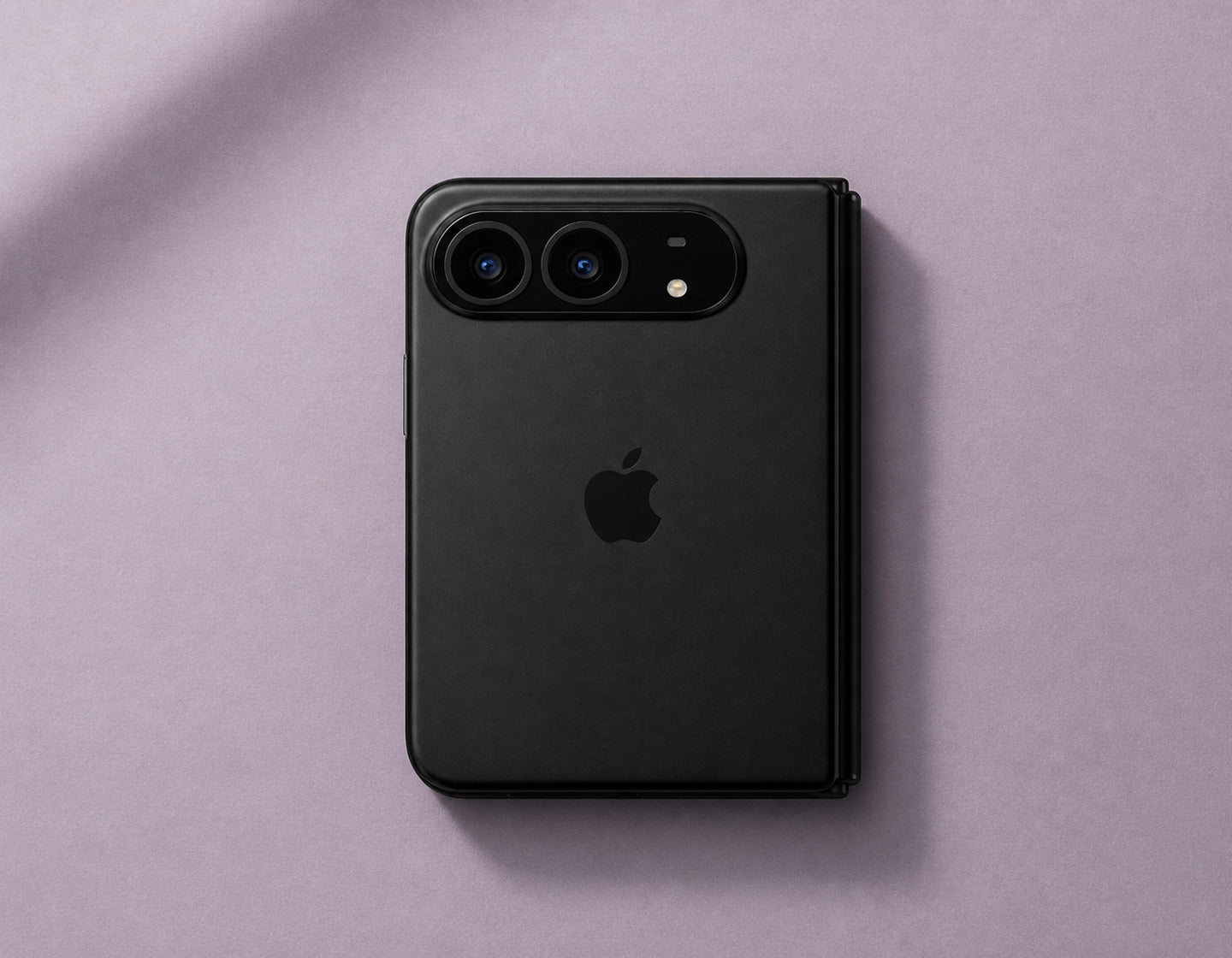
Hero image: BMX concept render, not an official Apple image. Apple has not confirmed the phone’s battery capacity or charging speeds.
The strongest current battery rumor is 4,883mAh across two cells. Our charging forecast is 20W to 25W through MagSafe and current-iPhone-class fast charging through USB-C. No reliable Ultra-specific wired wattage has surfaced, and Apple has not confirmed any of these specifications.
The battery number sounds precise. The charging forecast does not. That distinction matters.
| Question | Best answer today | Confidence |
|---|---|---|
| Battery size | 4,883mAh reported total | Strong rumor, not official |
| Battery layout | Two cells: 1,921mAh + 2,962mAh | Supported by filing report and iOS language |
| MagSafe speed | Likely 20W to 25W | Reasoned forecast |
| Wired speed | Likely current-iPhone fast-charge class | No trustworthy Ultra wattage yet |
| Battery life | Unknown | Requires Apple tests and real use |
Where the 4,883mAh number comes from
A July report traced the figure to two batteries allegedly registered by an Apple supplier: one rated at 1,921mAh and the other at 2,962mAh. Together they total 4,883mAh.
That split makes sense for a book-style foldable. One cell can sit in each half while Apple works around the hinge, displays, cameras, logic board, and charging hardware. The unequal capacities also suggest the components are not distributed symmetrically across the phone.
A second clue appeared in iOS 27 beta code referring to the health of multiple “batteries” in one iPhone. Software language is not hardware confirmation, but it supports the reported two-cell layout.
This is the best-supported battery figure available today. It can still change before production, and Apple does not usually headline iPhone battery capacity in milliamp-hours.
4,883mAh does not guarantee great battery life
Capacity tells us how much charge the cells can store. It does not tell us how quickly the phone will use it.
The Ultra is reported to have a roughly 5.5-inch outer display and a 7.8-inch folding inner display. Someone who handles messages on the cover screen may see very different endurance from someone who spends hours multitasking, navigating, gaming, or watching video on the larger panel.
The processor, modem, display brightness, refresh rate, software, cameras, temperature, and network conditions all affect the result. Apple’s efficiency could make 4,883mAh perform extremely well. The large screen could also consume the advantage.
So the honest battery-life verdict remains: the capacity looks competitive, but “all day” cannot be predicted from the label.
MagSafe will probably run at 20W to 25W
Current reporting now points to MagSafe being included. Apple’s current iPhone 17 models support MagSafe and Qi2 charging at up to 25W, while the thinner iPhone Air peaks at 20W.
The reported Ultra is even thinner when open. That makes the same range sensible: full 25W if Apple can manage heat in the folding chassis, or a 20W cap if the phone behaves more like the Air.
For full context, 25W is a peak. Current Apple guidance requires a compatible MagSafe charger and a 30W or greater power adapter, and charging can slow as the battery fills or the phone warms up.
Our current call is therefore 20W to 25W magnetic wireless charging, with 25W possible but not guaranteed.
Wired charging is the larger unknown
There is currently no reliable Ultra-specific wired charging number. Pages listing an exact wattage are filling a blank, not reporting a settled specification.
The useful reference is Apple’s current lineup. iPhone 17, 17 Pro, and 17 Pro Max can reach 50 percent in about 20 minutes with a 40W or greater adapter and USB-C cable. The thinner iPhone Air takes about 30 minutes with a 20W or greater adapter.
If Ultra follows the Pro architecture, expect something close to the 20-minute class with a 40W-or-higher adapter. If thinness and heat force a more conservative curve, it may land closer to the Air’s 30-minute class.
That does not mean the phone necessarily accepts 40W continuously. Adapter rating, peak input, average input, and time to 50 percent are different measurements. Until Apple publishes a charging-time claim or the phone is measured, the honest forecast is roughly 20 to 30 minutes to 50 percent through USB-C.
The thin folding body makes heat the real constraint
Peak wattage is easy to market. Sustained charging is harder.
At a reported 4.5 to 4.8 mm per half when open, the Ultra has very little depth for the battery, charging coil, shielding, structure, and thermal path. Wireless charging adds more heat than a cable because some energy is lost between the charger and phone.
That means a 25W MagSafe peak could matter less than how long the phone holds it. The same is true for wired charging. A higher initial draw does not help much if the phone quickly reduces power while the inner screen, camera, navigation, or games are active.
The useful tests after launch will measure the complete charge curve, surface temperature, folded versus unfolded charging, screen-on charging, and the point at which the phone begins reducing input.
What this means for a power bank
A 4,883mAh phone battery does not mean a 5,000mAh power bank will deliver one complete recharge. The numbers are measured at different voltages, and energy is lost through conversion, the cable or wireless transfer, heat, and the phone’s own charging process.
Wireless charging loses more along the way than a direct cable. Using the phone while charging consumes part of the incoming energy before it ever reaches the battery.
That makes two separate questions important: can the power bank deliver the protocol and speed the Ultra accepts, and how much usable energy reaches the phone? We handle those questions in the existing-power-bank guide rather than pretending one label-mAh division gives an exact charge count.
The bottom line
Plan around a reported 4,883mAh battery split across two cells. Expect MagSafe at 20W to 25W and wired charging in roughly the current 20-to-30-minute half-charge range. Treat both charging speeds as forecasts until Apple publishes the real requirements.
The number that remains impossible to forecast is real battery life. A large inner screen changes the workload too much. The useful answer will come from testing the same phone on the cover screen, inner screen, and mixed daily use.
Sources
Battery reporting: 9to5Mac’s supplier-filing report, 9to5Mac’s iOS 27 multiple-battery report, and Tom’s Guide’s current Ultra rumor ledger.
Charging context: MacRumors’ current MagSafe report, Apple’s iPhone 17 Pro charging specifications, Apple’s fast-charge guidance, and Apple’s MagSafe guidance.

Leave a comment
This site is protected by hCaptcha and the hCaptcha Privacy Policy and Terms of Service apply.