
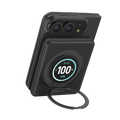
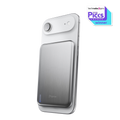
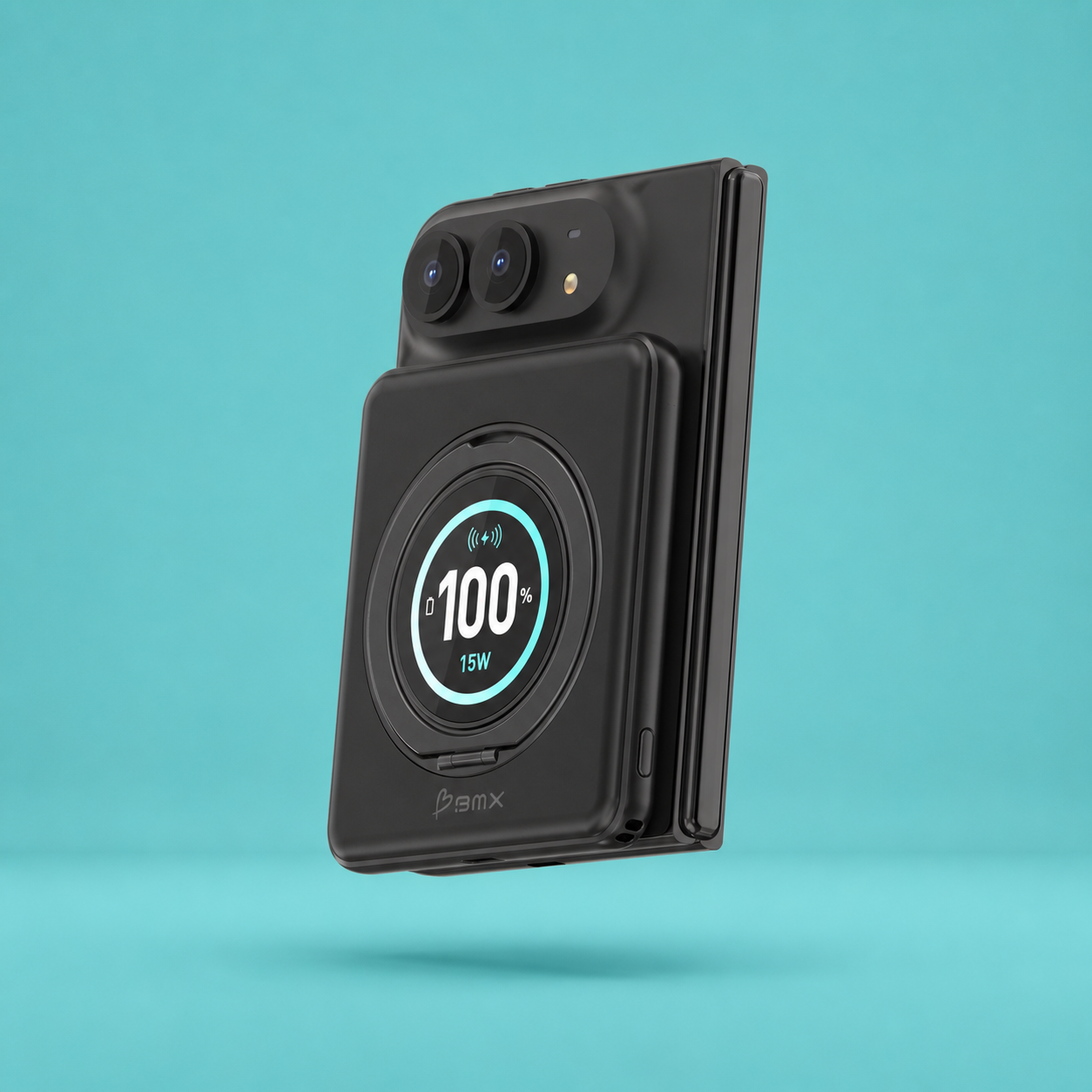




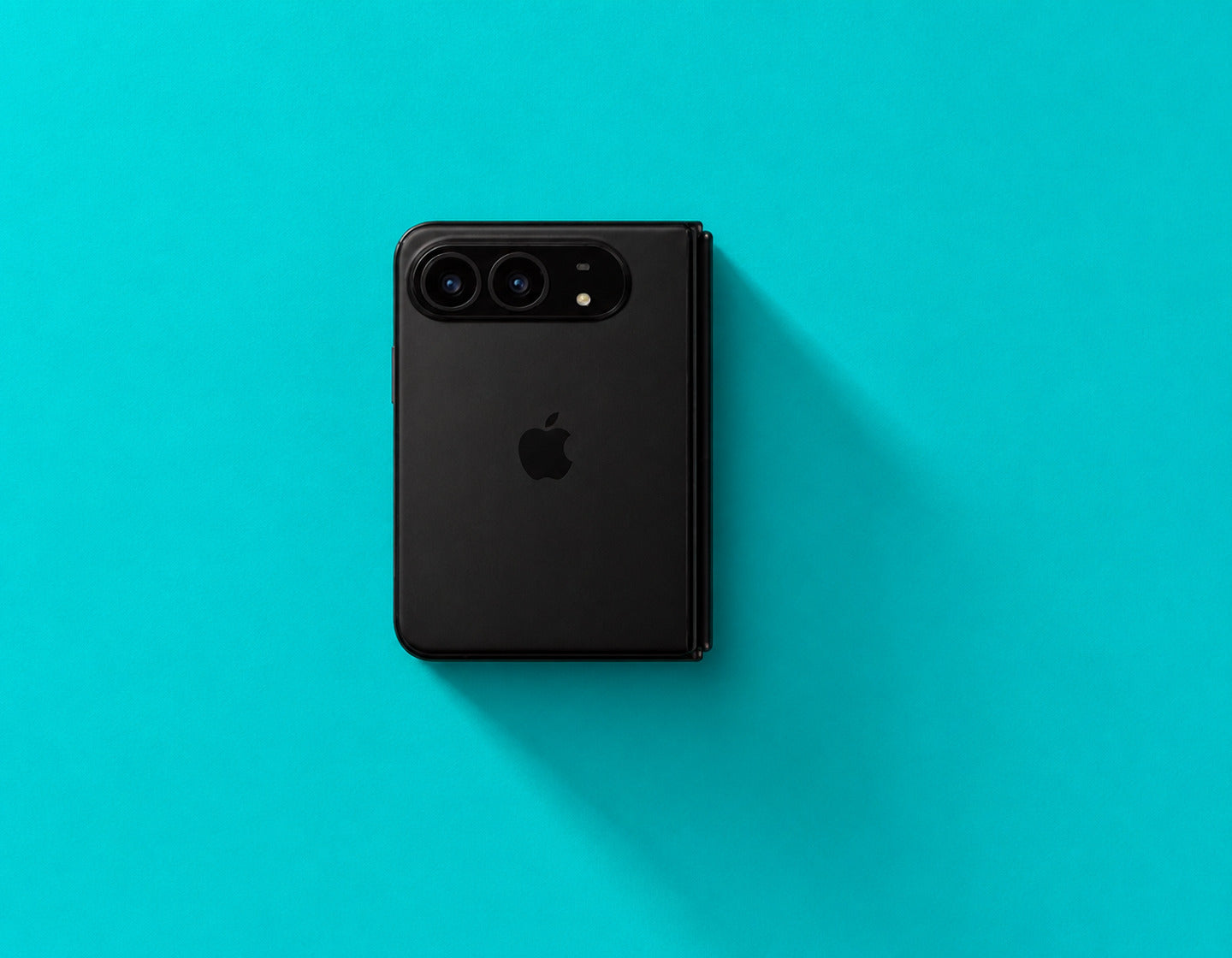
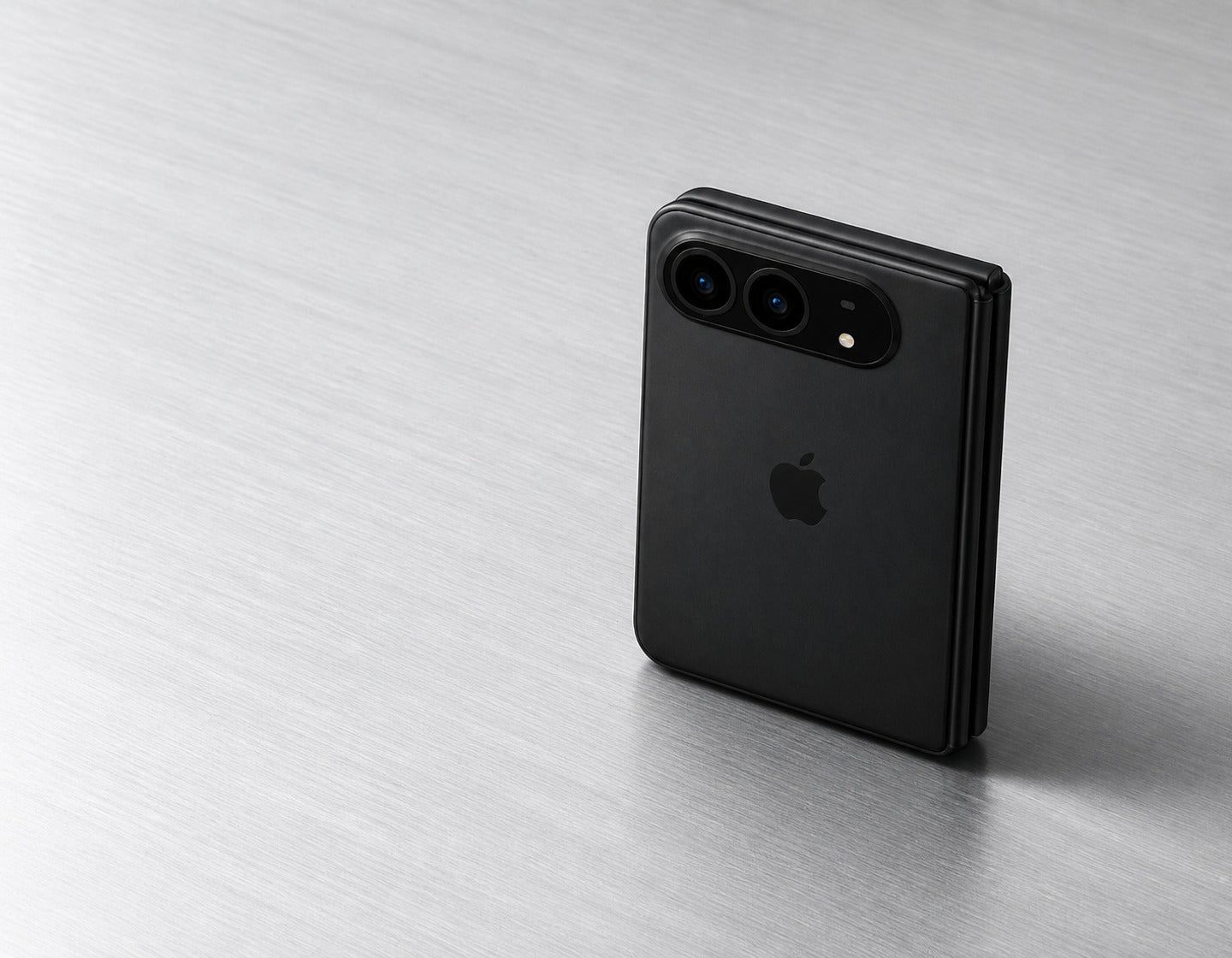
Hero image: BMX concept render, not an official Apple image. Final phone geometry, MagSafe support, and charging specifications remain unconfirmed.
Our call: yes, iPhone Ultra will probably have MagSafe. It is not official, but the strongest current reporting points that way. If Apple includes it, the more interesting question is whether this very thin foldable reaches the full 25W available on current iPhones, and how its short, wide shape changes charging in practice.
The likely answer is a MagSafe system built around the current Qi2 25W standard, with an Ultra charging limit somewhere between 20W and 25W. That is a forecast, not a leaked specification.
| Question | Best answer today |
|---|---|
| Will it have MagSafe? | Probably yes, but Apple has not confirmed it. |
| Will it use Qi2 25W? | Likely, based on Apple’s current iPhone charging architecture. |
| How fast will it charge? | Our estimate is 20W to 25W at peak. |
| Will old accessories work? | Many probably will, but at their existing speed and with possible fit issues. |
Why MagSafe now looks likely
In an interview published September 1, Bloomberg’s Mark Gurman said that all indications he has heard point to MagSafe being included. He also noted that Apple managed to fit MagSafe into the 5.6 mm iPhone Air, weakening the argument that a thin body alone would force Apple to remove it.
That is stronger evidence than the leaked cases that appeared earlier this year with magnetic rings printed inside them. Those cases still matter as supporting evidence, but case makers can work from incomplete pre-release drawings.
There is counterevidence. Reported dummy units did not show a visible MagSafe ring, and an extremely thin foldable leaves less internal room for every component. Still, dummy units reveal external dimensions, not necessarily the charging coil and magnet array hidden inside the phone.
So the clean answer is: probably yes, but not confirmed until Apple says so.
Qi2.2 is the logical next step
What people commonly call Qi2.2 is officially Qi specification version 2.2.1, marketed by the Wireless Power Consortium as Qi2 25W. It raises compatible magnetic wireless charging from 15W to as much as 25W and includes tighter power control and foreign-object detection.
Apple already supports both MagSafe and Qi2 wireless charging at up to 25W on iPhone 17. The phone includes the magnetic array and alignment system needed to position the charging coils correctly. That makes the current 25W architecture the sensible assumption for a new flagship-class foldable.
This part is an inference, not a rumor about a confirmed Ultra specification. Apple could use the same architecture and still set a lower power limit for this particular phone.
Expect 20W to 25W, not an automatic 25W
Qi2 25W describes what the charging system can support. It does not guarantee that every phone will accept the full 25W.
Apple’s own lineup proves the point. Current iPhone 17 models can reach 25W with the right MagSafe charger and power adapter, while the much thinner iPhone Air peaks at 20W. An iPhone Ultra reported to be roughly 4.5 mm thick when open may face similar thermal and packaging limits.
Our best estimate is therefore 20W to 25W peak magnetic charging. Apple may prioritize the full 25W, or it may cap the Ultra closer to the Air to control temperature in a very thin enclosure.
Reaching the phone’s peak would also require the right equipment. Apple’s current 25W MagSafe setup calls for a compatible charger and a 30W or greater USB-C power adapter. A 15W puck or battery pack remains a 15W accessory even when attached to a phone capable of more.
The shape may matter more than the peak number
Current reports describe a book-style foldable with a roughly 5.5-inch outside display and a 7.8-inch inside display. Closed, it looks shorter and wider than a conventional Pro Max. Open, each half is exceptionally thin.
That shape creates three practical questions.
Where does the heat go? Wireless charging always loses some energy as heat. A thin rear half has less material and internal volume to spread that heat. Apple already slows or pauses charging when an iPhone gets too warm, so sustained speed may matter more than the brief peak printed on a specification sheet.
Where does the coil sit? The charging coil, camera system, battery, logic board, and hinge all compete for space. The magnet ring may need to sit higher or lower than expected. That position will determine whether an accessory lies flat and clears the camera.
What happens when the phone opens? A charging puck resting on a desk should be simple. A stand or car mount has to support the leverage of a much larger open display through one magnetic connection. Magnet strength, case stiffness, ring position, and orientation will all matter.
Those are engineering implications of the reported shape. They are not claims about Apple’s final internal layout.
What happens to the MagSafe gear you already own?
Charging pucks are the safest bet. If Ultra has native MagSafe, a small current puck will probably attach and charge. Its existing power limit will still apply.
Battery packs are less predictable. A pack can align with the magnets and begin charging while its body extends below the shorter phone, crowds the camera, or blocks comfortable access to the bottom edge. Attachment does not guarantee a good physical fit.
Wallets and grips depend on ring position. They may connect normally but cover a different proportion of the rear panel or sit awkwardly near the hinge and camera.
Stands and mounts need a real open-phone test. A mount that feels solid with the phone closed may behave differently when the inner screen is unfolded and the center of mass moves away from the magnetic connection.
A case adds another variable. It needs its own correctly positioned magnetic ring and enough camera clearance to preserve flat contact. If the charger sits crooked or leaves a gap, watch for unstable speed and extra heat rather than relying on the charging animation alone.
Why we made SolidSafe™ Duo shorter
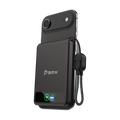
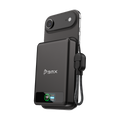
BMX is developing SolidSafe™ Duo with a compact 77 x 88 x 11 mm body and 15W magnetic wireless charging. The custom footprint is intended to match the reported short, wide rear shape instead of hanging a conventional tall battery enclosure below it.
That does not make it a Qi2 25W product, and we are not claiming final compatibility before the production phone exists. Its maximum magnetic wireless output is 15W. The final test still has to confirm magnetic alignment, camera clearance, edge overhang, USB-C access, heat, and stability with the phone closed and open.
The bottom line
MagSafe on iPhone Ultra now looks more likely than not. Qi2 25W is the most logical charging architecture because Apple already uses it across current iPhones. The remaining question is whether the Ultra reaches 25W or follows the thinner iPhone Air closer to 20W.
The phone’s shape then decides how useful that charging system feels. A puck will probably be straightforward. Battery packs, stands, wallets, grips, and cases will need to fit a shorter rear panel, clear the camera, stay aligned, and manage heat. Those answers require Apple’s final specifications and real hardware.
Sources
MagSafe reporting: Tom’s Guide’s interview with Mark Gurman and MacRumors’ September 1 report.
Charging standards and current Apple behavior: Wireless Power Consortium’s Qi standard overview, Apple’s iPhone 17 technical specifications, and Apple’s MagSafe charging guidance.
Reported phone shape and cases: 9to5Mac’s dummy-unit report, MacRumors’ foldable iPhone roundup, and Tom’s Guide’s case-leak report.
Keep reading
- What Is iPhone Ultra? What Apple Has Confirmed and What Remains Rumor
- Will Your Current Power Bank Work With iPhone Ultra?
- iPhone Ultra Accessories: What You Can Buy Now and What Should Wait

Leave a comment
This site is protected by hCaptcha and the hCaptcha Privacy Policy and Terms of Service apply.