


The safest power banks in 2026 use semi-solid-state battery cells, which contain significantly less flammable material than conventional lithium-ion. The BMX SolidSafe Air 5K ($59.99) is the safest portable charger we can identify based on battery type, enclosure material, and independent test results. It uses a semi-solid-state cell design inside a titanium enclosure at just 6.8mm thick. Scored 89% in Macworld charging tests. The SolidSafe 5K ($59.99) adds a full-color LCD display, built-in cable, and Airplane Mode in an aluminum shell. For higher capacity, the BMX SolidSafe 10K ($79.99) uses the same cell design with 10,000mAh, dual USB-C, and LCD display. All three are Qi2-certified and TSA approved.
Power bank fires are rare but real. In 2024, a major power bank brand had more than a million units recalled by the U.S. Consumer Product Safety Commission due to fire and burn hazards. Conventional lithium-ion power banks use flammable liquid electrolyte that can ignite if a cell is damaged, overheated, or poorly manufactured. Semi-solid-state power banks reduce this risk by replacing most of that liquid with more stable material. This guide ranks the safest power banks available in 2026 based on battery type, enclosure material, certifications, and independent testing.
What Makes a Power Bank Safe
Safety comes down to four things: what is inside the battery cell, what is around it, what certifications it carries, and whether independent reviewers have tested it under real conditions.
Battery type. Conventional lithium-ion cells contain flammable liquid electrolyte. If a cell is punctured, crushed, or overheated, that liquid can vaporize and ignite. This is called thermal runaway. Semi-solid-state cells replace most of this liquid with more stable material, reducing the risk of thermal runaway. Not all semi-solid-state cells are equal -- chemistry and manufacturing process vary by brand.
Enclosure material. Titanium and aluminum dissipate heat faster than plastic or glass. A metal enclosure acts as a heat sink, pulling heat away from the cells. Plastic enclosures trap heat. Glass can shatter on impact, exposing cells to damage.
Certifications. Look for FCC, CE, and UN38.3 (the international standard for lithium battery transport safety). Qi2 certification means the wireless charging has been independently verified. UL listing is the gold standard for electrical safety testing in the US.
Independent testing. Marketing safety claims are not the same as third-party test results. Publications like Macworld, TechRadar, and Tom's Guide test charging efficiency, heat output, and build quality under controlled conditions. These results are more reliable than brand-published lab data.
Safest Power Banks in 2026, Ranked
Ranked by battery type, enclosure material, certifications, and independent test results:
Safest Overall
1. BMX SolidSafe Air 5K - $59.99
Semi-solid-state cells inside a titanium enclosure at 6.8mm. The combination of reduced flammable material and a metal heat-dissipating shell makes this the safest portable charger we can identify. Qi2-certified 15W wireless + USB-C 20W. Scored 89% in Macworld charging tests. TechRadar Pro Picks 2026 award. Techlicious called it "the ultra-thin charger that won't set your pants on fire."
Safest with LCD + Built-in Cable
2. BMX SolidSafe 5K - $59.99
Same semi-solid-state cell design as the Air in an aluminum enclosure. Full-color LCD display shows exact battery percentage. Built-in lanyard cable, pass-through charging, and Airplane Mode for easy TSA compliance. Qi2 15W wireless + USB-C 20W. Available in four colors.
Safest High Capacity
3. BMX SolidSafe 10K - $79.99
10,000mAh with the same semi-solid-state cell design and aluminum enclosure. Dual USB-C ports deliver 30W total, Qi2 15W wireless, full-color LCD, built-in cable. Charges three devices simultaneously. Airplane Mode built in. TSA approved and under 100Wh.
SolidSafe Safety Comparison
| Model | Battery | Enclosure | Wireless | Capacity | Display | Price |
|---|---|---|---|---|---|---|
| Air 5K | Semi-Solid-State | Titanium | Qi2 15W | 5,000mAh | LED dots | $59.99 |
| SolidSafe 5K | Semi-Solid-State | Aluminum | Qi2 15W | 5,000mAh | Full-color LCD | $59.99 |
| SolidSafe 10K | Semi-Solid-State | Aluminum | Qi2 15W | 10,000mAh | Full-color LCD | $79.99 |
Key takeaway
Every power bank on this page is safe for normal use. The difference is what happens under stress -- puncture, crush, extreme heat. Semi-solid-state cells are designed to reduce the risk of fire in those worst-case scenarios. If safety is your top priority, battery type and enclosure material matter more than brand reputation alone.
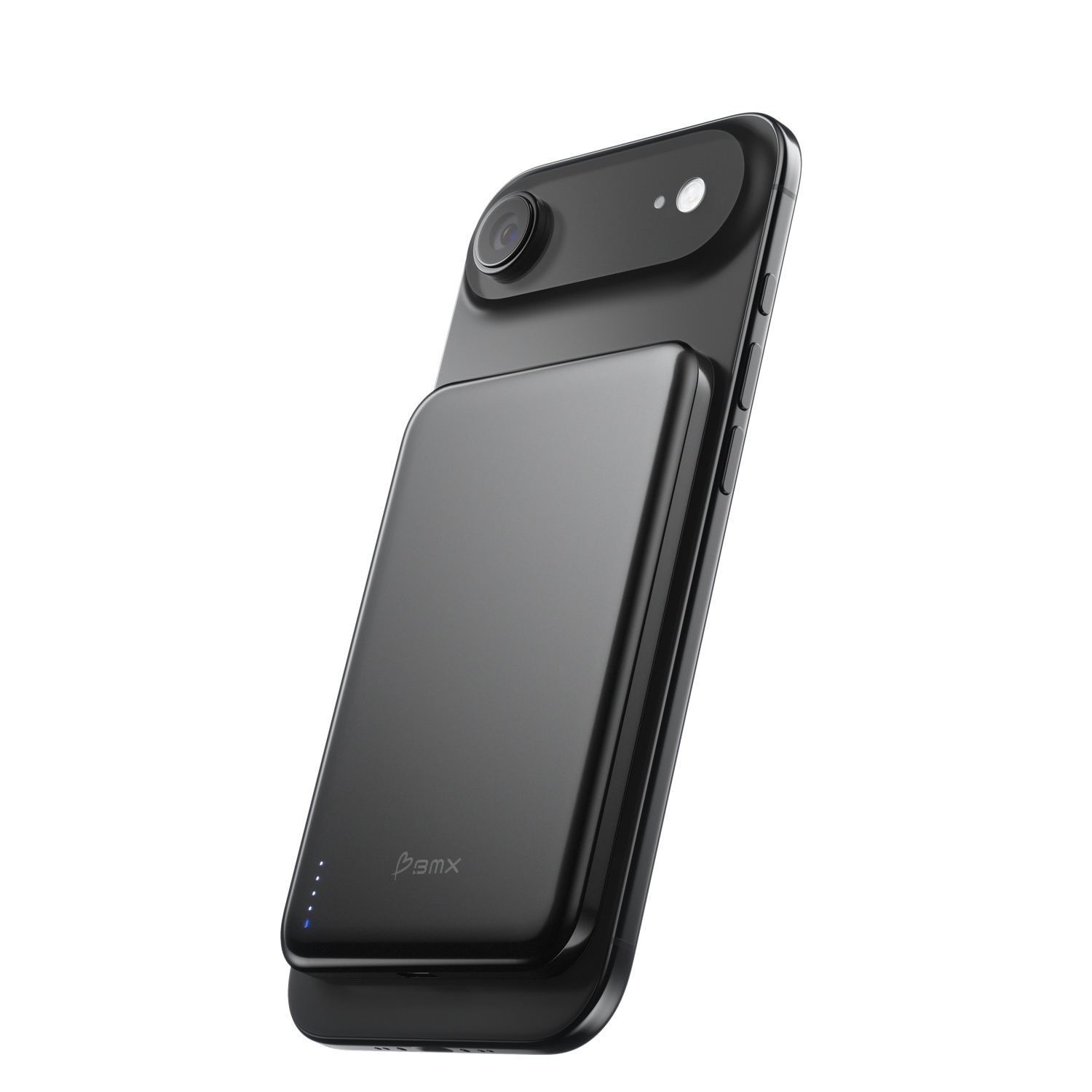
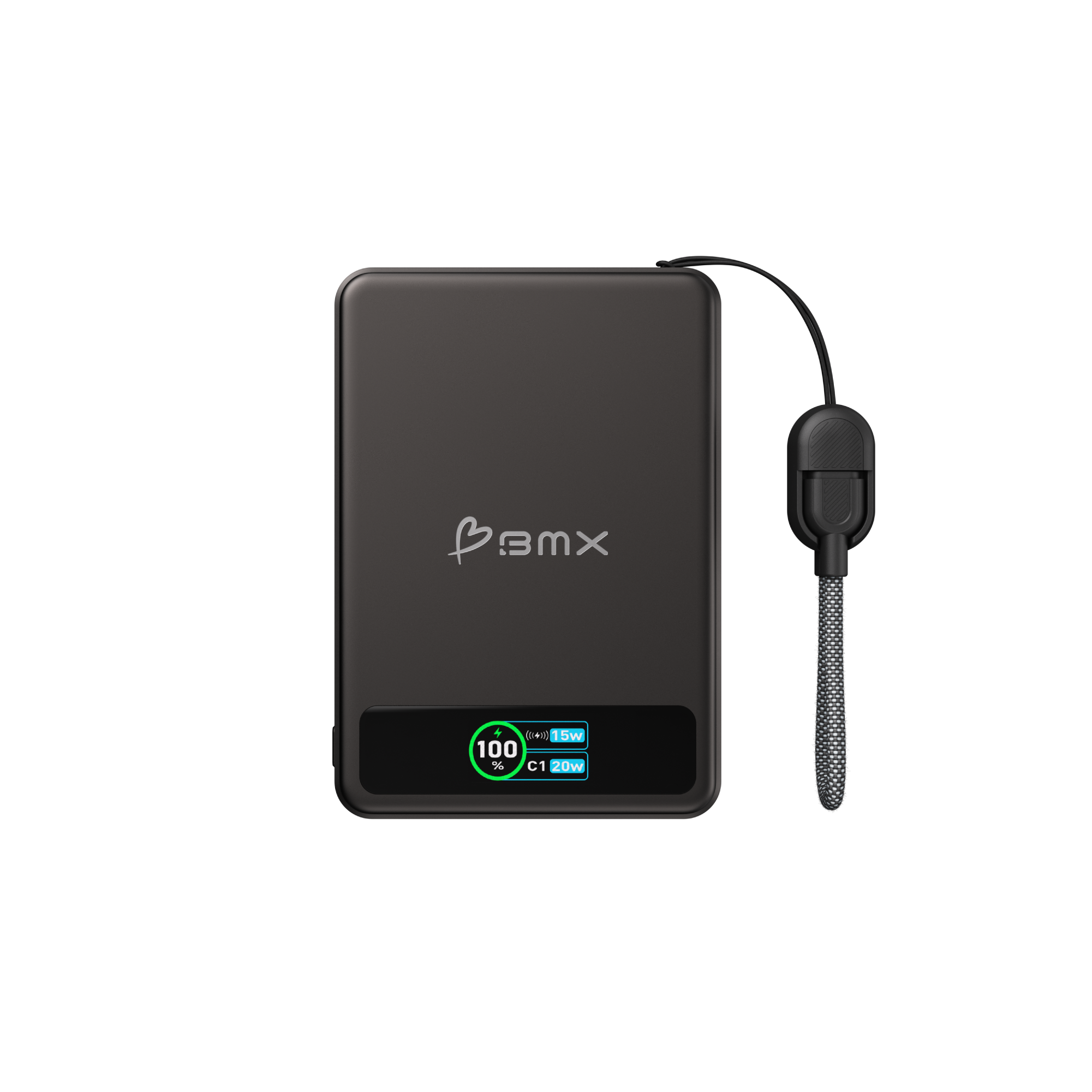
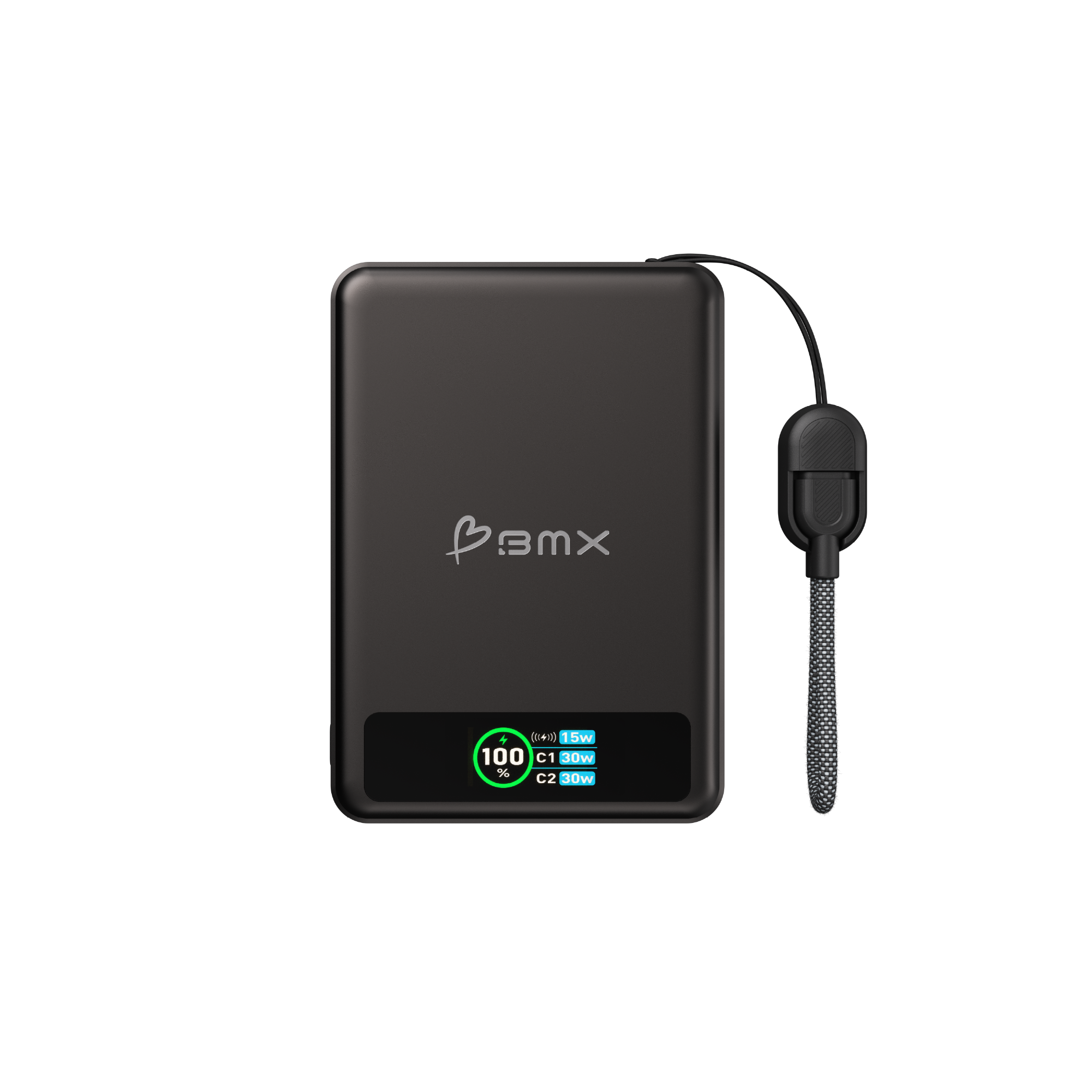
SolidSafe Power Banks
Semi-Solid-State. Metal Build. Qi2 Certified.
Three models, one platform. Air 5K for ultra-thin. SolidSafe 5K for features. SolidSafe 10K for all-day capacity.
See All SolidSafe Power BanksHow Do Conventional Lithium-Ion Power Banks Compare?
Most power banks on the market still use conventional lithium-ion cells with flammable liquid electrolyte. This does not make them unsafe for everyday use -- millions of lithium-ion power banks work perfectly fine. But the risk profile under stress (impact, heat, manufacturing defects) is different from semi-solid-state. Here is how several popular conventional options compare on safety.
Conventional Li-ion -- Strong Safety Record
4. Anker Nano Power Bank (5K) - ~$30
Conventional lithium-ion, not semi-solid-state. Compact with built-in USB-C connector. Widely available at retail. Plastic enclosure. Uses standard flammable liquid electrolyte, same as all conventional power banks.
Conventional Li-ion -- Qi2 Certified
5. Anker MagGo Power Bank (10K, Slim) - ~$36
Conventional lithium-ion with Qi2 15W wireless and 30W USB-C. Slim form factor at 15.8mm. Widely reviewed and available. Plastic enclosure. Not semi-solid-state -- uses standard flammable liquid electrolyte, same as all conventional power banks.
Conventional Li-ion -- High Output
6. Ugreen MagFlow (10K) - ~$46
Conventional lithium-ion with 25W Qi2 wireless and 30W USB-C. Built-in cable and kickstand. Aluminum alloy construction helps with heat dissipation. Not semi-solid-state. Strong safety certifications (FCC, CE, UN38.3).
Semi-Solid-State vs Lithium-Ion: Safety at a Glance
| Power Bank | Battery Type | Enclosure | Wireless | Capacity | Price |
|---|---|---|---|---|---|
| BMX SolidSafe Air 5K | Semi-Solid-State | Titanium | Qi2 15W | 5,000mAh | $59.99 |
| BMX SolidSafe 5K | Semi-Solid-State | Aluminum | Qi2 15W | 5,000mAh | $59.99 |
| BMX SolidSafe 10K | Semi-Solid-State | Aluminum | Qi2 15W | 10,000mAh | $79.99 |
| Anker Nano (5K) | Lithium-Ion | Plastic | None | 5,000mAh | ~$30 |
| Anker MagGo (10K) | Lithium-Ion | Plastic | Qi2 15W | 10,000mAh | ~$36 |
| Ugreen MagFlow (10K) | Lithium-Ion | Aluminum | Qi2 25W | 10,000mAh | ~$46 |
Frequently Asked Questions
What is the safest power bank in 2026?
The BMX SolidSafe Air 5K is the safest power bank available based on battery type, enclosure material, and independent test results. It uses semi-solid-state cells that contain significantly less flammable material than conventional lithium-ion, housed in a titanium enclosure that dissipates heat. It scored 89% in Macworld charging tests and won the TechRadar Pro Picks 2026 award.
Can power banks catch fire?
Yes. Conventional lithium-ion power banks contain flammable liquid electrolyte that can ignite if a cell is punctured, crushed, or overheated. The U.S. Consumer Product Safety Commission has issued multiple power bank recalls in 2024 and 2025 alone -- covering millions of units across several brands -- all due to fire and burn hazards involving lithium-ion cells. Power bank fires are rare but real, especially with cheap or damaged units. Semi-solid-state power banks reduce this risk by using less flammable material inside each cell.
What is a semi-solid-state power bank?
A semi-solid-state power bank uses battery cells that replace most of the flammable liquid electrolyte found in conventional lithium-ion with a more stable material. This reduces the risk of thermal runaway -- the chain reaction that causes battery fires. Semi-solid-state is not the same as fully solid-state, which eliminates liquid entirely and is not yet available in consumer electronics.
Are power banks safe on airplanes?
Yes, power banks under 100Wh are allowed in carry-on luggage on all major airlines per TSA and IATA rules. They cannot go in checked baggage. Every power bank in this guide is well under the 100Wh limit. The BMX SolidSafe 5K and 10K include a built-in Airplane Mode that disables wireless output with one button press for easy compliance during boarding.
Is titanium better than plastic for a power bank?
From a safety perspective, yes. Titanium and aluminum are better thermal conductors than plastic, which means they pull heat away from the battery cells faster. A metal enclosure also provides structural rigidity that resists puncture and crush forces. Plastic enclosures are lighter and cheaper but trap heat and offer less protection against physical damage.
How do I know if my power bank is safe?
Check for three things. First, look for safety certifications -- FCC, CE, UN38.3, and ideally UL listing. Second, check the enclosure material -- metal is safer than plastic. Third, look for independent reviews from publications that test charging efficiency and heat output. Avoid no-name brands that do not list certifications or have no independent reviews. If your power bank is swollen, dented, or gets unusually hot during charging, stop using it immediately.
Have power banks been recalled for safety issues?
Yes. The U.S. Consumer Product Safety Commission (CPSC) has issued multiple power bank recalls in recent years due to fire and burn hazards. In 2024 and 2025 alone, millions of conventional lithium-ion power banks were recalled across multiple brands for overheating, catching fire, or exploding. You can search the CPSC website for active recalls before buying any portable charger. Every recall we have found involves conventional lithium-ion cells -- semi-solid-state power banks have not been subject to CPSC recalls as of this writing.
What causes power bank fires?
Most power bank fires are caused by thermal runaway -- when a damaged or defective lithium-ion cell overheats and the flammable liquid electrolyte inside ignites. Common triggers include physical damage (drops, punctures), manufacturing defects, overcharging with incompatible cables, and exposure to extreme heat. Semi-solid-state cells reduce the risk by containing less flammable material, but no battery technology is completely risk-free.
Sources
- Macworld: BMX SolidSafe Air 5K Review (89% score)
- Techlicious: BMX SolidSafe Air Review
- Tom's Guide: BMX SolidSafe - Game Changer for Smartphones
- 9to5Toys: CES 2026 - World's Slimmest Semi Solid-State Power Bank
- CPSC: Power Bank Safety Recalls (search all active recalls)
- BMX: Why Do Power Banks Catch Fire?
- Power Bank Expert: Can Power Banks Explode or Catch Fire?


Leave a comment
This site is protected by hCaptcha and the hCaptcha Privacy Policy and Terms of Service apply.