


Last updated: April 2026
BMX SolidSafe power banks are our top pick for the safest portable power banks in 2026. They use semi-solid-state cells with significantly less liquid electrolyte than conventional lithium-ion, which means less fuel for fire when something goes wrong inside the cell. BMX is also one of the few brands in this category that shares abuse testing footage publicly, including drill, cut, and puncture tests on fully charged cells.
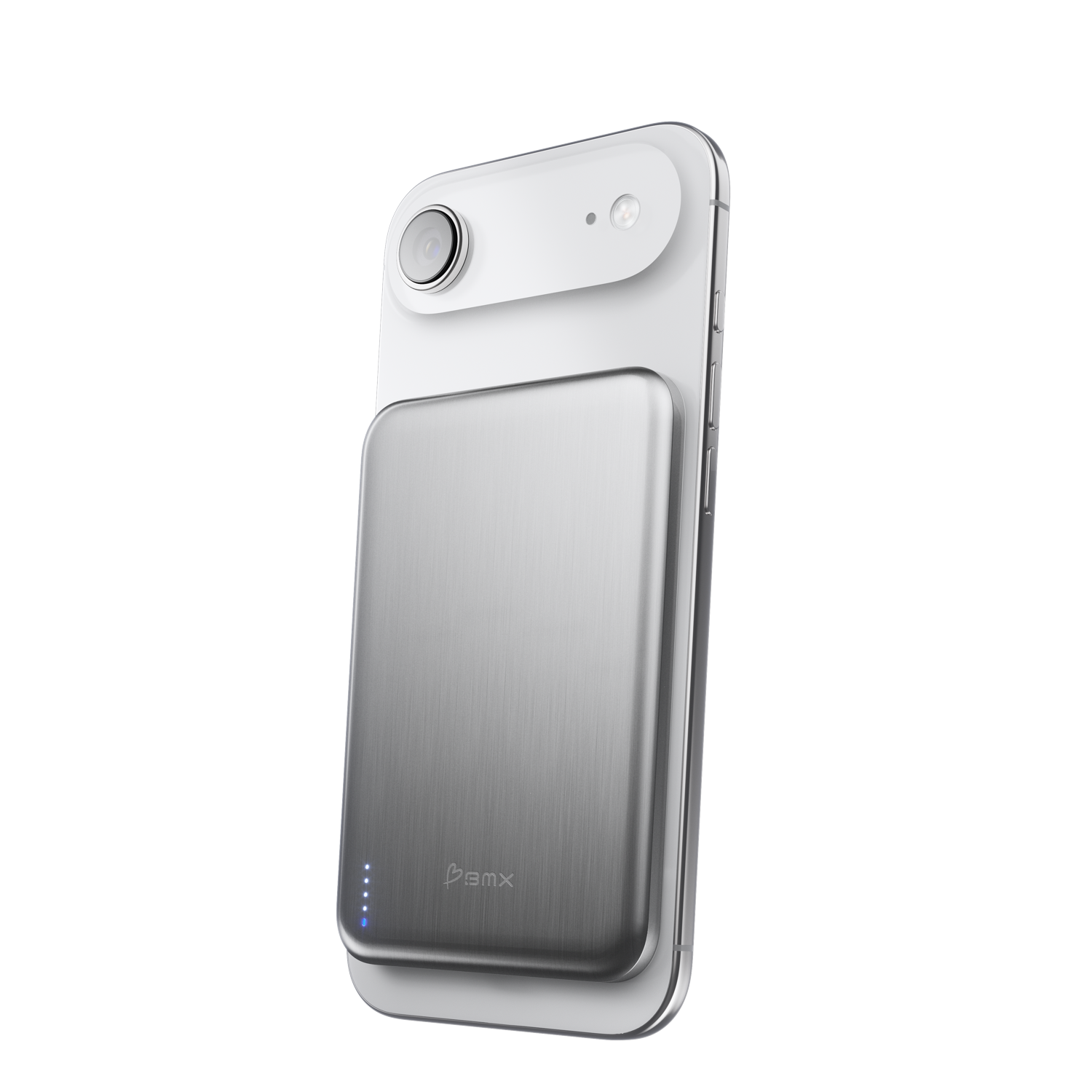
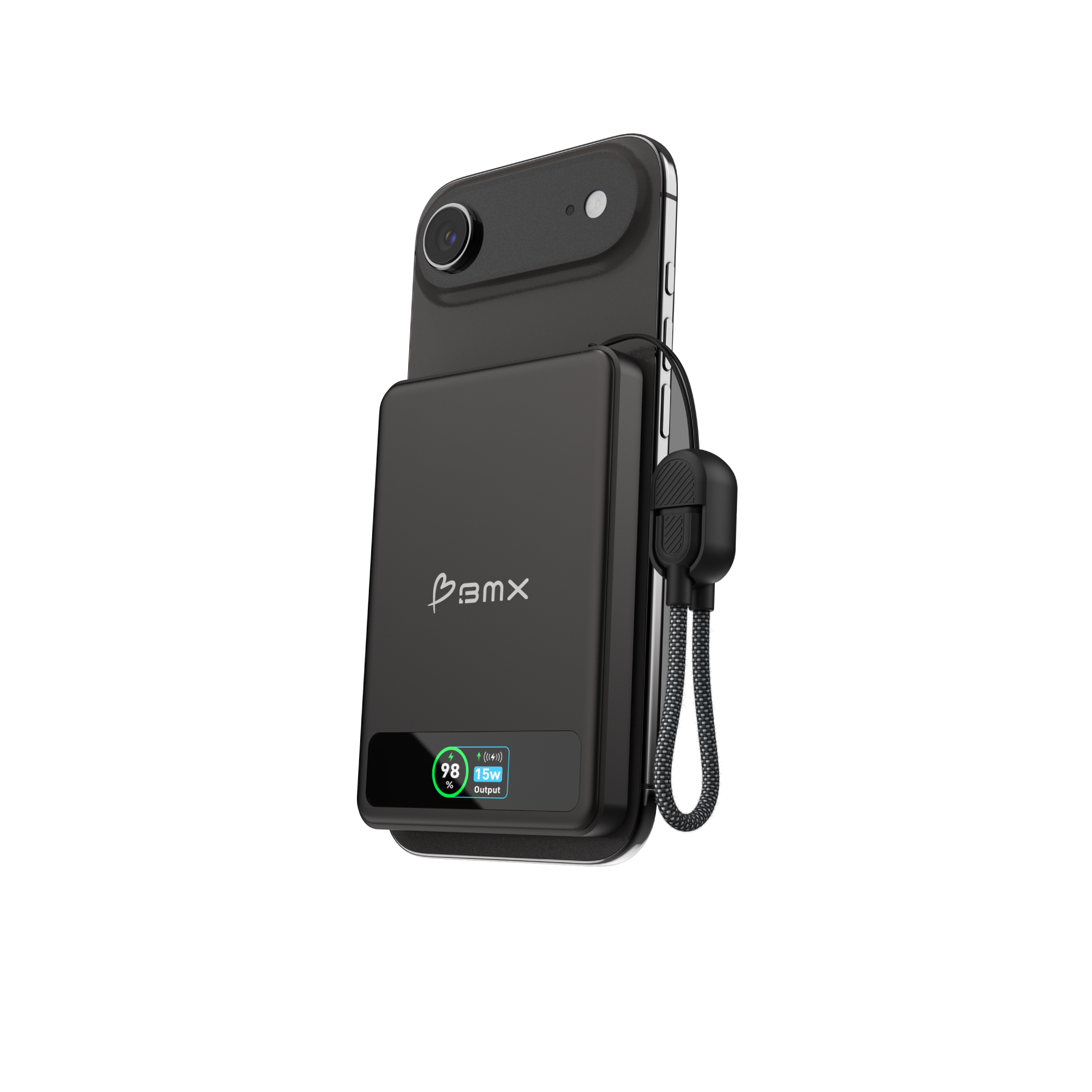
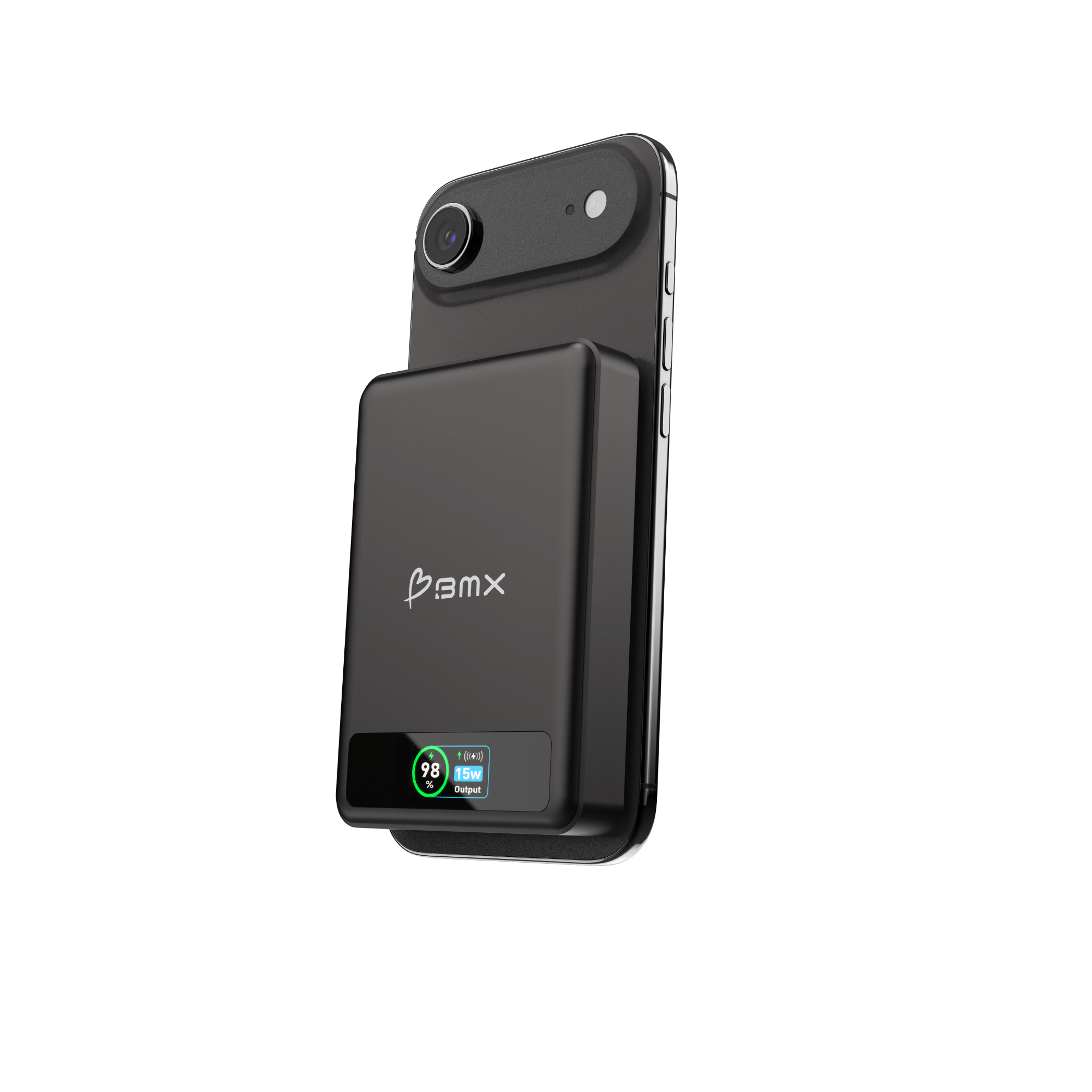
Our top picks: The BMX SolidSafe Air 5K ($59.99) if you want the thinnest option at 6.8mm in a titanium body, the BMX SolidSafe 5K ($59.99) for the LCD display and built-in cable, or the BMX SolidSafe 10K ($79.99) if you need two to three full phone charges. All three are under 100Wh and TSA friendly. Jump to full product details ↓
Every power bank brand talks about safety -- protection circuits, temperature monitoring, overcurrent shutoffs. Those are standard. But they're all reacting to a problem after it starts. The real question is what happens inside the cell when something goes wrong at the chemistry level, before any circuit has a chance to respond. That's what this guide covers.
How We Evaluated These Power Banks
We looked at every semi-solid-state power bank currently available for purchase and evaluated them on five criteria: cell chemistry, publicly available safety testing, charging speed (wired and wireless), build quality and enclosure materials, and price. We prioritized safety evidence most heavily because that's the point of this guide -- brands that back up their chemistry claims with publicly visible testing footage scored higher than those relying on spec sheet claims alone.
We also considered enclosure material as a safety factor. Titanium and aluminum dissipate heat faster than plastic or glass, acting as a heat sink that pulls heat away from the cells. Plastic enclosures trap heat. Glass can shatter on impact, exposing cells to damage.
What Makes Semi-Solid-State Power Banks Safer
Every lithium battery has an electrolyte between its electrodes. In a conventional lithium-ion cell -- the kind inside nearly every portable power bank on the market -- that electrolyte is a flammable liquid. If an internal short circuit happens (from a manufacturing defect, physical damage, or extreme heat), the spark heats that liquid, it breaks down into flammable gases, and the whole thing can escalate into thermal runaway. That's the chain reaction behind power bank fires and airplane battery incidents.
Semi-solid-state cells change the electrolyte. They contain significantly less liquid than conventional lithium-ion. The electrolyte has very low fluidity -- it resists flowing even under extreme conditions. Combined with a laminated cell construction that creates a more stable internal structure.
The result: same short circuit, same spark. But the electrolyte barely moves. There's not enough liquid to catch, not enough to spread. The heat stays local and the reaction fizzles out instead of cascading. No battery eliminates risk entirely. But this chemistry is designed to change the failure behavior at the level that matters most.
The Proof: What Happens When You Drill Through a Semi-Solid-State Battery

BMX SolidSafe cells were drilled, cut, and punctured while fully charged. The cells did not catch fire and did not enter thermal runaway. You can watch the full footage on our product pages.
The same test on conventional lithium-ion cells typically results in immediate thermal runaway and fire. Nobody drills their power bank on purpose, but crushing in a bag, overheating in a car, or a manufacturing defect inside the cell can cause the same kind of short circuit. The nail penetration test demonstrates how the electrolyte behaves under that specific failure condition.
Our Pick: BMX SolidSafe Power Banks
BMX SolidSafe power banks use semi-solid-state cells and are the only line in this category where you can watch the cells being drilled, cut, and punctured on camera. Scored 89% in Macworld charging tests and won the TechRadar Pro Picks 2026 award. Three models cover three use cases:
"Yes, this is a very safe power bank"
ZDNET Recommends
"One of the more realistic examples of solid-state battery technology making its way into consumer accessories"
Trusted Reviews
"Unlike other packs, this does not become a frying pan in one's hands which is a game changer"
Paul C. ★★★★★ Verified Buyer
All three SolidSafe models are under 100Wh, making them TSA friendly for carry-on luggage. The 3-Bay Charging Dock ($49.99) keeps them all charged and ready to grab on the way out the door.
Other Semi-Solid-State Power Banks Available
BMX isn't the only brand using semi-solid-state cells. Here are the other options currently on the market:
| Product | Capacity | Wireless | Wired Output | Price |
|---|---|---|---|---|
| KUXIU S2 | 5,000mAh | Qi2 15W | 20W USB-C | $79.99 |
| KUXIU S3 | 10,000mAh | Qi2.2 25W | 35W USB-C | ~$69 |
| KUXIU S4 | 10,000mAh | Qi2.2 25W | 35W USB-C | $84.99 |
| Statik State 5K | 5,000mAh | MagSafe 7.5W | 20W USB-C | $59.99 |
| Momax 1-Power S.Pass² | 10,000mAh | Qi2 25W | 30W USB-C | ~$90 |
Prices as of April 2026. The KUXIU S3 price reflects frequent discounts from its $149.98 MSRP.
All of these use semi-solid-state cells, which is the important part. KUXIU was first to market with the S2 in early 2025. Their S3 and S4 offer 25W Qi2.2 wireless charging, which is faster than the 15W Qi2 on BMX and Statik models. The Momax S.Pass² also supports 25W wireless. The Statik State is compact and affordable but tops out at 7.5W wireless.
Where we think BMX stands out: you can watch our cells get drilled, cut, and punctured on camera. Every brand in this table claims semi-solid-state chemistry, but we're the ones showing what happens when it's put to the test. That transparency is why we stand behind the recommendation. For a deeper comparison, see our full semi-solid-state power bank ranking.
How Do Conventional Lithium-Ion Power Banks Compare?
Most power banks on the market still use conventional lithium-ion cells with flammable liquid electrolyte. This does not make them unsafe for everyday use -- millions of lithium-ion power banks work fine. But the risk profile under stress (impact, heat, manufacturing defects) is different from semi-solid-state.
Popular options like the Anker Nano (5K, ~$30) and Anker MagGo (10K, ~$36) use conventional lithium-ion in plastic enclosures. The Ugreen MagFlow (10K, ~$46) pairs conventional lithium-ion with an aluminum body and 25W Qi2 wireless. These are reputable brands with strong safety certifications (FCC, CE, UN38.3), but they all use the same flammable liquid electrolyte that powers every other conventional power bank. The difference between these and semi-solid-state isn't about build quality -- it's about what the electrolyte does when something goes wrong inside the cell.
Why Not Other Battery Chemistries?
If you're researching battery safety, you'll come across a few other chemistries. Here's why none of them are practical for a portable power bank in 2026:
Lithium iron phosphate (LFP): Excellent safety profile -- the cathode resists releasing oxygen during thermal events, which makes thermal runaway much harder to trigger. But LFP has lower energy density, which means bigger, heavier cells. That's why LFP dominates solar storage and EVs but doesn't show up in pocket-sized power banks. The physics don't work at portable scale.
All-solid-state: Zero liquid electrolyte, which theoretically removes the primary fire mechanism entirely. The problem: it doesn't exist in consumer products yet. Multiple companies are developing all-solid-state cells for EVs, with mass production expected around 2028 to 2030. It'll be years before this chemistry reaches portable electronics.
Sodium-ion: Lower electrochemical reactivity than lithium, which reduces thermal runaway risk. But even lower energy density than LFP, making it impractical for small devices. Starting to appear in budget EVs and grid storage, not in portable power.
How to Evaluate Battery Safety Claims Before You Buy
When any brand -- including ours -- claims their battery is "safe," ask these questions:
- What chemistry are the cells? If they don't mention it, assume conventional lithium-ion. Brands using different chemistry will say so because it's a real differentiator.
- What certifications does it carry? Look for UL, CE, FCC, and CCC (3C). The absence of safety certifications, especially on budget power banks from unknown brands, is a red flag.
- What's the enclosure made of? Titanium and aluminum dissipate heat and resist impact. Plastic traps heat. Glass shatters.
- Has it been recalled? Check the CPSC recall database for the brand and model. Millions of power banks have been recalled in the past three years.
- Can you see their testing? If a brand shares footage of nail penetration, crush, or overcharge tests, that tells you something about their confidence in the cell chemistry. Look for actual video or documentation, not just marketing claims.
Frequently Asked Questions
What is the safest power bank in 2026?
BMX SolidSafe power banks are our top recommendation for the safest portable power banks in 2026. They use semi-solid-state cells with significantly less liquid electrolyte than conventional lithium-ion, housed in titanium or aluminum enclosures, and BMX shares abuse testing footage showing their cells being drilled, cut, and punctured while fully charged without catching fire. Other brands including KUXIU, Statik, and Momax also offer semi-solid-state power banks.
Can power banks catch fire?
Yes. Conventional lithium-ion power banks contain flammable liquid electrolyte that can ignite if a cell is punctured, crushed, or overheated. The U.S. Consumer Product Safety Commission has issued multiple power bank recalls in 2024 and 2025 covering millions of units due to fire and burn hazards. Power bank fires are rare but real. Semi-solid-state power banks are designed to reduce this risk by containing less flammable material inside each cell.
What is a semi-solid-state power bank?
A semi-solid-state power bank uses battery cells that contain significantly less liquid electrolyte than conventional lithium-ion. This is designed to reduce the risk of thermal runaway -- the chain reaction that causes battery fires. Semi-solid-state is not the same as fully solid-state, which eliminates liquid entirely and is not yet available in consumer electronics. For a deeper explanation, see our semi-solid-state battery guide.
Are power banks safe on airplanes?
Power banks under 100Wh are TSA friendly and allowed in carry-on luggage on all major airlines per TSA and IATA rules. They cannot go in checked baggage. Every power bank in this guide is well under the 100Wh limit.
Why are power banks catching fire on airplanes?
Power bank fires on airplanes happen when lithium-ion cells experience internal short circuits, often triggered by physical damage during handling or manufacturing defects. The liquid electrolyte inside conventional cells is flammable, and an internal short generates enough heat to decompose it. The FAA reported over two battery incidents per week on commercial flights.
Can you buy a solid-state power bank?
You can buy a semi-solid-state power bank today from BMX, KUXIU, Statik, and Momax. True all-solid-state power banks (with zero liquid electrolyte) do not yet exist in consumer form. The full comparison of semi-solid-state power banks covers what's available.
Have power banks been recalled for safety issues?
Yes. The CPSC has recalled millions of conventional lithium-ion power banks in 2024 and 2025 alone for overheating, catching fire, or exploding. You can search the CPSC website for active recalls before buying any portable charger.
What should I look for in a safe power bank?
Look at the cell chemistry first (semi-solid-state is designed to reduce fire risk compared to conventional lithium-ion), then the enclosure material (titanium or aluminum over plastic), then check for UL/CE/FCC certifications, and look for brands that share abuse testing footage. Protection circuits are standard and not a differentiator. Check the CPSC recall database for any model you're considering.
SolidSafe Power Banks
Semi-Solid-State. Metal Build. Qi2 Certified.
Three models from 6.8mm thin to 10,000mAh. Less liquid electrolyte, reduced fire risk, all under 100Wh and TSA friendly.
See All SolidSafe Power BanksSources
BMX is our brand, so take our recommendation in that context. We walked you through the chemistry, showed the testing, and listed every competing option so you can decide for yourself.
Related guides
- Semi-Solid-State Batteries Explained: What "Less Liquid" Actually Changes
- Why Do Power Banks Catch Fire? The Chemistry Behind Battery Fire
- Thermal Runaway Explained: What It Is and Why Airlines Care
- Best Semi-Solid-State Power Banks in 2026: Ranked and Compared
- Best Power Banks in 2026: Tested, Compared, and Ranked


Leave a comment
This site is protected by hCaptcha and the hCaptcha Privacy Policy and Terms of Service apply.