


GaN chargers win clearly in three situations: daily carry, travel, and any setup running two or more devices on one outlet. Silicon chargers are still fine for a single phone at home, low-wattage accessories, or any place where size and heat are not real problems. At 100W and above, GaN is effectively the only practical choice. Here is the honest head-to-head and how to decide which one belongs in your bag.
If you read What Is a GaN Charger?, you already know the technical answer: gallium nitride replaces silicon in the switching transistors, the charger runs at a higher switching frequency, magnetics get smaller, efficiency goes up. That is the science. This post answers the harder question: should you actually buy one?
The honest answer is "sometimes." Not every charger needs to be GaN. Most articles on this topic gloss over that. We won't.
The Real Differences, By the Numbers
Here is what the two technologies typically deliver at the same advertised wattage. These are general ranges, not best-case marketing.
| Spec | Silicon charger | GaN charger |
|---|---|---|
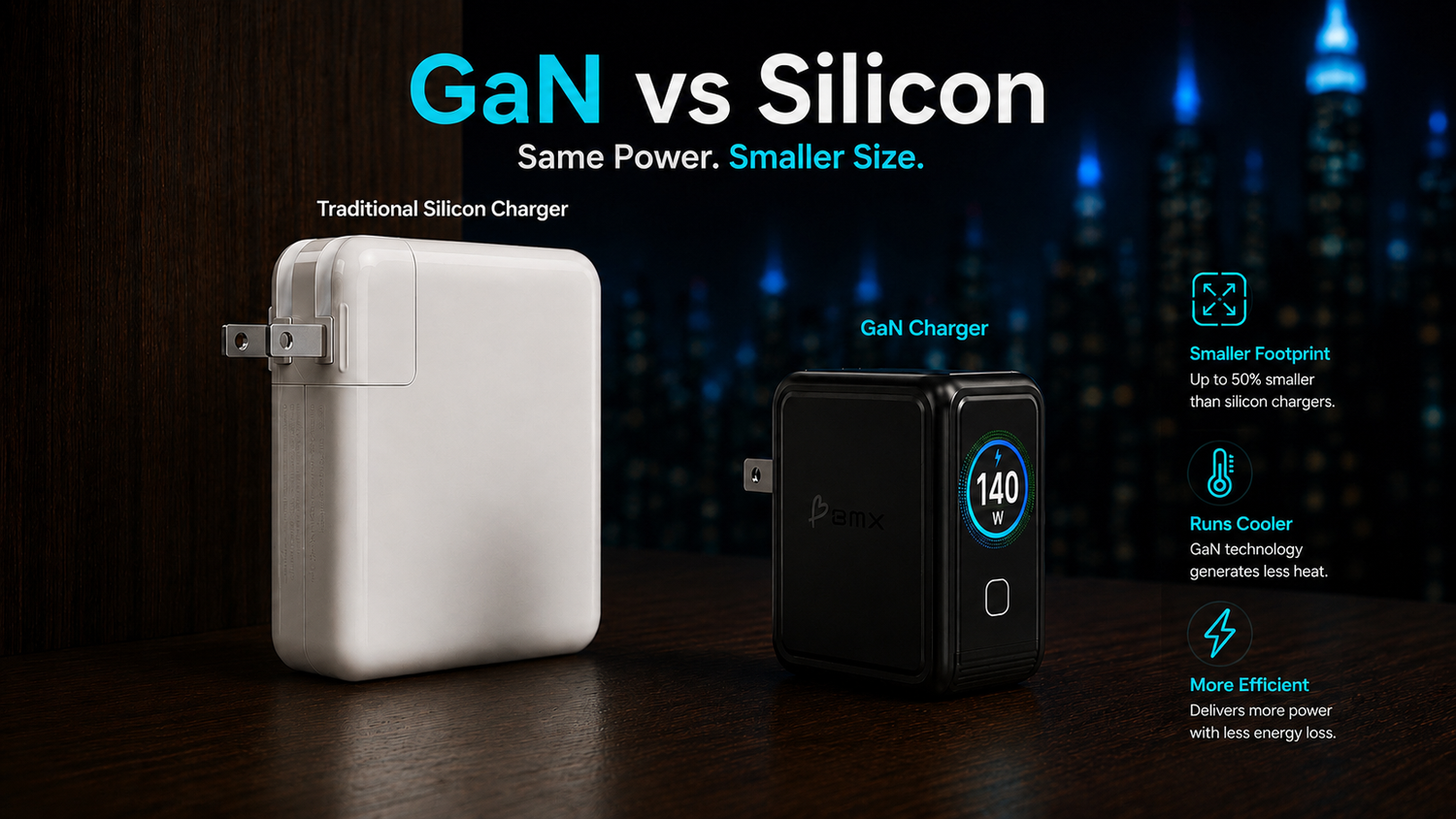
| Size (typical 65W) | Palm-sized brick | About half the volume |
| Weight (typical 65W) | Around a quarter pound | About half that |
| Efficiency at rated wattage | Around 80 to 85 percent | 90 percent and above |
| Heat at sustained load | Warm to hot above 65W | Cooler at the same load |
| Multi-port density | Adds size and heat fast | 2 to 4 ports common |
| Cost (entry-level 65W) | $25 to $35 | $50 to $80 |
| Cost (premium 140W with display) | Effectively unavailable | $80 to $150 |
One thing the table makes clear: USB-C Power Delivery and PPS support are not GaN features. Both technologies can support both protocols. A silicon charger that lists PD 3.1 and PPS will charge your phone exactly as fast as a GaN charger with the same protocol support. GaN's advantages are physical: size, weight, heat, and multi-port density. The protocols are separate.
When GaN Clearly Wins
Daily carry
If a charger lives in your bag and goes with you to work, a coffee shop, a coworking space, or a friend's couch, GaN is the obvious win. A silicon brick at 65W takes up real space and adds noticeable weight. A GaN charger at the same wattage shrinks to about half the volume and roughly half the weight. Multiply by every day for a year and the difference shows up.
Travel
One GaN charger plus a plug adapter replaces three or four older bricks and a tangle of cables. International travel especially benefits. GaN chargers handle 100 to 240V input natively, so you only need a physical plug adapter for the outlet shape. Pack one 100W or 140W GaN charger and you can power a laptop, phone, and headphones from a single outlet anywhere in the world.
Multi-device charging
This is the underrated win. The moment you charge two or more devices from one charger, GaN's efficiency advantage compounds. Silicon chargers can do multi-port, but they get hot fast and the size penalty stacks up quickly. A 100W GaN brick can handle a laptop plus a phone plus headphones without thermal throttling. Silicon at the same wattage usually requires a noticeably bigger unit.
High wattage (100W and above)
Above 100W, GaN is essentially the only practical choice. The thermal behavior of silicon falls off above the 100W threshold, and the size required to dissipate that heat passively makes a silicon 140W charger impractical for consumer use. Every premium 100W to 140W consumer charger on the market today is GaN, and that is not a fashion choice. It is physics.
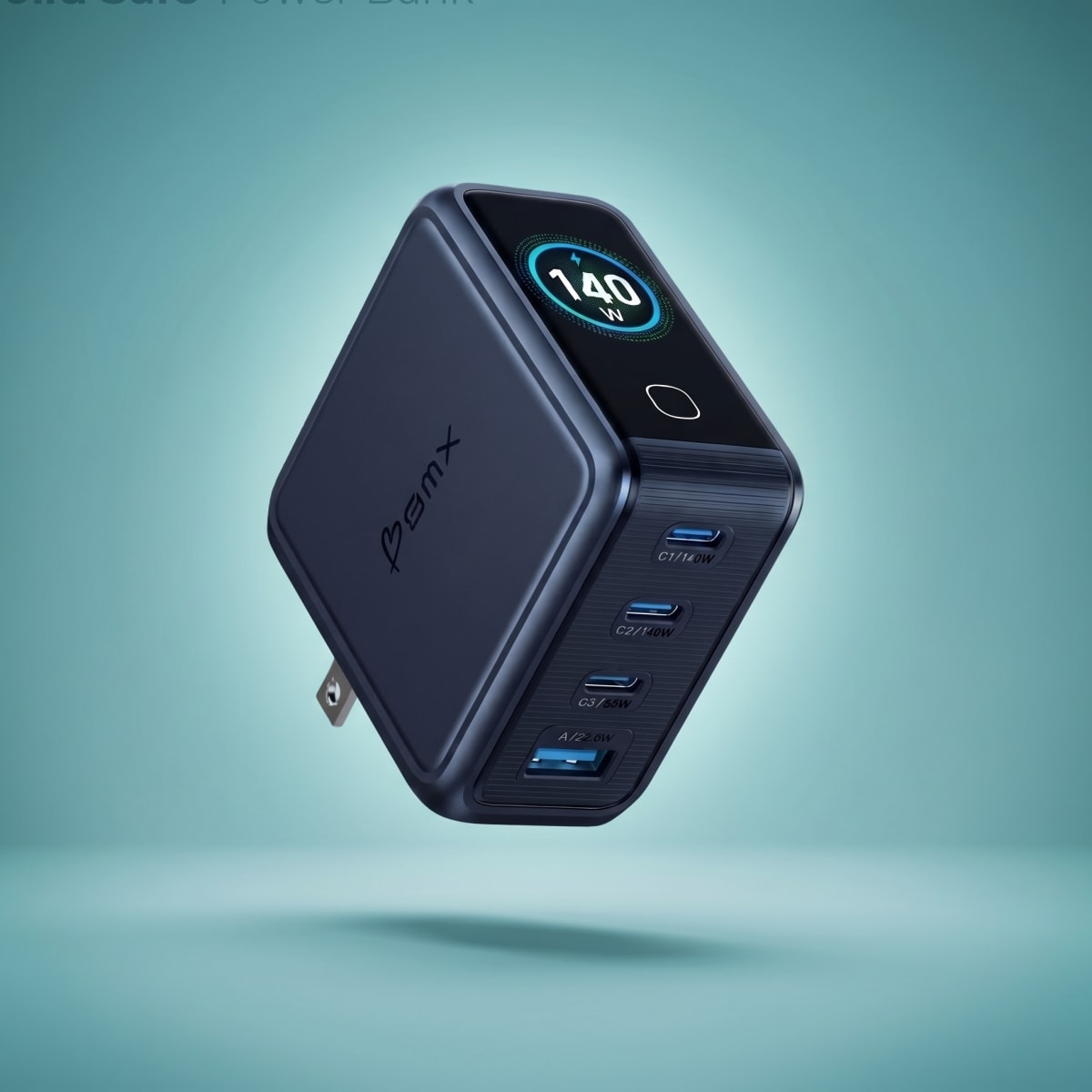
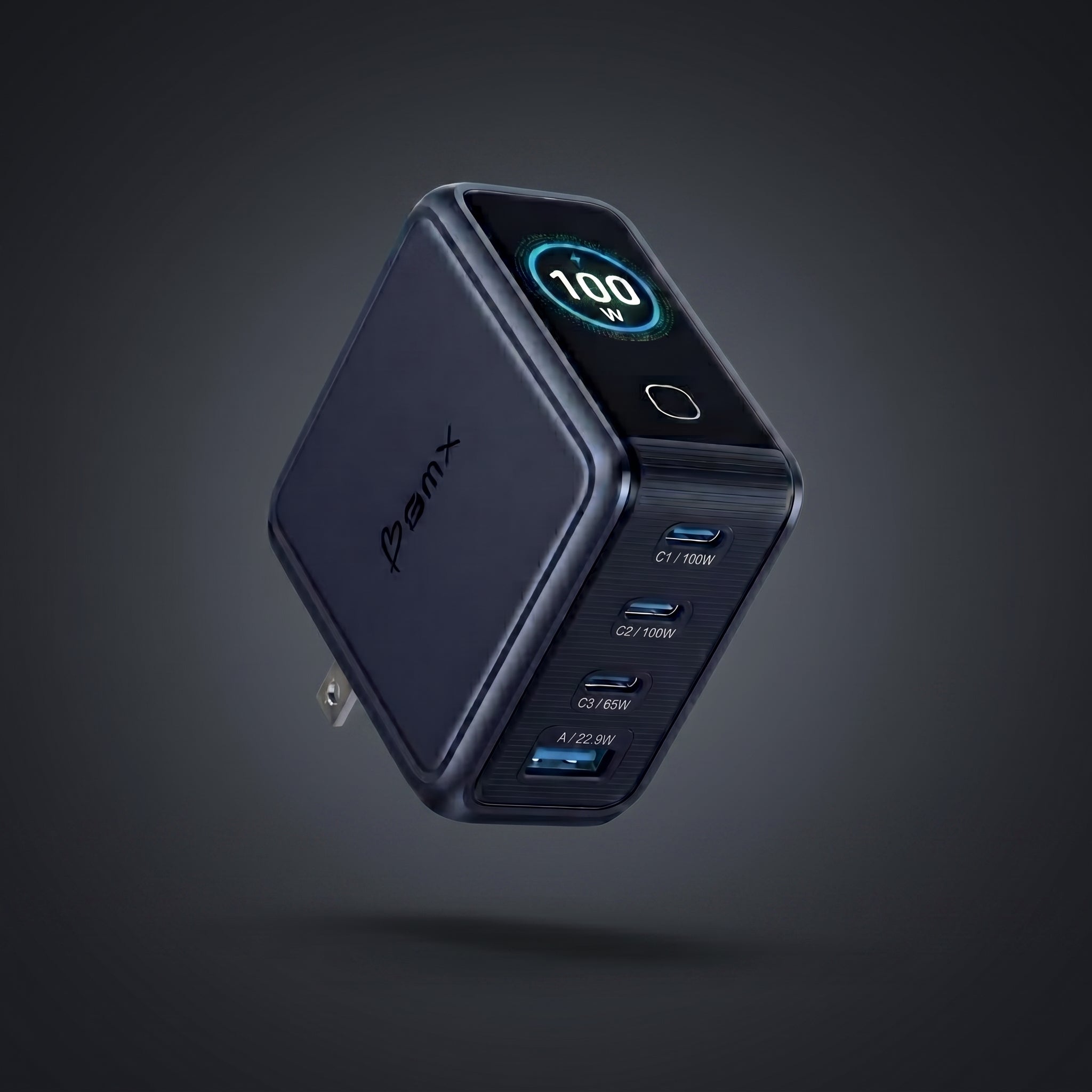
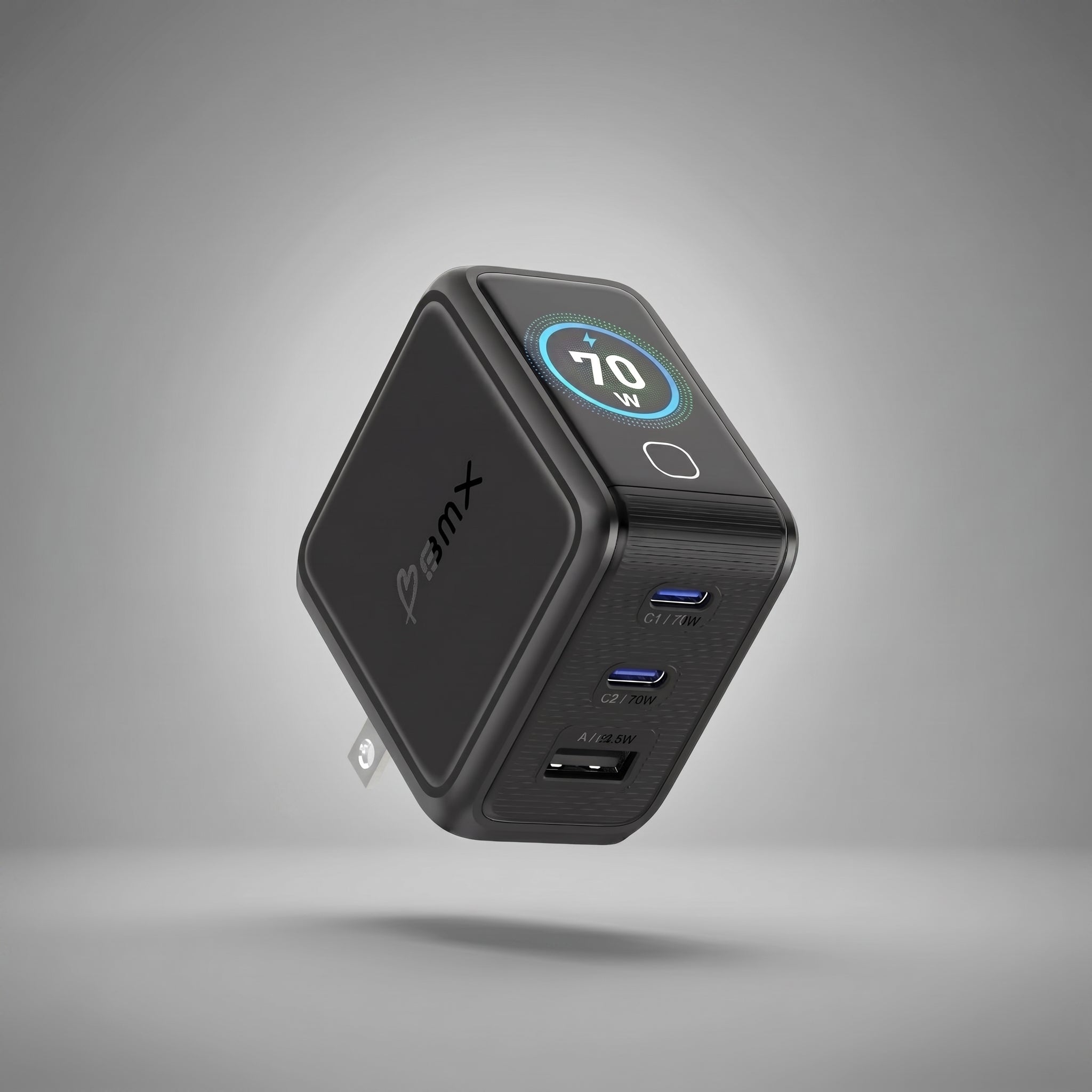
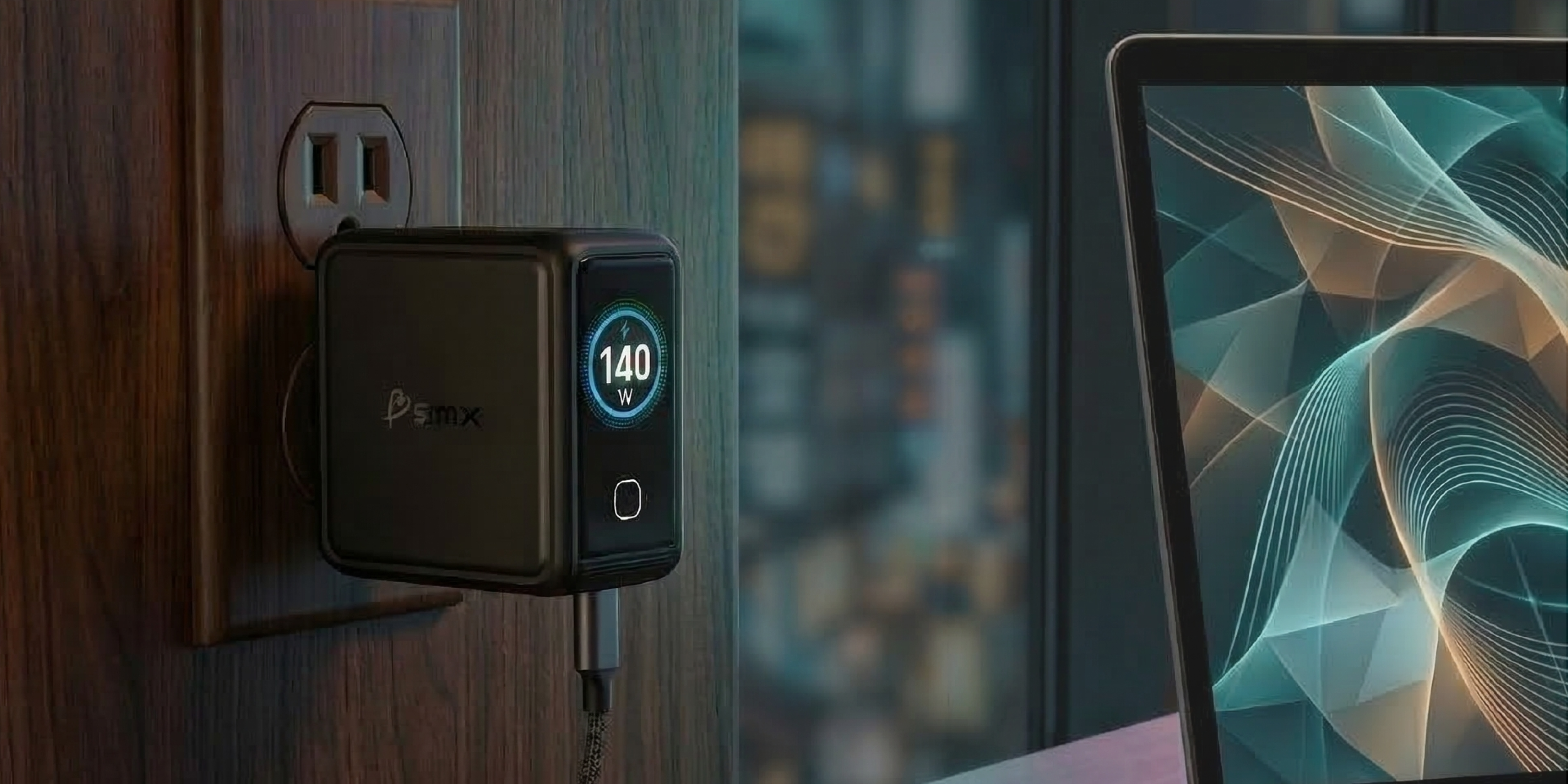
Premium GaN is where wattage displays have become standard. A per-port LCD turns the spec sheet into a live readout, so you can see what your laptop is actually pulling instead of guessing. The new BMX GaNsta 140W puts a full LCD on the front of a 4-port, 140W brick that fits in a coat pocket. See the GaNsta 140W →
When Silicon Is Still Fine (or Better)
This is the part most articles skip. Silicon is not dead. It is the right answer in several cases.
Single phone, single port, single outlet
If you only charge a phone, only from one outlet, only with the cable that came with it, the stock 20W to 30W silicon brick is fine. It is small enough, cheap enough, and your phone caps its draw far below the point where GaN's efficiency would matter. Replacing it with a 30W GaN charger costs $30 to $40 for no real benefit.
Permanently desk-mounted or behind furniture
The silicon brick stuffed behind your monitor or under your desk is not a problem to solve. Nobody sees it. Nobody feels its weight. The size difference between silicon and GaN does not matter when the charger is invisible. Upgrade only if you want to reclaim an outlet or consolidate multiple chargers into one.
Budget-constrained replacements
If a charger dies and you need a working replacement at $25 today, get the silicon charger. The $40 GaN charger at the same wattage will pay off later when you have travel coming up. Right now, the cheaper silicon charger is the right call.
Low-wattage accessories with their own charger
Wireless earbuds, e-readers, fitness trackers, smartwatches. Anything that draws under 10W. The stock charger is already smaller than any GaN charger would be at this wattage, and you would not get any real benefit from upgrading. Save the GaN budget for the chargers that handle real loads.
Quick rule
If a charger leaves the house, go GaN. If it stays plugged into the same outlet for a year, silicon is fine. If it handles a laptop or multiple devices, go GaN regardless.
The Cost Question: When the Premium Is Worth It
GaN costs more to manufacture. Gallium nitride wafers are harder and more expensive to produce than silicon, and the high-frequency switching components around them cost more too. That cost shows up in retail prices. A 65W GaN charger runs about double the price of a 65W silicon charger at entry-level. At 100W and above, the gap narrows because high-wattage silicon becomes its own kind of premium and most premium chargers above 100W are already GaN.
The honest math:
- Daily-carry user: GaN pays back in under 6 months in bag space and weight savings alone.
- Frequent traveler: GaN pays back on a single trip because you stop packing three separate chargers.
- Laptop owner who works from cafes: GaN pays back the first time you find a single outlet at a small table and need to charge phone plus laptop at the same time.
- Home-only user with one device: GaN never really pays back. Stay with silicon.
- Multi-device home base: GaN pays back if it lets you replace 2 or 3 silicon chargers and free up outlets.

The Size Story, Without Marketing Spin
"GaN is 30 to 50 percent smaller" is the line in most product pages on the internet. It is broadly directionally true. Here is what that actually means in your bag.
At 65W, a quality GaN charger is roughly half the volume and about half the weight of a typical silicon brick at the same wattage. At 100W, the gap widens. Silicon at 100W needs a noticeably bigger body to dissipate heat passively, while GaN at 100W stays roughly the size of a credit-card stack.
At 140W, silicon barely exists as a consumer product. Every 140W consumer charger on the market today is GaN. The choice at this wattage is not silicon-versus-GaN. It is which GaN charger fits your life: number of ports, presence of a display, foldable plugs, certifications, and total form factor.
Should You Replace Your Current Silicon Charger?
Probably not, if it works. Throwing away a working charger to buy a smaller one is rarely the right answer. The cost is real, the benefit is marginal in many cases, and the environmental cost of new electronics is not zero.
The right time to switch to GaN is when:
- Your current charger fails or is missing and you need a replacement.
- You bought a new laptop with higher wattage needs that your old charger does not handle.
- You are starting a new daily-carry habit and a smaller charger would actually fit your bag.
- You travel often enough that one GaN charger can replace three silicon ones.
- You charge multiple devices at once and your current setup requires two or more outlets.
If none of those apply, the silicon brick you have is doing the job. Save the GaN budget for when one of those triggers happens.
When you do switch, look for total wattage that matches your real workload, USB-C PD 3.1 support for headroom, PPS support if you own a recent Samsung phone, real protection circuits, and a wattage display if you want to actually verify what your devices are drawing. The full criteria checklist is in What Is a GaN Charger?.
Frequently Asked Questions
Is a GaN charger really worth the extra money?
Yes, if you carry it daily, travel with it, or charge multiple devices at once. No, if it lives behind your desk and only charges one phone. The premium pays back fastest for daily-carry and travel users.
Does a GaN charger charge faster than silicon?
Not directly. Charging speed is set by your device, not the charger material. A 65W GaN charger and a 65W silicon charger with the same protocol support (PD, PPS) will charge your phone or laptop at the same speed. GaN's advantage is size, heat, and multi-port density, not raw speed.
Will a GaN charger damage my older devices?
No. GaN chargers use the same negotiation protocols as silicon chargers (USB-C PD, USB-A QuickCharge, etc.). The charger delivers only what the device requests. Older devices charge at their normal speed, not at the GaN charger's max.
Are silicon chargers being phased out?
Not below 65W. Silicon still dominates the entry-level and stock-charger market because it is cheap to produce. Above 100W, GaN has effectively replaced silicon because the thermal and size constraints make silicon impractical at those wattages.
Why is my 100W GaN charger smaller than my old 65W silicon charger?
GaN switches at higher frequency, which lets the magnetic components inside the charger be much smaller. The result is a charger with more wattage in less volume. The new 100W GaN charger genuinely is smaller and more powerful than the old 65W silicon brick.
Are GaN chargers safer than silicon chargers?
Safety depends on the protection circuits in the charger, not the semiconductor material. A well-designed GaN charger with UL or CE certification, overcurrent protection, and over-temperature protection is safe. A cheap GaN charger without those protections is not. Same goes for silicon. Buy from brands that publish their certifications.
Will GaN chargers get cheaper over time?
Slowly. Gallium nitride wafer production is more complex than silicon, but volume is increasing and prices are gradually coming down. Expect entry-level GaN chargers to drop modestly over the next 2 to 3 years, with premium GaN holding its price as it gains features like displays and higher wattage support.
What is the smallest GaN charger I can buy in 2026?
Entry-level 30W GaN chargers from major brands are now small enough to fit in a coin pocket. 45W GaN chargers are about the size of a USB-C wall adapter you would have seen with a phone a few years ago. The size-to-wattage curve has shifted enough that even small 45W chargers can handle a phone plus an iPad simultaneously.
BMX GaNsta 140W
The Brick That Replaces Three Bricks.
140W. Four ports. Front-facing LCD shows real-time wattage so you can see what every device is drawing. Foldable international plugs. Fits in a coat pocket. $89.99.
See the GaNsta 140WRelated guides
- What Is a GaN Charger? Smaller, Cooler, Faster (2026 Guide)
- USB-C Power Delivery Explained: How Your Phone Actually Charges
- Phone Charger Wattage Explained: 5W vs 20W vs 30W vs 45W
- Charging Speed Checklist: 7 Reasons Your Phone Is Not Fast Charging
- Semi-Solid-State Batteries Explained: What "Less Liquid" Actually Changes

Leave a comment
This site is protected by hCaptcha and the hCaptcha Privacy Policy and Terms of Service apply.