


Last updated: March 29, 2026
A 5,000mAh power bank delivers roughly one full smartphone charge via USB-C. A 10,000mAh power bank delivers about two. But these are real-world numbers after accounting for 15-30% energy loss during voltage conversion, not the theoretical maximums printed on the box. Below is the honest math, device-specific estimates, and what actually affects how many charges you get.
Every power bank listing tells you the mAh rating. Very few explain what that number actually means once you plug in your phone. The rated capacity and the usable capacity are not the same thing, and the gap between them confuses people enough that "how many charges will I get?" is one of the most common questions in portable power.
This guide gives you real numbers for the phones people actually carry in 2026, explains why the math never quite works out, and shows you how to estimate charges for any device you own.
Quick Answer
A 5,000 mAh power bank delivers about 1.0 full charge for an iPhone 16 and 0.7 for a Galaxy S25 Ultra. A 10,000 mAh power bank delivers about 2.0 charges for an iPhone 16, 1.6 for an iPhone 16 Pro Max, and 1.4 for an S25 Ultra, after the 15 to 30 percent energy loss from voltage conversion. Full table below.
Key Takeaways
- Efficiency loss: You lose 15 to 30 percent of the rated mAh before any energy reaches your phone. The 3.7V to 5V step-up alone costs 10 to 15 percent as heat.
- 5,000 mAh banks: About 1.0 full charge on an iPhone 16 or iPhone 16 Pro, roughly 0.8 on an iPhone 16 Pro Max, and about 0.7 on a Galaxy S25 Ultra.
- 10,000 mAh banks: About 2.0 charges on an iPhone 16, 1.9 on a 16 Pro, 1.6 on a 16 Pro Max, and 1.4 on a Galaxy S25 Ultra.
- Quick formula: Charges = (power bank mAh x 0.85) divided by your phone's battery mAh. Use 0.70 instead of 0.85 for Qi2 or MagSafe wireless.
How many phone charges do you get from a 5,000 or 10,000 mAh power bank?
These estimates assume USB-C wired charging with the phone screen off. Wireless charging (Qi2/MagSafe) delivers fewer charges because of additional energy lost as heat during the magnetic transfer.
| Phone | Battery | 5,000mAh Bank | 10,000mAh Bank |
|---|---|---|---|
| iPhone 16 | 3,561 mAh | ~1.0 | ~2.0 |
| iPhone 16 Pro | 3,582 mAh | ~1.0 | ~1.9 |
| iPhone 16 Pro Max | 4,441 mAh | ~0.8 | ~1.6 |
| Samsung Galaxy S25 | 4,000 mAh | ~0.9 | ~1.8 |
| Samsung Galaxy S25 Ultra | 5,000 mAh | ~0.7 | ~1.4 |
| Google Pixel 9 Pro | 4,700 mAh | ~0.8 | ~1.5 |
| Google Pixel 9 | 4,700 mAh | ~0.8 | ~1.5 |
Estimates use 85% efficiency for USB-C wired charging. Actual results vary with cable quality, temperature, and phone usage during charging.
Quick rule of thumb
A 5,000mAh power bank gives most phones one full charge. A 10,000mAh power bank gives most phones about two. If your phone has a battery over 4,500mAh (like the S25 Ultra or Pixel 9 Pro), drop those estimates by about 25%.
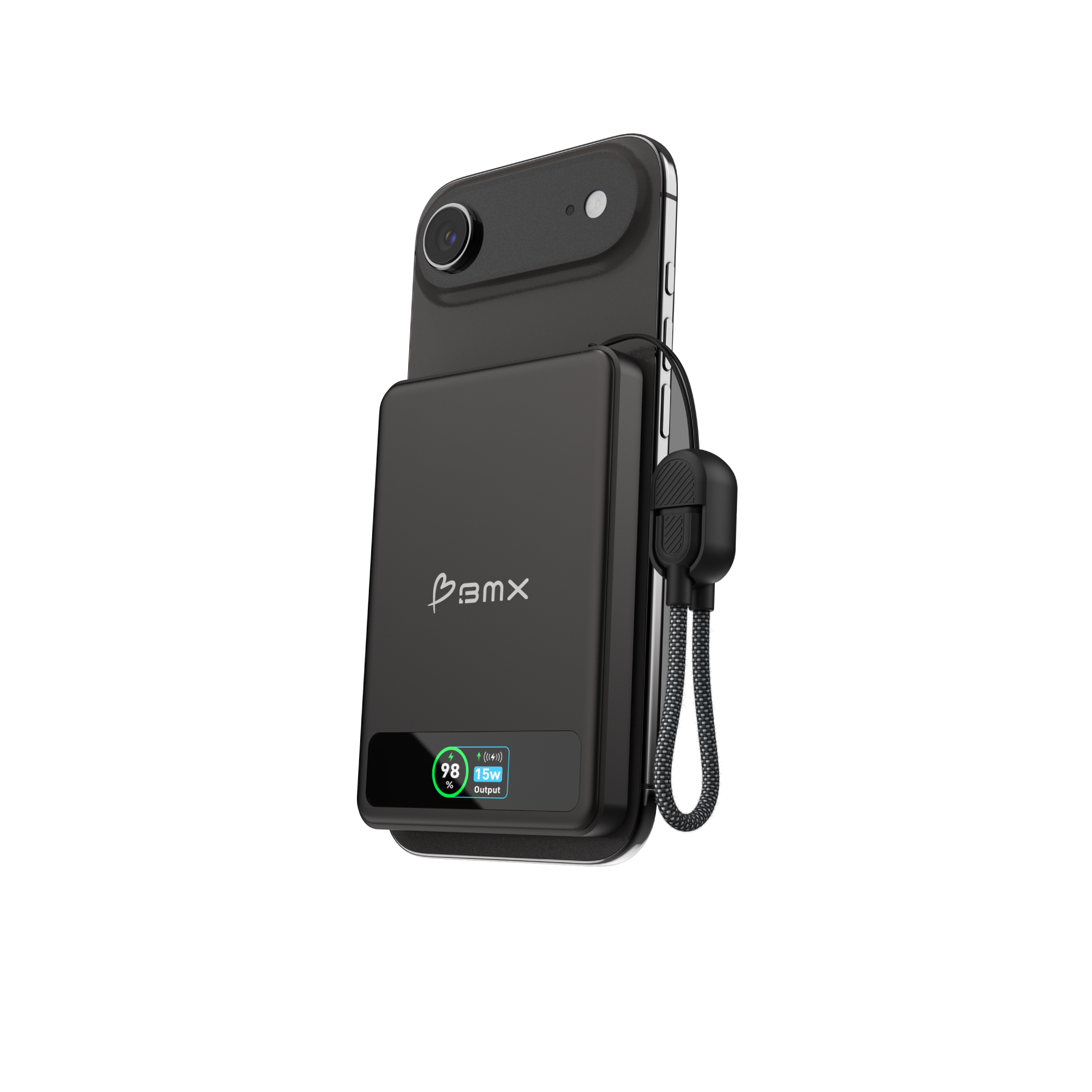
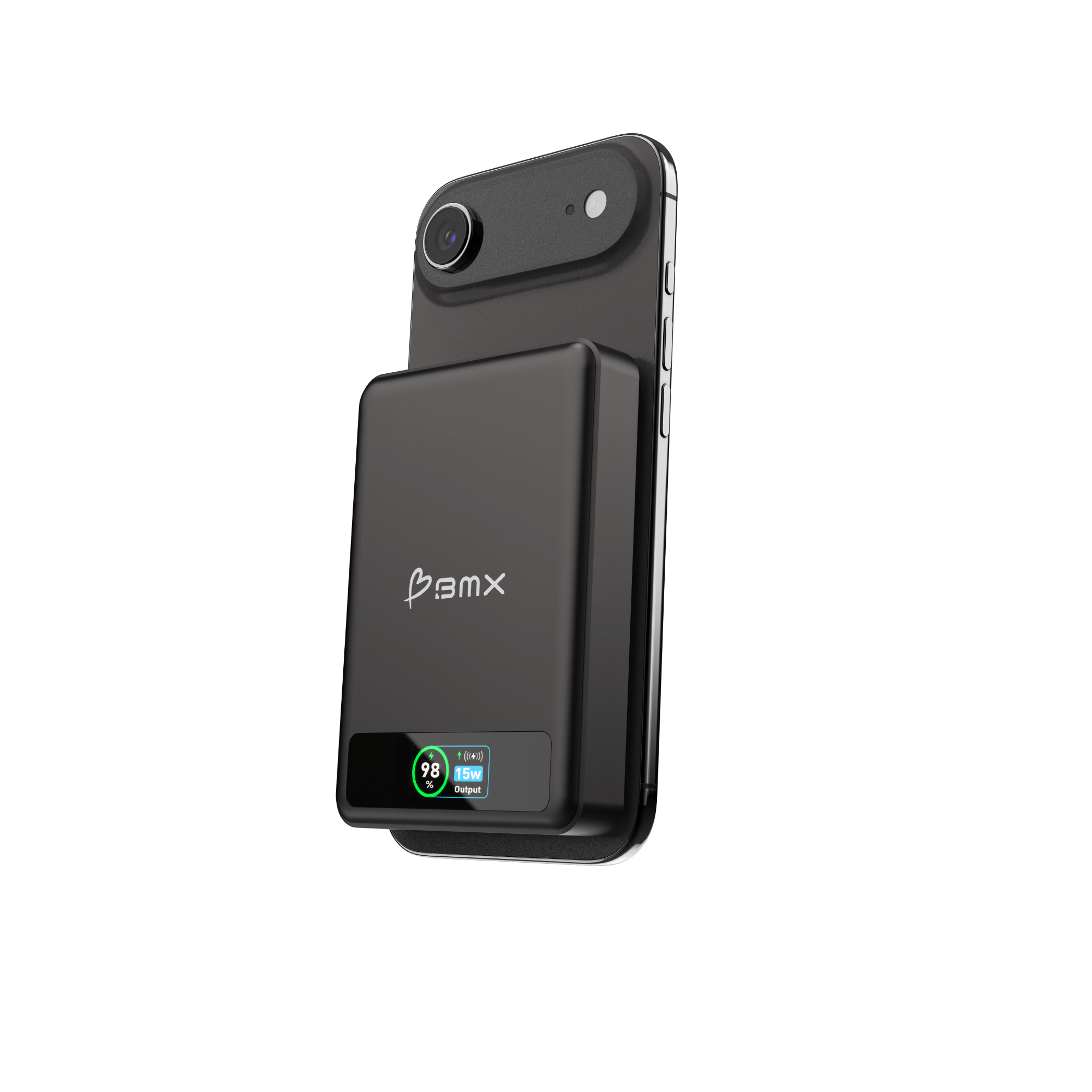
The BMX SolidSafe 5K and SolidSafe 10K both have full-color LCD displays that show your exact remaining capacity and live charging wattage, so you always know how much power you have left instead of guessing from LED dots. See the SolidSafe 5K →
Why doesn't a 10,000 mAh power bank deliver 10,000 mAh?
A 5,000mAh power bank does not deliver 5,000mAh to your phone. This is not a scam or false advertising. It is physics.
Power bank cells store energy at 3.7 volts internally. Your phone charges at 5 volts (or higher with fast charging protocols like USB-C Power Delivery). Converting from 3.7V to 5V takes energy. That conversion alone costs 10-15% of the rated capacity. On top of that, the charging circuitry in both the power bank and your phone generates heat, the cable has resistance, and your phone's battery management system has its own overhead.
Add it all up and you lose 15-30% of the rated mAh before any energy reaches your phone's battery. A 5,000mAh power bank delivers roughly 3,500-4,250mAh of usable capacity. A 10,000mAh power bank delivers roughly 7,000-8,500mAh.
How do you calculate how many charges a power bank gives?
Here is the formula. It works for any power bank and any device:
Charge estimate formula
Number of charges = (Power bank mAh x 0.85) / Phone battery mAh
The 0.85 multiplier accounts for average USB-C wired efficiency. For wireless charging (Qi2/MagSafe), use 0.70 instead.
For example, a 10,000mAh power bank charging an iPhone 16 Pro (3,582mAh) via USB-C:
(10,000 x 0.85) / 3,582 = 8,500 / 3,582 = 2.37 charges
In practice, expect closer to 1.9-2.0 full charges. The formula gives a useful estimate, but real-world conditions (temperature, cable quality, phone usage during charging) always pull the number down slightly.
To find your phone's battery capacity, search "[your phone model] battery mAh" or check the manufacturer's spec sheet. Every phone maker publishes this number.
How many charges do you lose using wireless vs USB-C?
Wireless charging is convenient but less efficient than a cable. Here is what actually happens: your power bank generates an alternating magnetic field from a copper coil. That field passes through a small air gap and induces a current in a second coil inside your phone. Every step in that chain loses energy. The coils have electrical resistance. The magnetic field spreads slightly even with Qi2 magnets holding alignment. And the conversion from AC back to DC inside your phone's receiver adds more overhead.
The result: roughly 20-30% of the energy leaving your power bank's battery never reaches your phone's battery. It becomes heat. You can feel it. If your phone gets noticeably warm while charging wirelessly from a power bank, that warmth is your lost charges. Qi2's magnetic alignment is a real improvement over older Qi pads (which could lose 40%+ with poor alignment), but physics still takes its cut.
| Charging Method | Efficiency | 5,000mAh Usable | 10,000mAh Usable |
|---|---|---|---|
| USB-C wired | ~85% | ~4,250 mAh | ~8,500 mAh |
| Qi2 / MagSafe wireless | ~70% | ~3,500 mAh | ~7,000 mAh |
Wireless efficiency varies with alignment and temperature. Qi2 magnetic alignment improves consistency compared to older non-magnetic Qi pads.
The practical takeaway: if you charge wirelessly with Qi2, expect about 15-20% fewer charges than the wired estimates in the table above. That means a 5,000mAh power bank gives about 0.7-0.8 wireless charges on a typical iPhone instead of a full charge. A 10,000mAh power bank gives about 1.4-1.6 wireless charges instead of two.
If you want maximum charges from your power bank, use the USB-C cable. If you want convenience and do not mind the tradeoff, wireless is fine for daily top-ups.
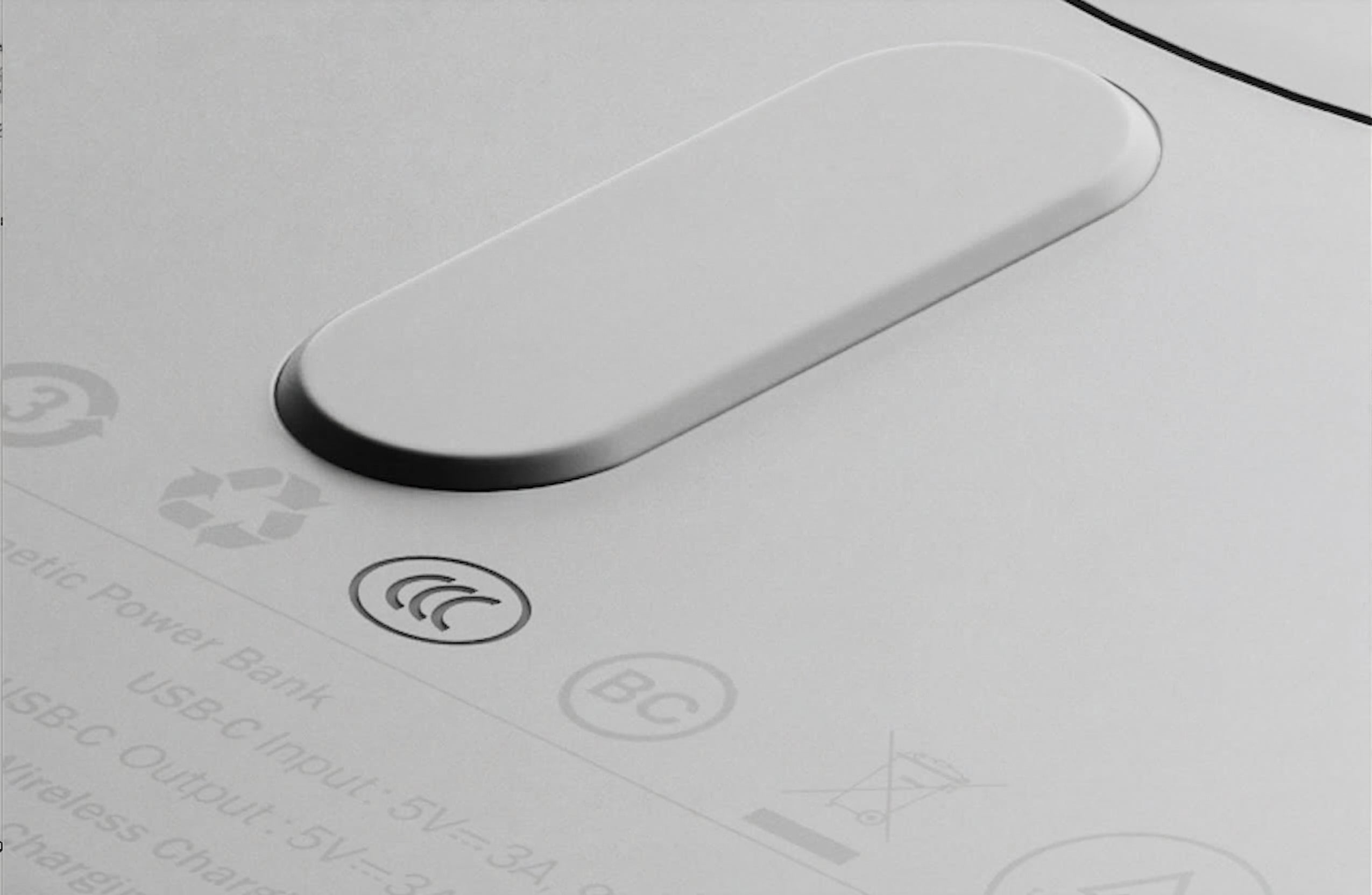
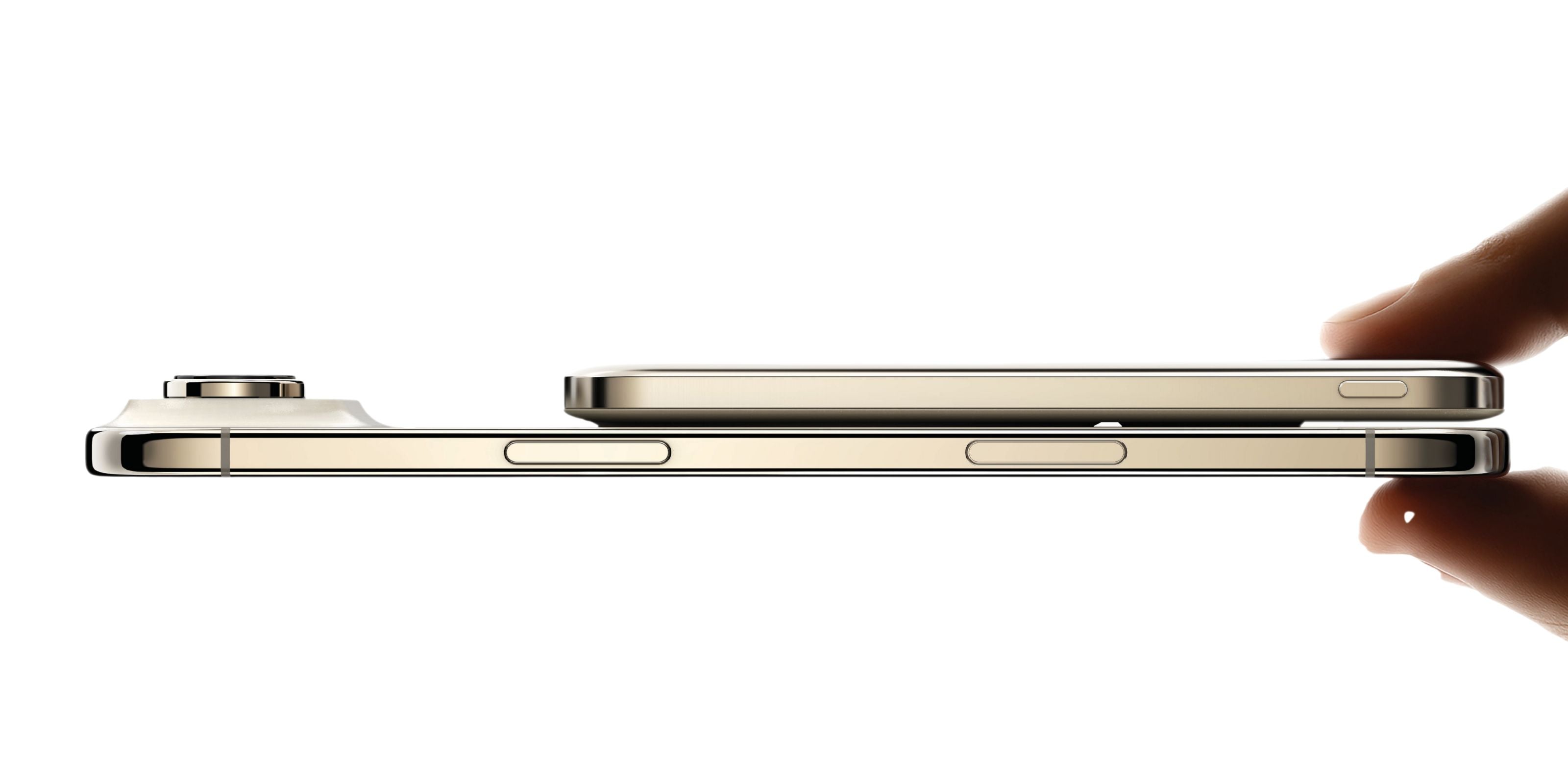
BMX SolidSafe power banks use semi-solid-state cells with significantly less flammable liquid than conventional lithium-ion. All three offer Qi2 wireless and USB-C wired charging.

What reduces the number of charges you actually get?
The formula gives you a baseline, but several factors push the real number lower.
- Using your phone while it charges. Navigation, video, or gaming while connected means some power bank energy runs your phone instead of filling the battery. Heavy use can reduce effective charges by 20-30%.
- Extreme temperatures. Lithium batteries perform worse in cold weather and generate more waste heat in very warm environments. Charging in direct sunlight or below freezing both reduce efficiency.
- Cheap or damaged cables. A thin or frayed USB-C cable adds resistance, which means more energy lost as heat in the cable itself. Use a cable rated for the wattage your power bank supports.
- Charging from near-empty. Your phone's battery management system draws more power when charging from 0% to 20% because of the voltage difference. Starting from 20-30% instead of dead empty is slightly more efficient.
- Power bank age and cycle count. Like any battery, a power bank's capacity degrades over hundreds of charge cycles. After 300-500 full cycles, expect 10-20% less usable capacity than when new.
Is mAh or Wh the better way to compare power banks?
mAh (milliamp-hours) measures electric charge, but it does not account for voltage. Two power banks can both say "5,000mAh" but store different amounts of energy if their internal cells run at different voltages.
Wh (watt-hours) is the more complete measurement. It multiplies capacity by voltage: a 5,000mAh power bank with 3.7V cells stores 18.5Wh. A 10,000mAh power bank stores 37Wh. This is why airlines use Wh for their carry-on limits (100Wh for most carriers) instead of mAh.
For comparing power banks at the same voltage (which is most consumer models), mAh works fine as a shorthand. But if you want to understand how much energy you are actually carrying, Wh is the number that matters. We wrote a full breakdown in our mAh vs Wh guide.
How Many Charges Do You Actually Need?
The right capacity depends on how you use your phone, not just which model you carry.
One charge (5,000mAh) is enough if: you need a safety net for long days, you charge overnight every night, you mostly use your phone for calls, messaging, and light browsing, or you want the smallest and lightest option for daily carry.
Two charges (10,000mAh) makes sense if: you rely on your phone for navigation, video, or hotspot throughout the day, you travel and cannot always find an outlet, you charge multiple devices (phone plus earbuds, for example), or you want a buffer that lasts a full weekend trip without recharging the power bank.
The calculus is simple. Think about how many times your phone dies or hits critical battery in a typical day. One death per day means 5,000mAh handles it. Multiple deaths or multi-day use means 10,000mAh gives you the headroom.
Why Battery Chemistry Matters Beyond Just Capacity
Most power banks on the market use conventional lithium-ion cells. They work, but the liquid electrolyte inside them is flammable. When something goes wrong (a manufacturing defect, a short circuit, damage from a drop or crush), that liquid can fuel a thermal runaway. This is the root cause behind the power bank fires and recalls that make headlines.
BMX SolidSafe power banks use semi-solid-state cells with an oxide electrolyte that contains significantly less liquid than conventional lithium-ion. In internal testing, SolidSafe cells were drilled, cut, and punctured while fully charged, with no fire and no thermal runaway. The chemistry does not eliminate risk entirely, but it reduces it substantially.
From a practical charging standpoint, the safety advantage matters most in the situations where you are pushing your power bank hardest: fast charging in a hot car, keeping it in a pocket while it charges your phone, or packing it in a suitcase surrounded by insulation. Those are the scenarios where conventional lithium-ion generates the most heat, and where semi-solid-state chemistry provides the most margin.
On battery safety
No battery is risk-free. Semi-solid-state chemistry greatly lowers fire risk compared to conventional lithium-ion, but risk is reduced, not eliminated. The key difference: significantly less liquid electrolyte means less fuel available if something goes wrong inside the cell.
How to Get the Most Charges from Your Power Bank
You cannot change the physics, but you can minimize unnecessary losses.
- Use USB-C instead of wireless when you need maximum charges. You get roughly 15-20% more usable energy from a wired connection. Use Qi2 for convenience, USB-C for efficiency.
- Do not wait until your phone is dead. Charging from 20% to 80% is more efficient than 0% to 100%. Top up throughout the day instead of waiting for emergency mode.
- Turn your screen off while charging. The single biggest drain during charging is running your phone at the same time. Lock the screen and let it charge.
- Avoid extreme temperatures. Do not leave your power bank on a car dashboard in summer or in an outside pocket in winter. Room temperature charging is the most efficient.
- Use a good cable. A quality USB-C cable rated for 60W or higher reduces resistance losses. The cable that came with your power bank is usually fine.
- Keep your power bank charged. Lithium batteries lose small amounts of energy through self-discharge over time. Recharge your power bank every couple of weeks even if you have not used it, and store it between 40-80% for long-term storage.
Frequently Asked Questions
How many times can a 5000mAh power bank charge an iPhone?
A 5,000mAh power bank delivers roughly 0.8 to 1 full charge on an iPhone 16 or iPhone 16 Pro via USB-C. Wireless charging (Qi2 or MagSafe) reduces that to about 0.6 to 0.8 charges because of the additional energy lost as heat during magnetic transfer. The iPhone 16 Pro Max, with its larger 4,441mAh battery, gets about 0.8 charges via USB-C.
How many times can a 10000mAh power bank charge a phone?
About 1.5 to 2 full charges for most smartphones via USB-C, depending on your phone's battery size. An iPhone 16 Pro gets about 1.9 charges. A Samsung Galaxy S25 Ultra (5,000mAh battery) gets about 1.4. These numbers account for the 15-30% energy loss that occurs during voltage conversion and charging.
Why does my power bank not give as many charges as the mAh rating suggests?
Power bank cells store energy at 3.7V but output at 5V or higher. That voltage step-up loses 10-15% as heat. Additional losses come from the charging circuits, cable resistance, and your phone's battery management system. Total losses typically run 15-30% of the rated capacity. This is normal for all power banks regardless of brand.
Does wireless charging give fewer charges than USB-C?
Yes. Wireless charging (Qi2 and MagSafe) runs at about 70-80% efficiency versus 85-90% for USB-C wired. A 5,000mAh power bank delivers about one full charge over USB-C but only about 0.7 charges wirelessly. If maximizing charges matters to you, use the cable. If convenience matters more, wireless works well for daily top-ups.
Is mAh or Wh a better way to compare power bank capacity?
Wh (watt-hours) is more accurate because it accounts for voltage. A 5,000mAh bank at 3.7V stores 18.5Wh. A 10,000mAh bank stores 37Wh. Airlines use Wh for their carry-on limits (100Wh max) for this reason. For most consumer comparisons where voltage is similar, mAh works as a rough shorthand.
How many charges do I need for a full day?
Most people need one extra charge to get through a heavy day. A 5,000mAh power bank covers that for most phones. If you use your phone heavily for navigation, video streaming, or mobile hotspot, or if you need to charge multiple devices, a 10,000mAh bank gives you roughly two charges and more headroom.
Does using my phone while charging from a power bank reduce the number of charges?
Yes. When you use your phone while it charges, some energy from the power bank goes to running the phone's screen, processor, and radios instead of filling the battery. Heavy use like gaming or navigation can cut your effective charges by 20-30%. For the most efficient charging, lock the screen or enable low-power mode while connected.
SolidSafe Power Banks
Know Exactly How Much Power You Have Left
SolidSafe power banks show your exact remaining capacity and live charging wattage on a full-color LCD. No guessing from LED dots. Semi-solid-state cells with significantly less flammable liquid than conventional lithium-ion.
See SolidSafe Power BanksRelated guides
- mAh vs Wh in Power Banks: How Many Phone Charges and What the Airline Limit Actually Means
- Fast Charging Explained Like You're Not an Electrical Engineer
- Best Power Bank for iPhone in 2026: Qi2, MagSafe, and USB-C Compared
- Best Power Bank for Travel in 2026: TSA Compliant and Airline Safe
- Safest Power Banks in 2026: Ranked by Battery Type, Enclosure, and Test Results
How many times can a 10,000 mAh power bank charge an iPhone?
About 2.0 full charges for an iPhone 16 (3,561 mAh battery), 1.9 for an iPhone 16 Pro (3,582 mAh), and 1.6 for an iPhone 16 Pro Max (4,441 mAh) via USB-C. Qi2 or MagSafe wireless drops those numbers by roughly 15 to 20 percent.
How many charges do you get from a 5,000 mAh power bank?
About 1.0 full charge on an iPhone 16 or iPhone 16 Pro via USB-C, 0.8 on an iPhone 16 Pro Max, 0.9 on a Samsung Galaxy S25, and 0.7 on a Galaxy S25 Ultra. Wireless charging (Qi2 or MagSafe) cuts each number by about 15 to 20 percent.
Why don't power banks deliver their full rated capacity?
Power bank cells store energy at 3.7 volts internally but output at 5 volts or higher. That voltage step-up alone loses 10 to 15 percent as heat. Charging circuits, cable resistance, and your phone's battery management system add more losses. Total: expect 15 to 30 percent of the rated mAh to never reach your phone's battery.
What size power bank do I need for a full day?
For most people, a 5,000 mAh power bank covers one extra charge, which handles a heavy day. If you use navigation, video, or hotspot heavily, or you carry multiple devices, a 10,000 mAh bank gives about two charges and enough headroom for a weekend trip without recharging the bank itself.
Does phone battery size affect how many charges I get?
Yes, directly. A 10,000 mAh power bank gives about 2.0 charges to an iPhone 16 (3,561 mAh) but only 1.4 charges to a Galaxy S25 Ultra (5,000 mAh). Larger phone batteries mean fewer full charges per power bank. Use the formula (power bank mAh x 0.85) divided by your phone's battery mAh to estimate for any device.
Is a 20,000 mAh power bank twice as good as a 10,000 mAh?
Roughly, yes. At 85 percent USB-C efficiency, a 20,000 mAh bank delivers about 17,000 mAh of usable capacity, which is about 4.8 full charges for an iPhone 16, 3.8 for an iPhone 16 Pro Max, or 3.4 for a Galaxy S25 Ultra. The tradeoff: about double the weight and size, and airlines cap carry-on batteries at 100 Wh (roughly 27,000 mAh at 3.7V).

Leave a comment
This site is protected by hCaptcha and the hCaptcha Privacy Policy and Terms of Service apply.