
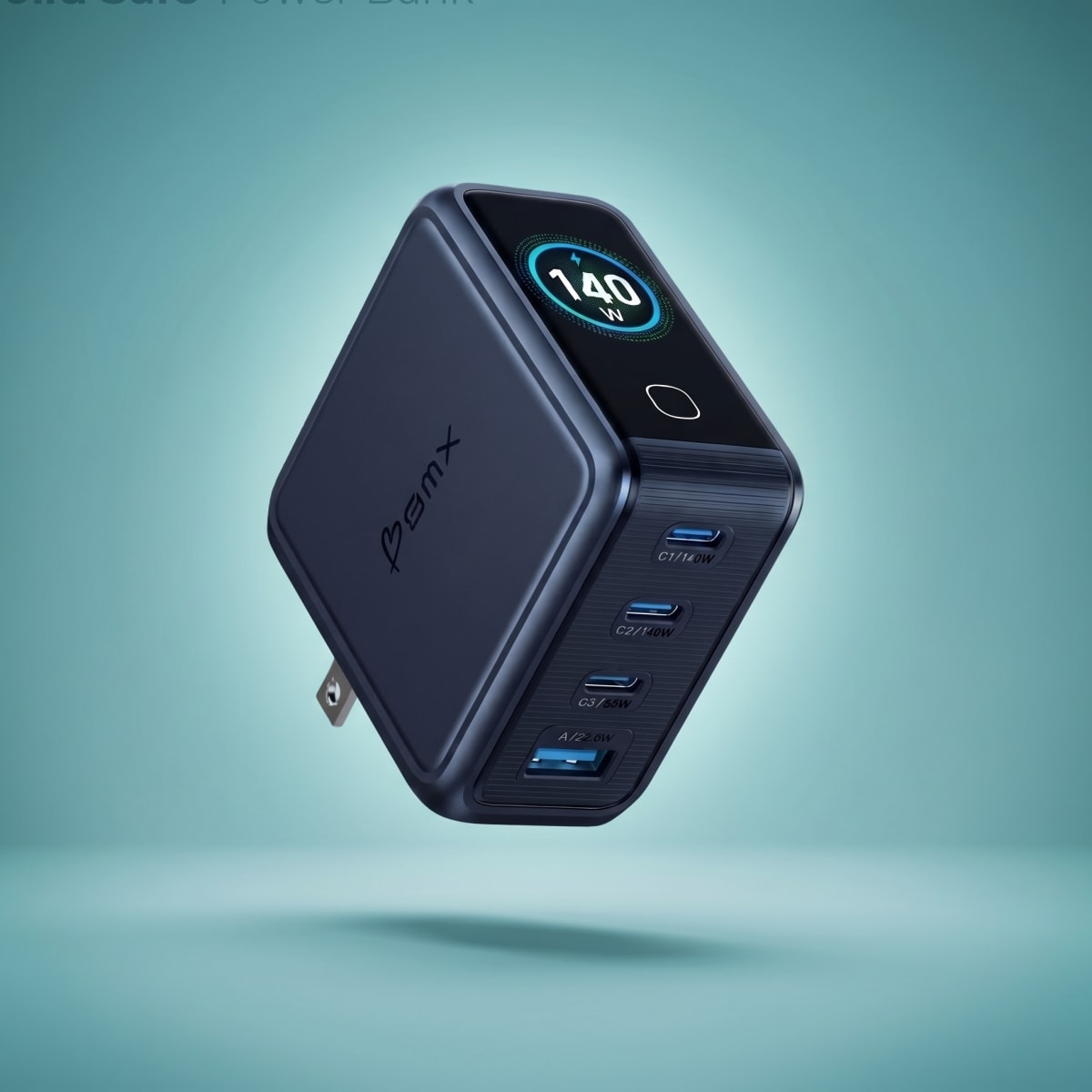
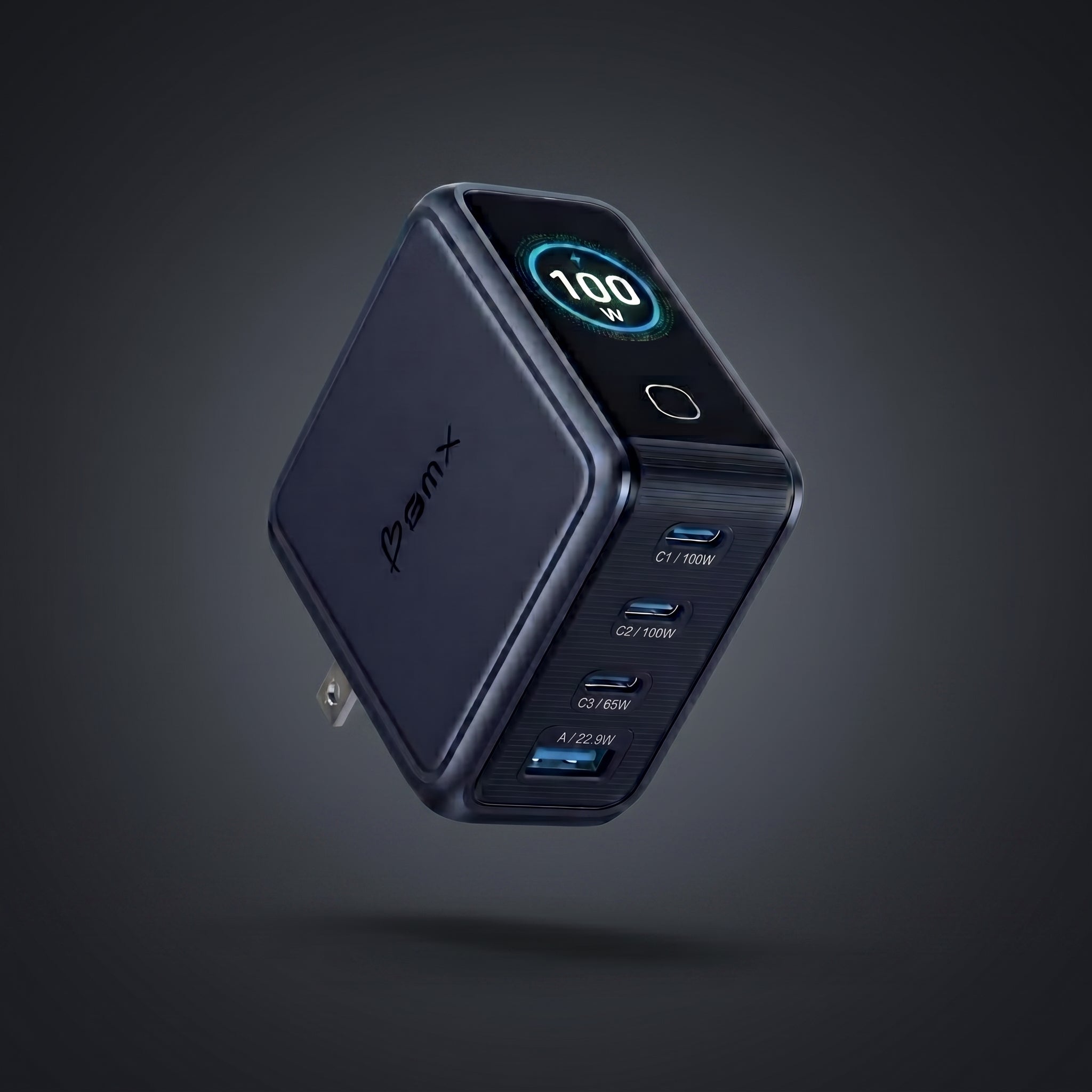
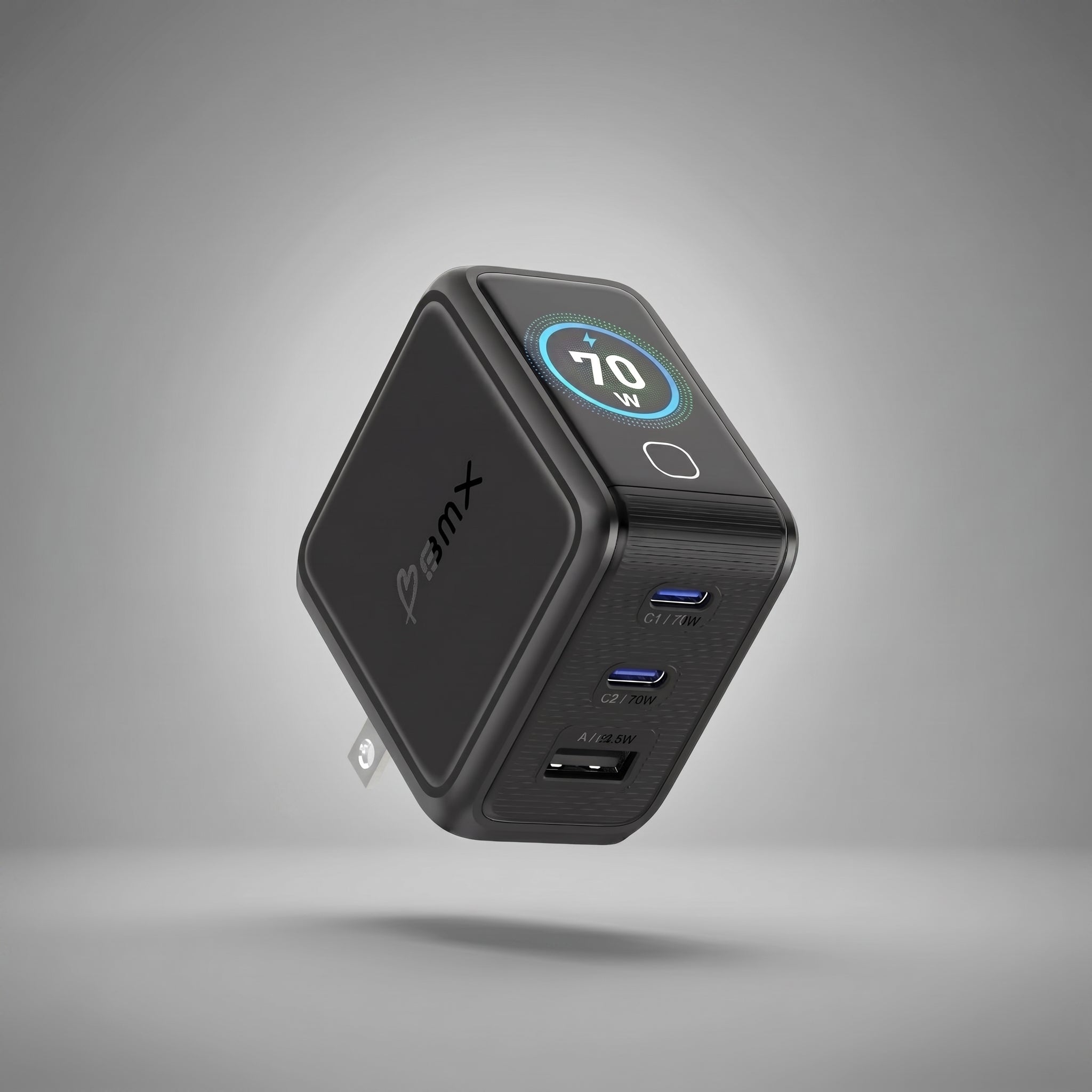


The safest power bank for air travel in 2026 has three things working at once: semi-solid-state cells (significantly less liquid electrolyte to ignite if something goes wrong), capacity under the 100Wh airline limit, and CCC certification for flights to or within China. The BMX SolidSafe Air 5K, SolidSafe 5K, and SolidSafe 10K are the only US-sold consumer power banks that combine all three, and they are the safest power banks for air travel in 2026.
Air travel has been the single most dangerous environment for lithium-ion power banks since the FAA started tracking battery incidents on aircraft. Cabin pressure, temperature swings, vibration, and the simple fact that you cannot fight a battery fire at 30,000 feet the way you can in your kitchen all push the risk equation in one direction. The chemistry inside the cell is the part that decides what happens when something goes wrong. This post covers what "safest" actually means in the air, why the 100Wh limit exists, what CCC certification adds, and which BMX SolidSafe power banks check every box.
What "safest power bank for air travel" actually means
"Safest" gets used loosely on product pages. In the context of air travel, it has a real definition. A safe power bank for flying is one that meets four conditions at the same time:
1. The chemistry inside the cell is engineered to fail less violently if a thermal event ever starts. Conventional lithium-ion uses a liquid electrolyte that vaporizes and feeds a thermal runaway. Semi-solid-state cells reduce that liquid electrolyte significantly. Risk is reduced, not eliminated, but reduced is what the FAA, the airlines, and the people sitting next to you actually care about.
2. The capacity sits under 100 watt-hours (Wh). This is the FAA, IATA, and most major-airline limit for lithium batteries in carry-on bags. Anything over 100Wh requires airline approval. Anything over 160Wh is banned outright. The math: divide milliamp-hours by 1000, multiply by nominal voltage (usually 3.7V for lithium-ion or 3.8V for some semi-solid-state cells). A 10,000mAh power bank is roughly 37 to 38Wh. A 27,000mAh bank is roughly 100Wh, right at the line. Anything bigger and you are hoping the gate agent does not check.
3. The build keeps lithium batteries out of checked luggage entirely. Power banks must travel in carry-on only. Every airline says this. The reason: a fire in the cargo hold takes minutes to detect and even longer to suppress. A fire in the cabin is visible immediately, and crew can use a battery containment bag.
4. The product carries the relevant safety certifications for the routes you fly. If you ever fly inside China or to China on a domestic carrier, the bank must be CCC (3C) certified as of June 2025. Most US power banks are not. CCC certification is one of the strictest battery safety regimes in the world.
A power bank that meets only one or two of these is not a travel-safe power bank. It is a power bank that happens to be small enough to fit in your bag.
Quick answer
The safest power bank for air travel in 2026 is one with semi-solid-state cells, under 100Wh capacity, CCC certification for China-route flights, and a multi-layer protection circuit. The BMX SolidSafe Air 5K (37Wh), SolidSafe 5K (38Wh), and SolidSafe 10K (38Wh) all qualify. All three sit well under the 100Wh airline limit and the Air 5K is CCC-certified.
The BMX SolidSafe Air 5K is the only ultra-thin Qi2 power bank sold in the US that pairs semi-solid-state chemistry with CCC certification, which is what makes it the most travel-safe SolidSafe in the line. See the SolidSafe Air →
Why the 100Wh airline limit exists (and why you should respect it)
The 100Wh limit on carry-on lithium batteries is not arbitrary. It was set by the International Civil Aviation Organization (ICAO) and adopted by the FAA, IATA, and almost every major commercial carrier. The threshold reflects how much energy a single cabin-located battery fire can release before crew suppression becomes overwhelmed.
To convert milliamp-hours (mAh, the spec on the box) to watt-hours (Wh, the spec the airline cares about):
Wh = (mAh / 1000) x nominal voltage
For most lithium-ion power banks the nominal voltage is 3.7V. For semi-solid-state cells it can be 3.8V. So a 5,000mAh power bank is between 18.5 and 19Wh. A 10,000mAh bank is roughly 37 to 38Wh. A 20,000mAh bank is in the 74-76Wh range. A 27,000mAh bank lands right at the 100Wh ceiling.
The practical implication: nearly every consumer power bank under 25,000mAh is well under the limit. The risk is not that you will accidentally exceed 100Wh. The risk is that the cell inside any bank, even a small one, fails violently while the plane is in the air.
| Capacity | Approx Wh | FAA carry-on? | Airline approval? |
|---|---|---|---|
| 5,000 mAh | ~19 Wh | Yes | Not required |
| 10,000 mAh | ~37-38 Wh | Yes | Not required |
| 20,000 mAh | ~74-76 Wh | Yes | Not required |
| 27,000 mAh | ~100 Wh | At the limit | Often required |
| Over 27,000 mAh | Over 100 Wh | Approval needed | Required (max 2 batteries 100-160Wh) |
Why semi-solid-state chemistry matters above 30,000 feet
The 100Wh limit caps the amount of energy in any single battery. It does not change what happens when that energy releases. That part is decided by the chemistry inside the cell.
Conventional lithium-ion batteries use a free-flowing liquid electrolyte to move ions between the anode and cathode. That liquid is the fuel. When a cell is punctured, crushed, exposed to high heat, or overcharged through a defect the protection circuit did not catch, the liquid electrolyte vaporizes, reacts with oxygen, and feeds a thermal runaway event. This is what every battery fire incident report describes. The flames you see are the electrolyte burning.
Semi-solid-state cells, the chemistry inside every BMX SolidSafe power bank, contain significantly less liquid electrolyte. Less free-flowing liquid means less volatile fuel available if the cell is ever damaged. Risk is reduced, not eliminated. That is the honest framing. But the reduction is the difference between an event that vents heat and stops, and an event that becomes the fire the cabin crew has to contain.

CCC certification: the credential that matters for China-route flights
As of June 2025, China's Civil Aviation Administration (CAAC) requires all power banks carried on domestic flights to display the CCC (also called 3C) certification mark. Without it, the bank gets confiscated at the gate. CCC certification is not a friendly marketing logo. It is one of the strictest consumer-electronics safety regimes in the world. To get certified, a power bank must pass extensive thermal, mechanical, electrical, and chemical safety testing in a CNAS-accredited lab.
Most US-sold power banks do not carry CCC certification. The BMX SolidSafe Air is one of the few that does. If your travel takes you anywhere through mainland China (including connecting flights and domestic legs), CCC certification is the difference between a working bank and a confiscated one.
For travel that does not touch China, CCC is still useful as a quality signal. A power bank engineered to pass CCC testing has been pressure-tested against a higher safety bar than the typical FCC-only US-market bank. The certification does not directly affect FAA carry-on rules, but it does correlate with build quality.

The 3 safest BMX SolidSafe power banks for air travel
Every SolidSafe power bank uses semi-solid-state chemistry, sits well under the 100Wh airline limit, and carries the multi-layer protection circuit stack that handles overcurrent, overvoltage, short circuits, overcharging, and thermal protection. The differences come down to capacity, port count, wireless support, and which routes the certifications cover.
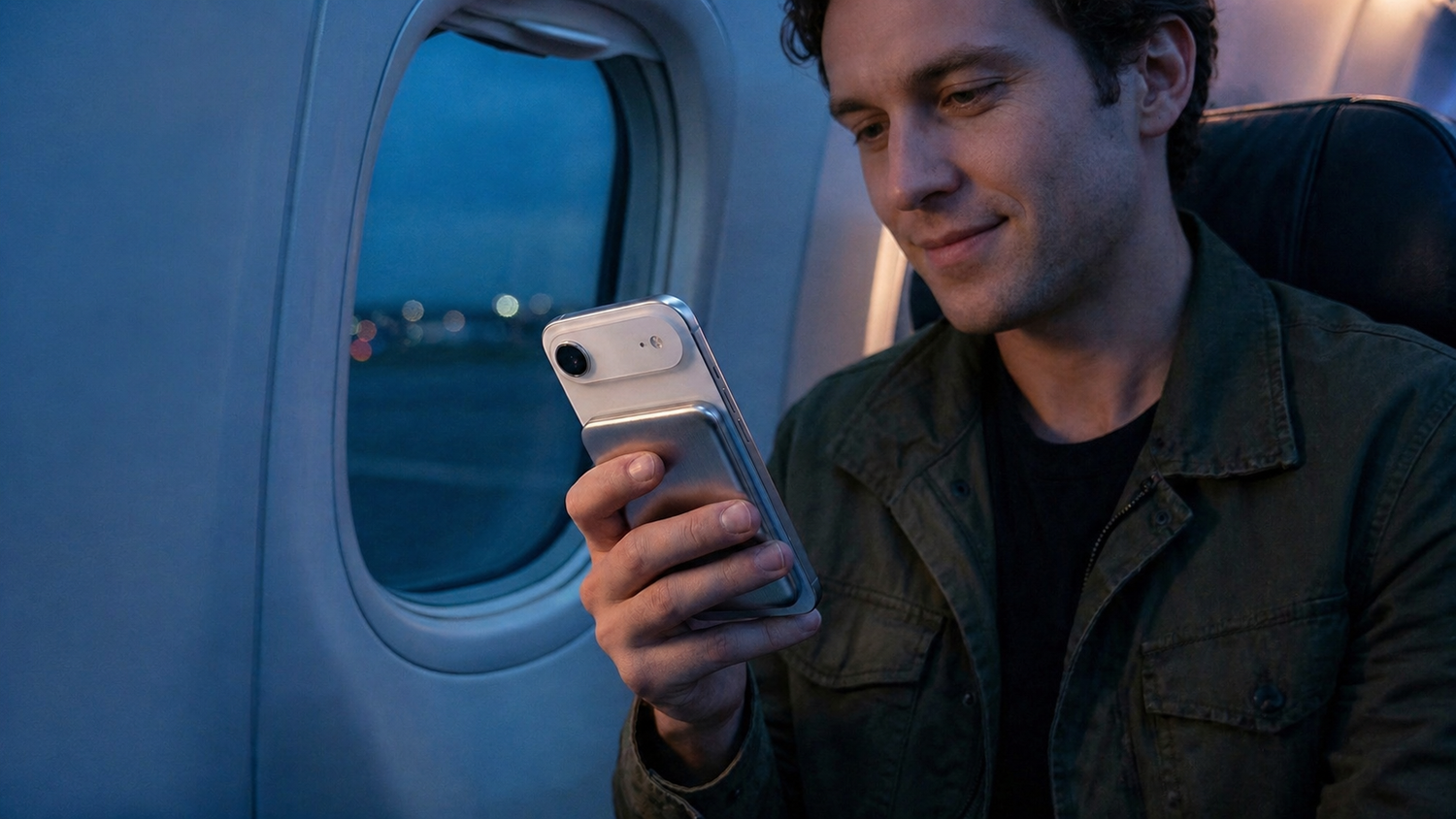
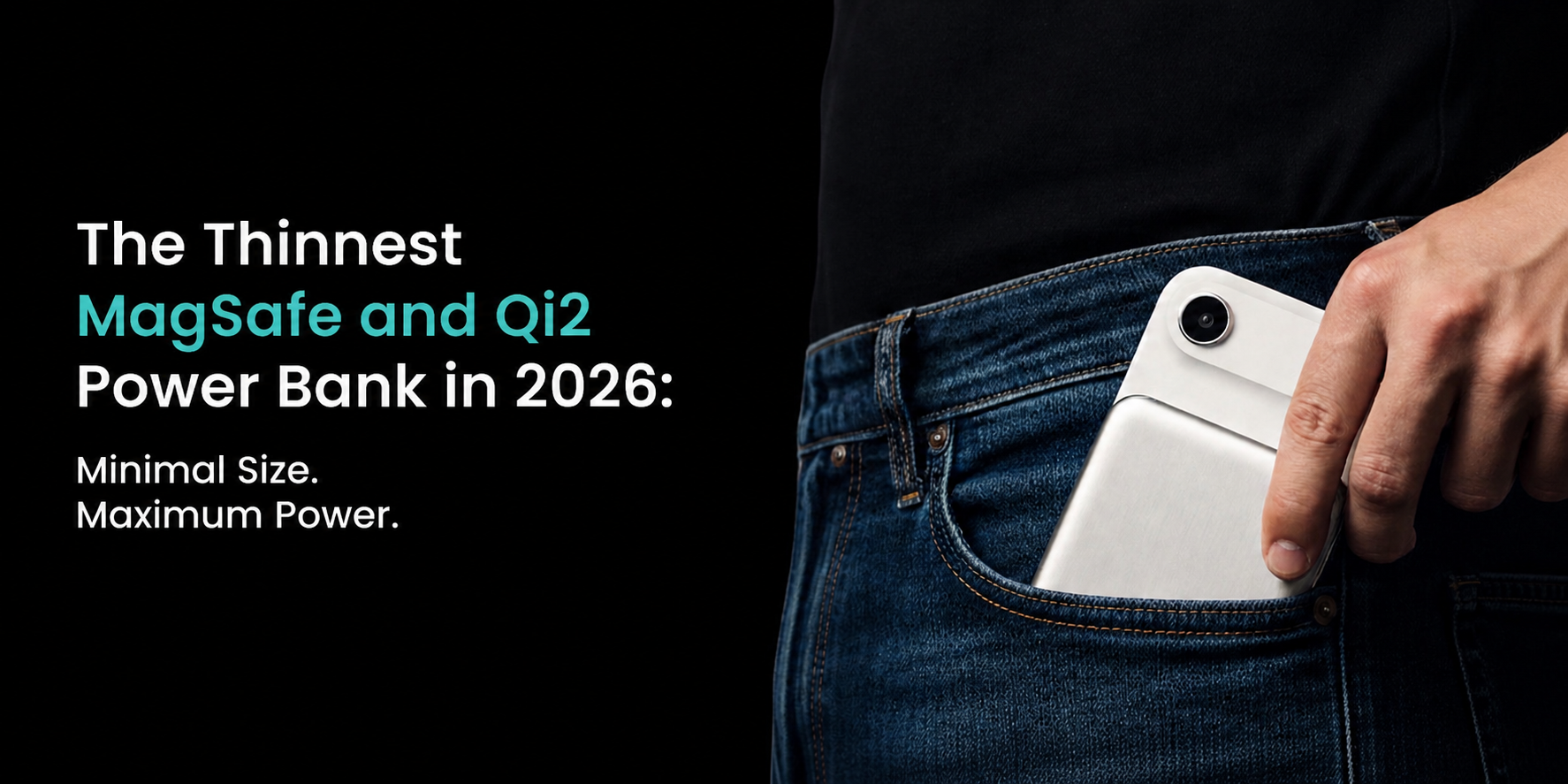
SolidSafe Air 5K -- $59.99 -- the travel pick. 5,000mAh / ~37Wh. 6.8mm titanium body, the thinnest power bank we sell. Qi2 wireless 15W magnetic. USB-C 20W out. Goes in a carry-on, a coat pocket, a passport sleeve. CCC-certified for China-route flights. The only Qi2 SolidSafe in the line. If you fly with nothing but your phone and a wallet, this is the bank.
SolidSafe 5K -- $59.99 -- the workhorse. 5,000mAh / ~38Wh. Built-in lanyard USB-C cable so you do not hunt for a cable on the plane. Color LCD shows exact charge state and per-port wattage. Qi2 wireless. Best when you want to see what is happening with your charge instead of guessing.
SolidSafe 10K -- $79.99 -- the all-day traveler. 10,000mAh / ~38Wh. Same lanyard cable, same LCD, double the capacity, dual USB-C output plus Qi2. Charges three devices at once (phone + AirPods + iPad). Best for long-haul, multi-day, or trips where you cannot count on outlet access. Sits at roughly 38Wh, less than half the 100Wh limit.
All three are under 100Wh by a wide margin. None will ever come close to triggering the airline approval rule. None have a recall history. All three are semi-solid-state.
What about Anker, Mophie, and other lithium-ion options?
Anker, Mophie, Belkin, Ugreen, and Baseus all sell power banks that meet the 100Wh airline limit. Several have multi-layer protection circuits comparable to SolidSafe. None of them sell semi-solid-state cells in the US consumer market today. That is the chemistry difference. Their banks are airline safe. SolidSafe banks are airline safe with a different failure profile if the protection circuit ever misses.
This is not a brand attack. It is a category fact. Lithium-ion has been the dominant power bank chemistry for over a decade. Semi-solid-state is newer. The brands that built businesses around lithium-ion have inventory, supply chains, and engineering teams aligned to that chemistry. Switching means rebuilding all of it. BMX launched after the chemistry transition started and built around semi-solid-state from the beginning, which is why we can talk honestly about the chemistry tradeoff. We have nothing to protect.
If you fly often and you care about the failure profile of the battery in your bag, the chemistry matters more than the brand name.
Practical packing rules for any power bank on any flight:
- Carry-on only. Never in checked luggage. Every airline requires this.
- Tape exposed terminals or keep the bank in its retail box if it is new.
- Keep the bank accessible during the flight in case of unusual heat or smell.
- Charge the bank to no more than 80 percent before a long flight to give the chemistry headroom.
- If you fly to or within China, confirm CCC certification before you depart. Confiscation at the gate is a non-event for SolidSafe Air owners and a problem for almost everyone else.
- Two banks of 100-160Wh are typically allowed with airline approval. Anything over 160Wh is banned outright.
- If you smell anything, see swelling, or feel unusual heat, alert the cabin crew immediately. This is what battery containment bags are for.
SolidSafe Power Banks
Travel-safe by chemistry. Not just by spec sheet.
Semi-solid-state cells, under 100Wh, CCC-certified for China travel, drilled on camera without catching fire. Three SolidSafe banks for three different ways to fly.
See SolidSafe Power BanksFrequently Asked Questions
What is the safest power bank for air travel in 2026?
The safest power bank for air travel in 2026 is one with semi-solid-state cells, capacity under the 100Wh airline limit, CCC certification for China-route flights, and a multi-layer protection circuit. The BMX SolidSafe Air 5K, SolidSafe 5K, and SolidSafe 10K all meet these conditions. The Air 5K is the slimmest and the only Qi2 wireless option in the line. The 10K offers the most capacity while still sitting comfortably under the airline limit.
What is the safest power bank for flying?
The safest power bank for flying is one whose chemistry is engineered to fail less violently if a thermal event ever starts, and which sits under the 100Wh FAA carry-on limit. Semi-solid-state cells reduce the free-flowing liquid electrolyte that drives lithium-ion fires. The BMX SolidSafe lineup uses semi-solid-state chemistry and all three SKUs are well under 100Wh. CCC certification is an additional credential required for power banks on flights inside China.
Can I bring a power bank on a plane?
Yes, in carry-on only. The FAA, IATA, and almost every commercial airline allow lithium battery power banks up to 100Wh in carry-on bags without prior approval. Banks between 100Wh and 160Wh require airline approval and are usually limited to two per passenger. Banks over 160Wh are banned outright. Power banks must never go in checked luggage.
How big can a power bank be on a plane?
Up to 100 watt-hours (Wh) without airline approval. To convert milliamp-hours to watt-hours, divide mAh by 1000 and multiply by 3.7 (lithium-ion) or 3.8 (some semi-solid-state). A 27,000mAh bank lands right at the 100Wh ceiling. Anything bigger requires airline approval (typically capped at two batteries between 100 and 160Wh). The BMX SolidSafe 10K is approximately 38Wh, well under the limit.
Why are some power banks safer than others?
Two reasons. First, the protection circuit. A multi-layer protection circuit catches the common failure triggers (overcharge, overcurrent, overheating, short circuit) before they reach the cells. Second, and more important, the chemistry inside the cell. Conventional lithium-ion uses a liquid electrolyte that can vaporize and feed a thermal runaway. Semi-solid-state cells contain significantly less liquid electrolyte, which reduces the available fuel if the cell is ever compromised. Two power banks with identical protection circuits can have very different outcomes when something goes wrong, depending on the chemistry underneath.
Is the BMX SolidSafe Air airline safe?
Yes. The BMX SolidSafe Air 5K is approximately 37Wh, well under the 100Wh FAA carry-on limit. It uses semi-solid-state cells (significantly less liquid electrolyte than conventional lithium-ion), carries CCC certification for power banks on flights inside or to China, and ships with a full multi-layer protection circuit. It is the only Qi2 wireless power bank we sell that meets every travel-safety condition.
Do I need a CCC-certified power bank?
If you ever fly inside China or to China on a domestic carrier, yes. Since June 2025 the Civil Aviation Administration of China requires CCC (3C) certification on every power bank carried on domestic flights. Without the mark, the bank is confiscated at the gate. For travel that does not touch China, CCC is not required, but it is still a useful quality signal because the certification process is one of the strictest battery safety regimes in the world. The BMX SolidSafe Air is CCC-certified.
Can a power bank explode on a plane?
Lithium-ion power banks have caused on-aircraft thermal events. The FAA tracks these incidents and they are the reason the 100Wh carry-on limit and the checked-baggage ban exist. The chemistry inside the cell is what determines how a thermal event behaves once it starts. Semi-solid-state cells reduce the liquid electrolyte that fuels lithium-ion fires, which reduces (not eliminates) the severity of an event if one ever begins. Pack only in carry-on, keep accessible, alert crew if anything seems wrong.
Related guides
- Power Bank Rules on Planes: The 2026 Update Every Traveler Needs
- What Is 3C Certification? Power Bank Safety and China Travel Explained
- mAh vs Wh: How the Airline 100Wh Limit Actually Works
- Safest Power Banks in 2026: Semi-Solid-State Buying Guide
- Why Do Power Banks Catch Fire? The Chemistry Behind Battery Fire
- Best Power Bank for Travel in 2026: Airline Safe and Carry-On Friendly


Leave a comment
This site is protected by hCaptcha and the hCaptcha Privacy Policy and Terms of Service apply.