





Quick Answer
Airlines limit power banks by watt-hours (Wh), not mAh. The formula is (mAh × voltage) ÷ 1000 = Wh. Most consumer power banks use 3.7V cells, so a 10,000mAh pack is about 37 Wh and a 27,000mAh pack is about 99.9 Wh, just under the 100 Wh airline limit. Use the calculator below to check your specific pack.
Key Takeaways
- Under 100 Wh: allowed in carry-on without airline approval. Almost all consumer power banks fall here.
- 100 to 160 Wh: requires airline approval, typically limited to two per passenger.
- Over 160 Wh: not permitted on passenger flights at all.
- The Wh rating must be printed on the device. If it is not visible, you can be stopped at security regardless of the math.
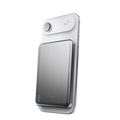
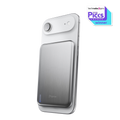
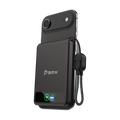
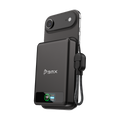
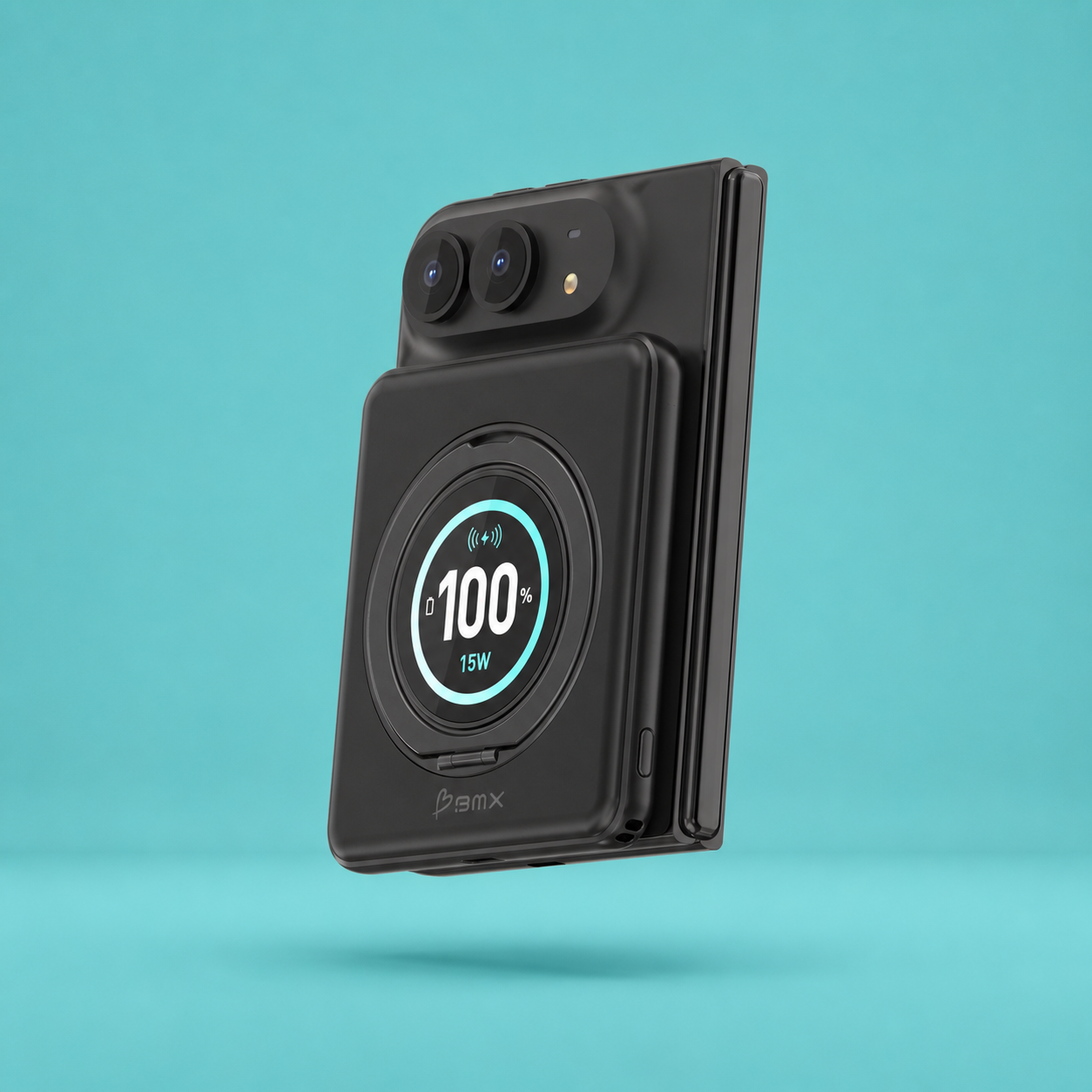
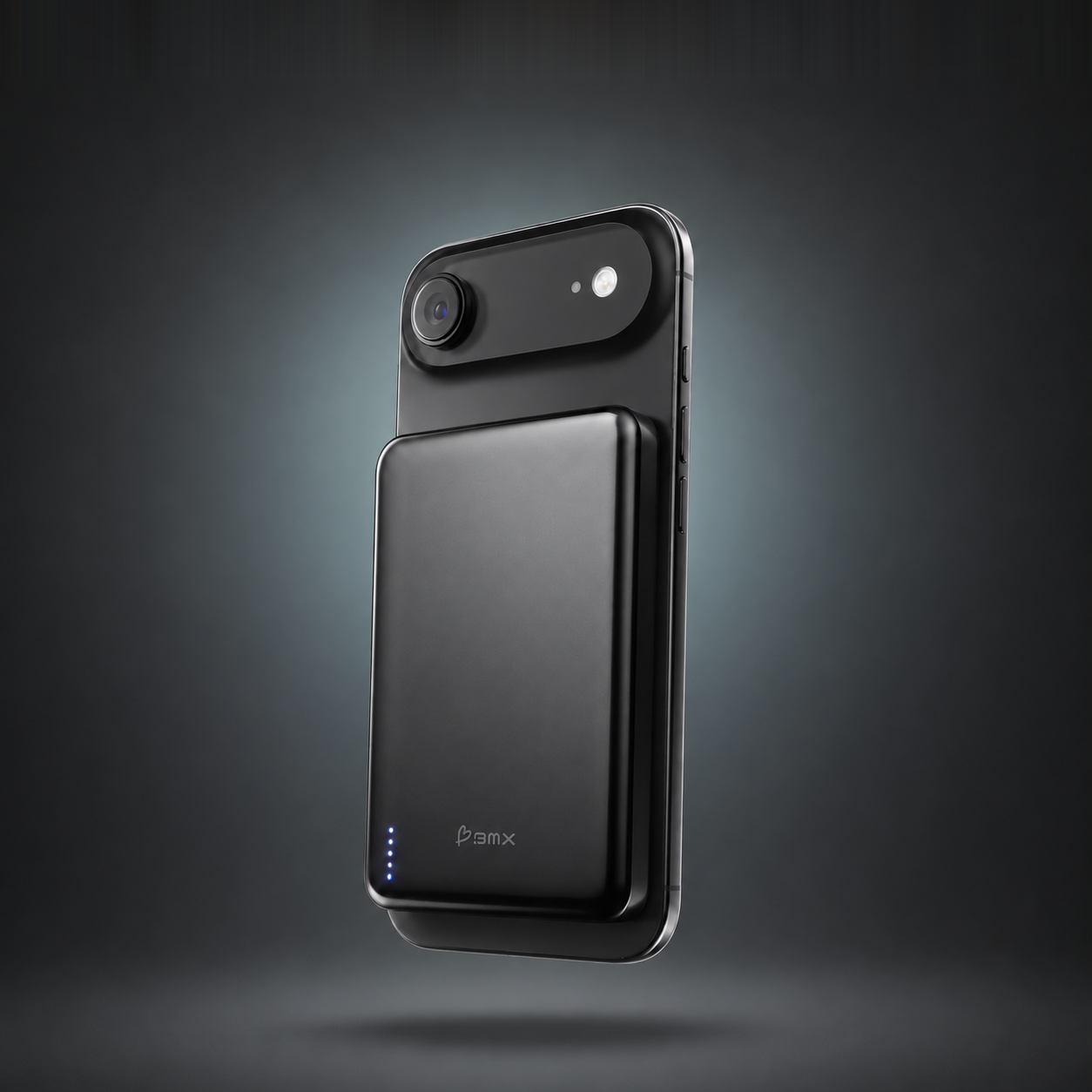
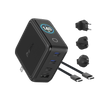
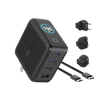
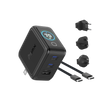
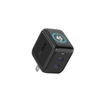
Already shopping for an airline-safe power bank? All three BMX SolidSafe models are well under the 100 Wh limit and have the Wh rating clearly printed on the device. Jump to the lineup →
Power Bank Wh Calculator
Enter your power bank's mAh and voltage. The voltage is almost always 3.7V for lithium-ion or lithium-polymer cells, which is what nearly every consumer power bank uses. Some packs report 3.6V or 3.85V; check the label.
Common Power Bank Sizes and Their Wh Ratings
If your power bank's voltage is 3.7V (the most common), this is the quick reference. Anything above 27,000mAh at 3.7V starts approaching the 100 Wh airline limit.
| mAh capacity | Wh (at 3.7V) | Airline status |
|---|---|---|
| 5,000 mAh | 18.5 Wh | Allowed |
| 10,000 mAh | 37.0 Wh | Allowed |
| 15,000 mAh | 55.5 Wh | Allowed |
| 20,000 mAh | 74.0 Wh | Allowed |
| 25,000 mAh | 92.5 Wh | Allowed |
| 27,000 mAh | 99.9 Wh | Allowed (right at the limit) |
| 30,000 mAh | 111.0 Wh | Requires approval |
| 40,000 mAh | 148.0 Wh | Requires approval |
| 45,000+ mAh | 166.5+ Wh | Not allowed |
Why Airlines Use Wh Instead of mAh
Mile-amp-hours (mAh) measure how much electric charge a battery holds. Watt-hours (Wh) measure energy. The same mAh at a different voltage is a different amount of energy, and energy is what drives thermal runaway risk if a cell fails. Two batteries can both be rated 20,000 mAh but contain very different amounts of energy if their cell voltages differ.
This is why ICAO, the FAA, and every major airline use Wh as the limit. A 100 Wh threshold is consistent across cell chemistries and manufacturers. mAh by itself is not.
If your power bank's label only shows mAh, multiply by the voltage and divide by 1,000 to get Wh. The voltage is usually printed on the same label, often in small text. If it is missing entirely, assume 3.7V for a single-cell consumer power bank. For a deeper explainer on this distinction, our mAh vs Wh guide covers it in detail.
What If My Power Bank Has No Visible Wh Rating?
This is the most common reason power banks get pulled aside at security. The math may put you safely under the 100 Wh limit, but if the rating is not printed on the device itself in a place a TSA agent or gate agent can see, you may be told to leave it behind.
Some practical guidance:
- Check both the front and back of the pack, plus any side panels. Wh is sometimes printed in tiny text near the regulatory icons.
- If only mAh and voltage are listed, you can usually point to those and walk through the math, but the agent's call is final.
- Cheap, generic, or unbranded power banks often skip the Wh label entirely. Those are also the ones most likely to be confiscated.
- If you travel often and your current pack has no clear Wh rating, replace it with one that does. The cost of a confiscated pack at the gate, plus the inconvenience of being without backup power on the trip, exceeds the cost of buying a properly labeled one.


SolidSafe Power Banks: All Under the 100 Wh Limit, All Clearly Labeled
Every SolidSafe pack is compliant for carry-on travel under ICAO, FAA, and IATA guidelines. The Wh rating is printed on the device. The cells use semi-solid-state architecture with significantly less liquid electrolyte than conventional lithium-ion, which reduces the thermal-runaway mechanism that airlines are tightening rules around. See the full SolidSafe lineup.
Before You Travel With a Power Bank
Even if your Wh math is fine, three other rules apply almost universally:
- Carry-on only. Power banks must fly in the cabin with you, never in checked baggage. This is enforced by FAA, EASA, IATA, and ICAO. No exceptions.
- Storage rules are tightening. United Airlines (effective March 1, 2026) no longer allows power banks in overhead bins. Lufthansa Group, Emirates, ANA, Japan Airlines, and Qantas have similar rules. Plan to keep your power bank in a seat pocket or under the seat in your personal item.
- In-flight use is restricted on a growing list of carriers. The IATA DGR 67th Edition (effective January 1, 2026) prohibits charging power banks from in-seat USB ports across all signatories. Many airlines also ban using a power bank to charge other devices mid-flight. Check the carrier's current policy.
Our full Power Bank Rules on Planes 2026 guide covers the airline-by-airline policies, IATA framework, and recent updates including the United March 2026 change.
Frequently Asked Questions
Is a 5,000mAh power bank allowed on a plane?
Yes. A 5,000mAh power bank at 3.7V is approximately 18.5 Wh, well under the 100 Wh airline limit. It is allowed in carry-on luggage on essentially all commercial airlines without prior approval. Pack it in carry-on only, never checked baggage.
Is a 10,000mAh power bank allowed on a plane?
Yes. A 10,000mAh power bank at 3.7V is approximately 37 Wh, well under the 100 Wh airline limit. It is allowed in carry-on luggage on virtually all commercial airlines without prior approval. Carry-on only, no checked baggage.
Is a 20,000mAh power bank allowed on a plane?
Yes. A 20,000mAh power bank at 3.7V is approximately 74 Wh, under the 100 Wh airline limit. It is allowed in carry-on luggage without prior approval on essentially all commercial airlines. Some carriers (United, Emirates, Lufthansa, ANA, JAL, Qantas) require it to be stored in a seat pocket or under the seat rather than in an overhead bin.
Is a 27,000mAh power bank allowed on a plane?
Almost always yes. A 27,000mAh power bank at 3.7V is approximately 99.9 Wh, right at the 100 Wh airline limit. It is technically compliant, but expect extra scrutiny at security. Make sure the Wh rating is clearly printed on the device. If the label is missing or unclear, you may be stopped.
Is a 30,000mAh power bank allowed on a plane?
Only with airline approval. A 30,000mAh power bank at 3.7V is approximately 111 Wh, which falls into the 100 to 160 Wh range. Most airlines require advance approval and limit you to two packs at this size. Some airlines do not allow this size at all. Contact your carrier before traveling.
What is the maximum Wh power bank allowed on a plane?
The hard ceiling is 160 Wh. Anything above 160 Wh is prohibited on commercial passenger flights under any circumstances. Between 100 and 160 Wh requires airline approval (typically max two packs). Under 100 Wh is allowed without approval.
How do I convert mAh to Wh?
Multiply the mAh capacity by the voltage and divide by 1,000. The formula is (mAh × V) ÷ 1000 = Wh. Most consumer power banks use 3.7V cells, so the shortcut is mAh × 0.0037 = Wh. A 10,000mAh pack at 3.7V is 37 Wh. The calculator at the top of this page does the math for you.
What is the voltage of a typical power bank?
Most consumer power banks use lithium-ion or lithium-polymer cells at 3.7V nominal voltage. Some packs report 3.6V or 3.85V. Three-cell packs (rare in consumer products) operate at 11.1V. The voltage is usually printed on the label near the mAh rating; if it is missing, assume 3.7V.
Related guides
- Power Bank Rules on Planes 2026: Latest Updates, Airline-by-Airline Guide
- mAh vs Wh: What Power Bank Capacity Actually Means
- Best Power Banks for Travel in 2026
- Why a 10,000mAh Power Bank Does Not Give You 10,000mAh
- Can You Bring a Battery Bank on a Plane?
- Safest Power Banks in 2026: Semi-Solid-State Buying Guide


Leave a comment
This site is protected by hCaptcha and the hCaptcha Privacy Policy and Terms of Service apply.